
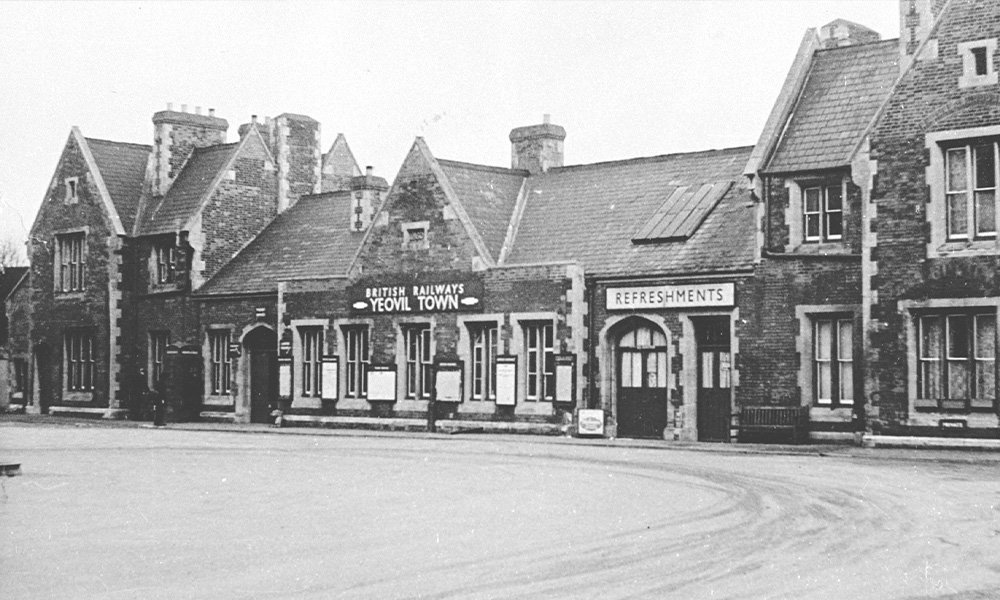
I’m going through the stations on the Yeovil to Taunton railway. I’ve covered Pen Mill, which is still active, but now we head into Yeovil Town station. What once was an impressive building, sadly is no longer there.
Yeovil had five stations at one point, Pen Mill, Junction, Town, Henford Goods Yard, and Hendford Halt. I will be going over all of the station, but today is about Yeovil Today.
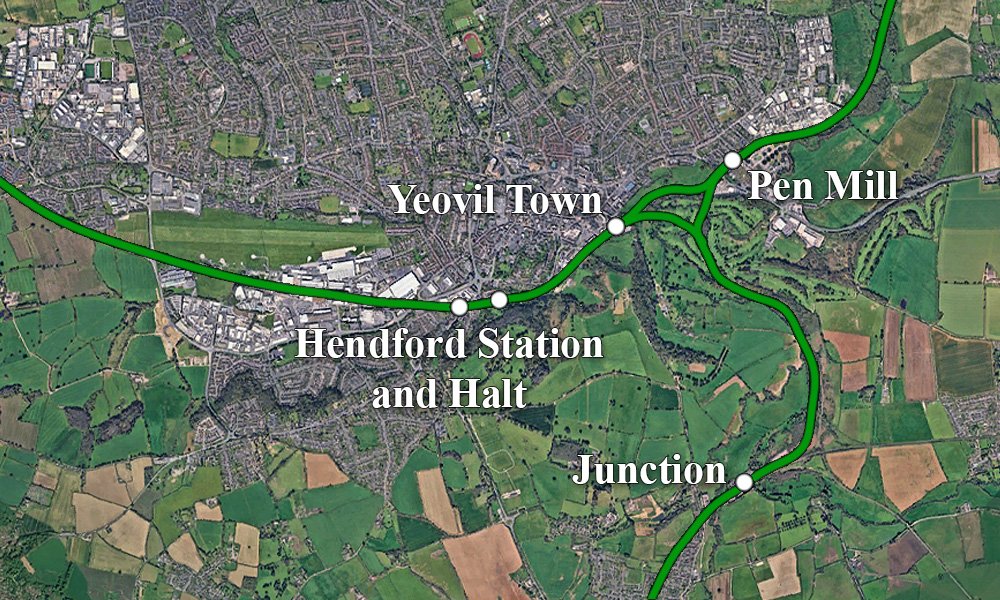
Town Station sat in the south east of Yeovil, and was 25½ miles from Taunton. It was at the end of Station Road, which is now known as South Western Terrace.
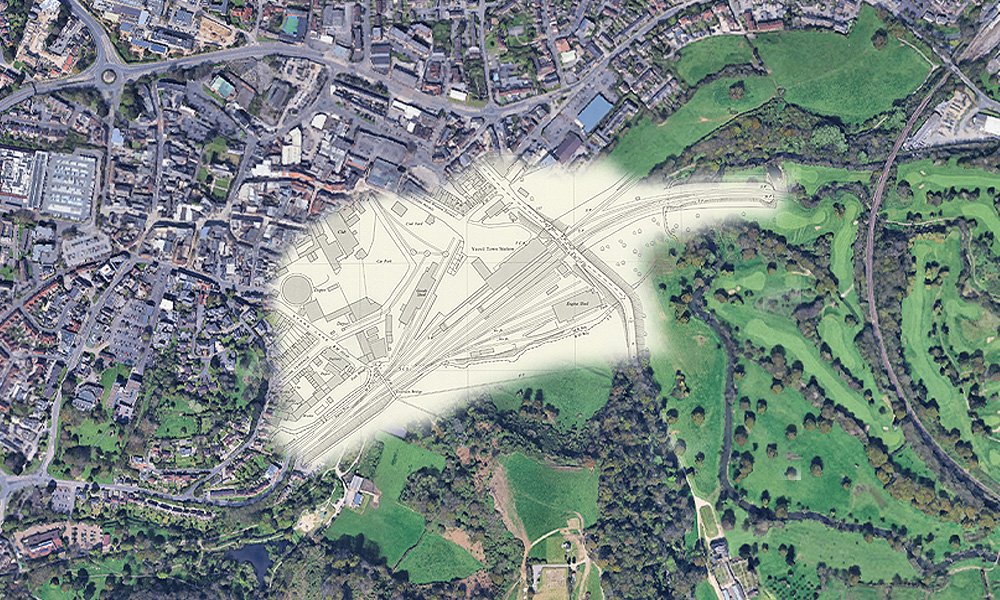
Town Station opened on the 1st June 1861, and ever very impressive sight for the towns folk. It had everything a busy station could need, including: a coal yard, cattle pens, two signal boxes, goods sheds, water tanks, cranes, and even wool stores.
The building was a joint station building, with two station masters, having both the London & Southwestern Railway and the Bristol & Exeter Railway run from it. Later, the Great Western Railway took over the B&ER.
Photos of Yeovil Town Station
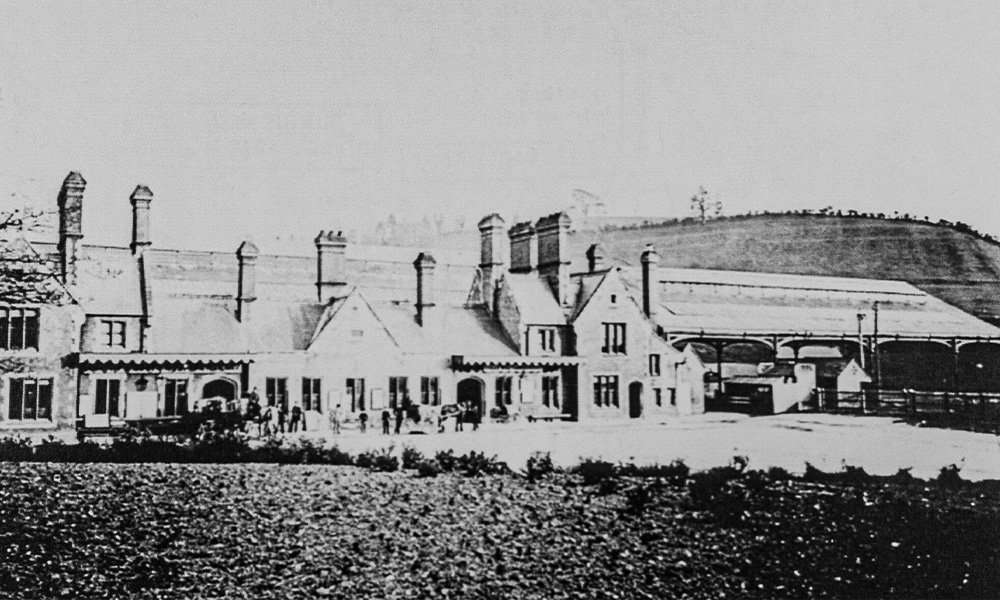
This photograph was taken around 1880. Summerhouse Hill can be seen on the right. Originally, the platforms were covered. Image via South Somerset Heritage Collection.
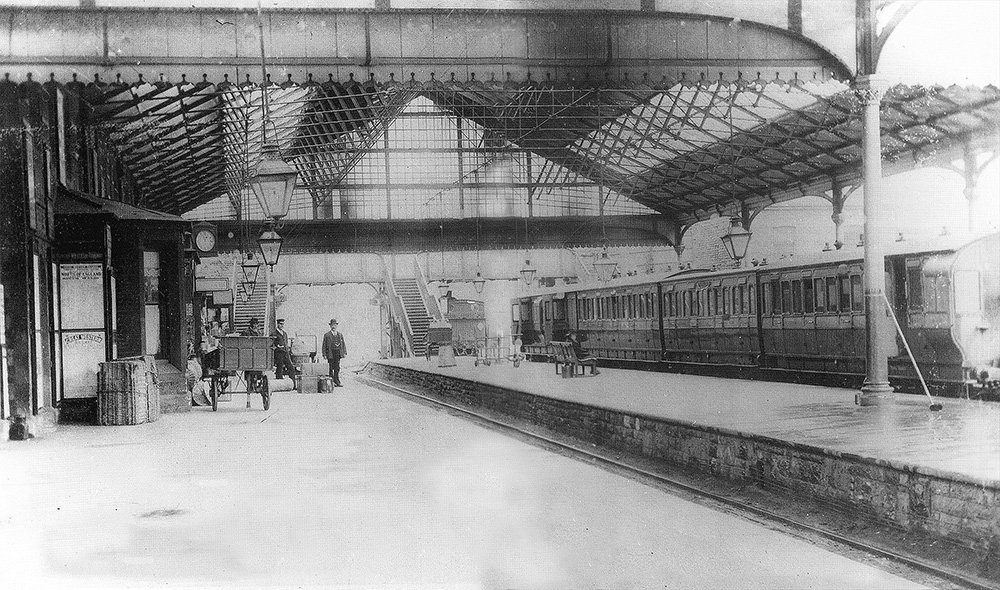
The inside of station was stunning. This is the longer part of the bright train shed, which covered both the GWR platform (400ft) and the LSWR platforms (270ft each). On the right is a set of the LSWR salmon pink and light brown coaches. Image by Lens of Sutton.
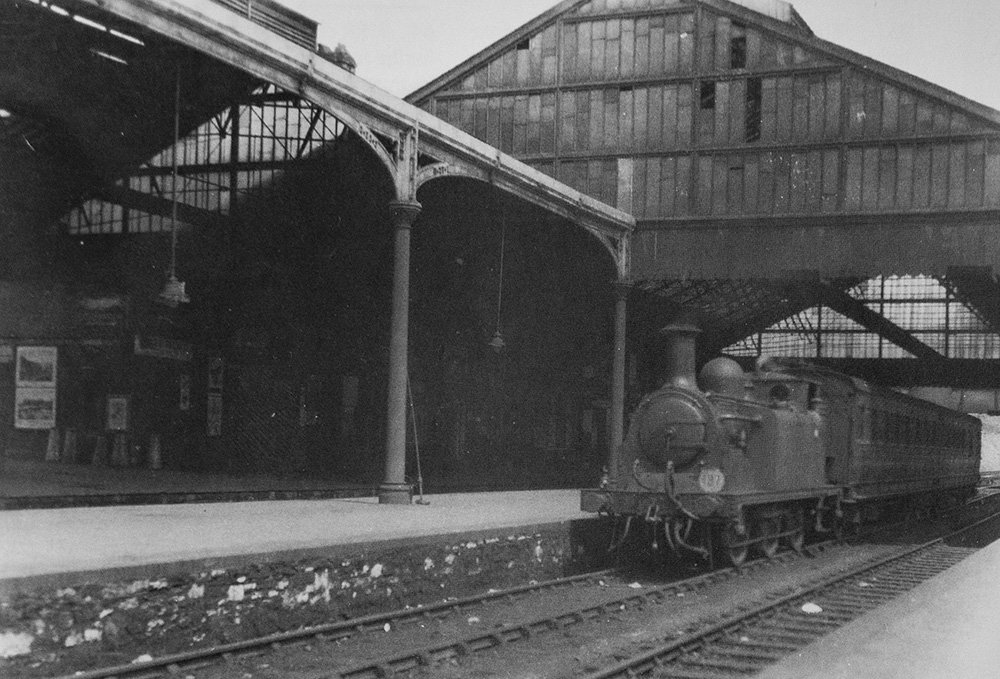
As with the Crystal Palace, which was erected ten years prior to this pair of imposing sheds, the cast iron components were very durable, but the timber parts, supporting the glass, were not so much. An SR train, headed by Class D1 0-4-2T stands under the failing glazed panel in the mid-1930s. Image by Lens of Sutton.
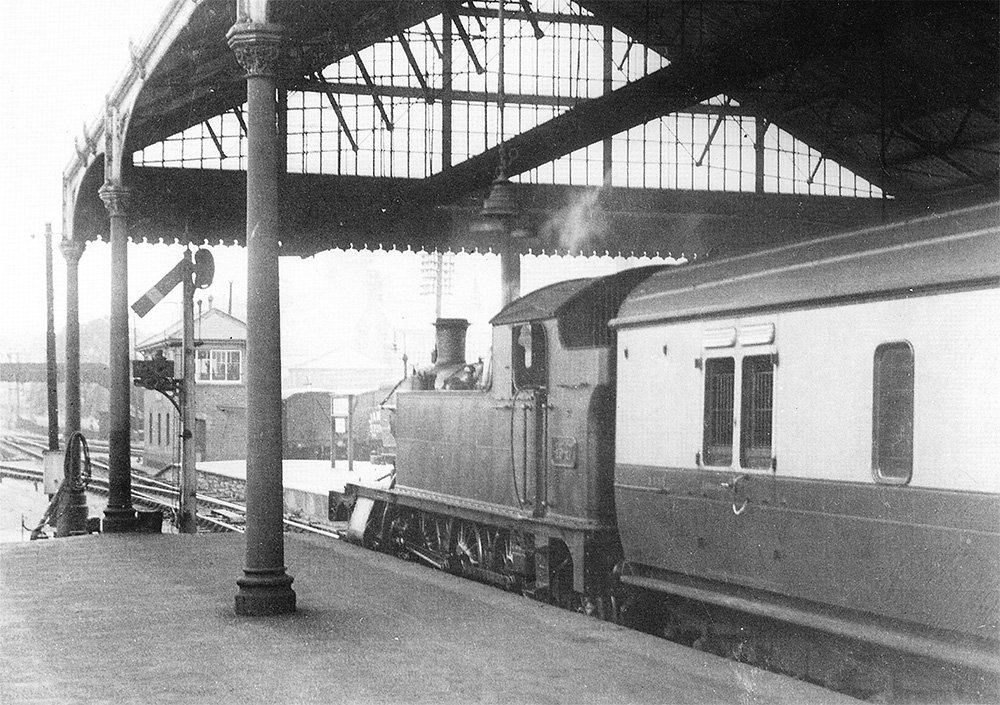
Waiting to depart for Taunton from the GWR platform is 4500 class 2-6-2T no 4547. The roof bracing wires are evident, but the smoke hood was a later addition to the elegant structure. Image by Lens of Sutton.
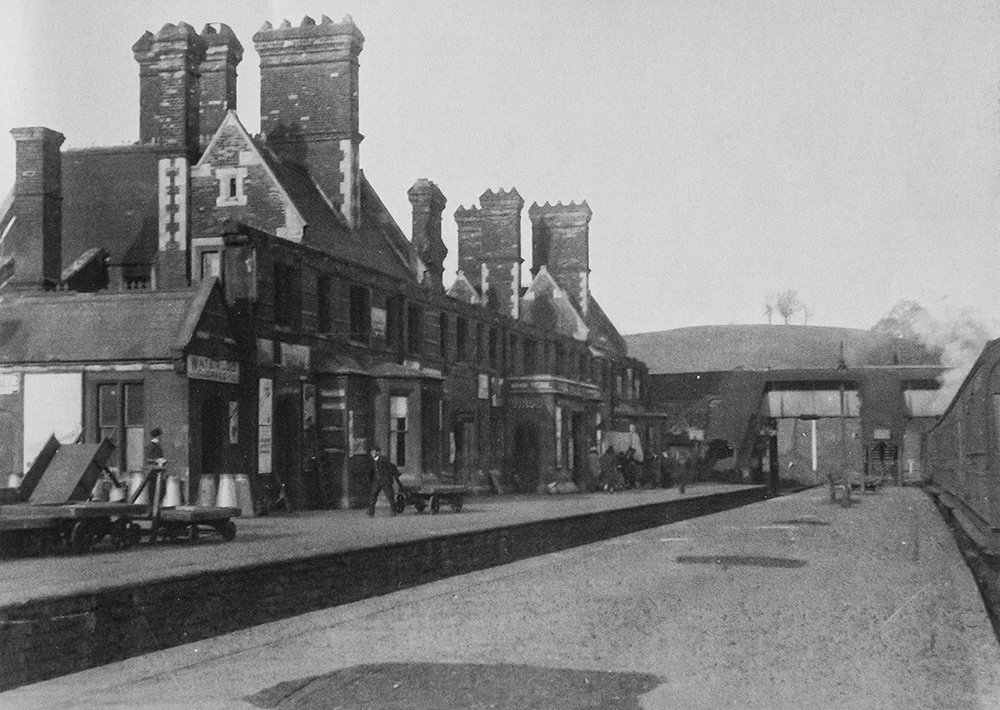
In later years, the demolition of the train shed showed the intricate stone quoins. However, not many people would have appreciated them on a rainy day. The platform was low in relation to the floor of the SR trains, a disadvantage when loading milk churns and other heavy goods. Image by Lens of Sutton.
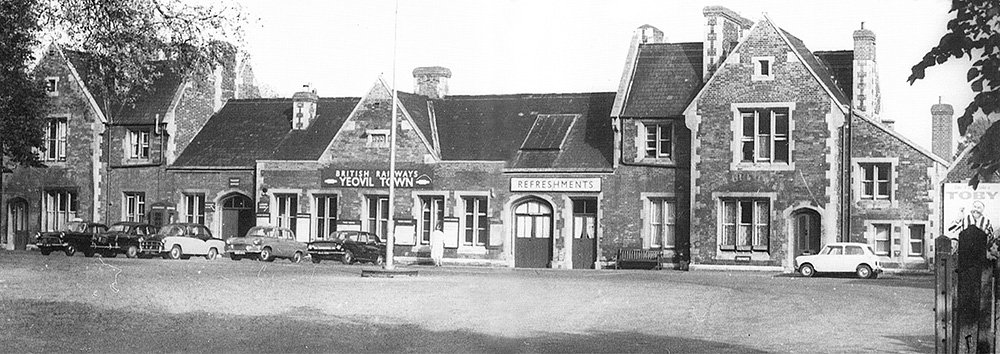
Royal Blue Coaches deprived the railway of many passengers and ironically load their vehicles in the forecourt, but this was only a benefit to the refreshment room. Here is one of the most imposing buildings in the town and certainly the most significant in its commercial history. This image was taken in 1963, in 1970, the Town Council took over the old building and demolished it to make a car park. Image by C. L. Caddy.
Overview of Town
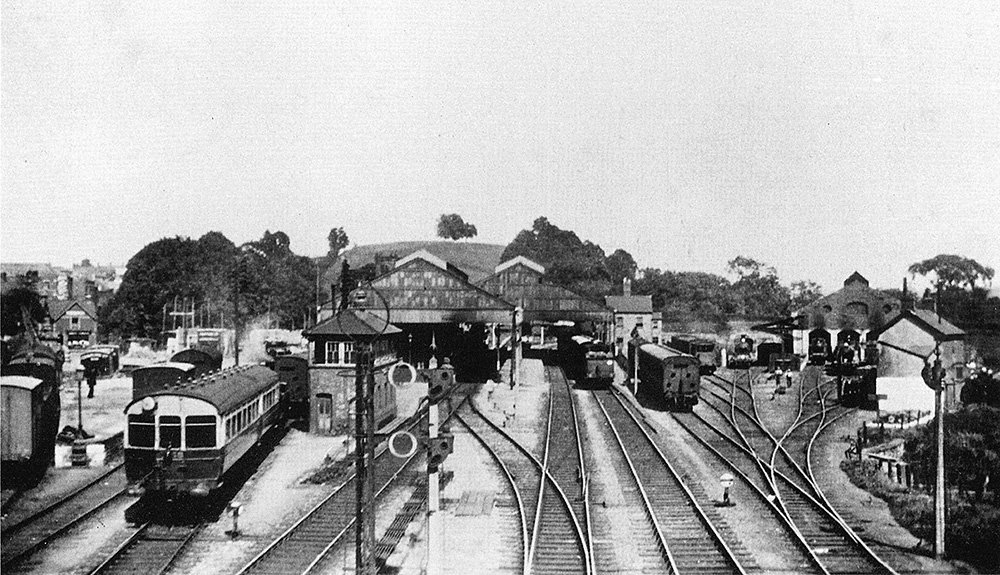
Taken, most likely from Dodham Bridge (which is no longer in existence), taken some time in the 1930s. You can see the GWR through lines and three sidings on the left. By this date, the SR controlled everything on the right of the island platform. Autocoaches of the type seen on the left were used to Pen Mill and on some stopping services on the Weymouth line; they were based in Weymouth. Image by Mowat coll.
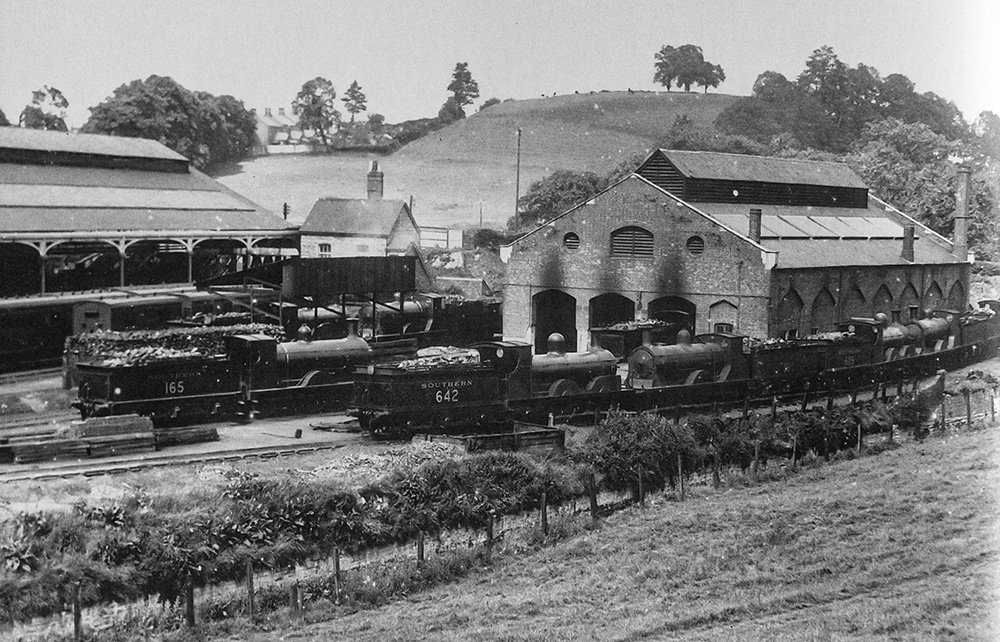
Taken just south of the station, we see the engine shed, the south side of the train shed, and one of the two houses built for the station masters. The SR allocated mostly 4-4-0s to its shed here for working between Salisbury and Exeter. The roof of the coal shed was added in 1920. Taken 12th June 1926. Image by H. C. Casserley.
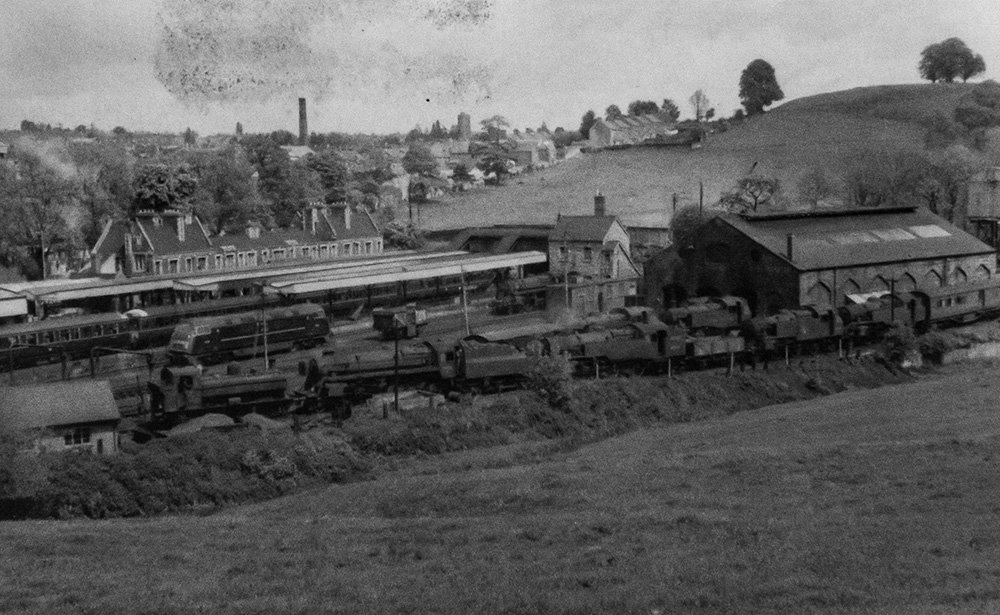
A photographer took this shot on a Sunday in May 1965. Several former GWR engines appeared here after the closure of Pen Mill shed in January 1959. Nos include: D808, 75007, 9754, 41283, 41290, 80039, 82035 and 80035. By June 1965, all the steam had vanished from this scene. Image by R. A. Lumber.
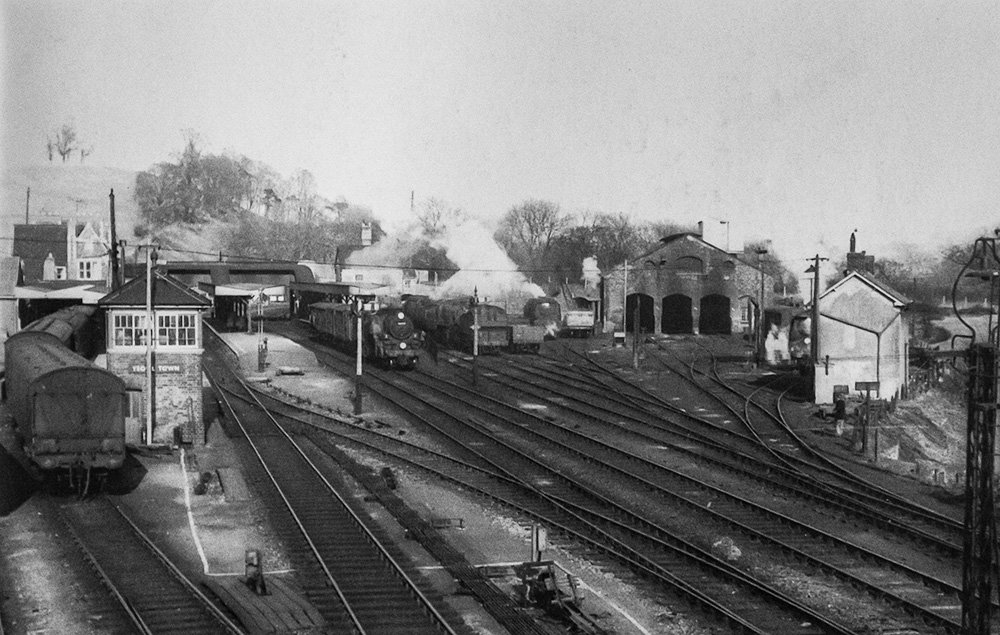
In another overview from Dodham Bridge, there were three passenger lines, known as: Main, Down Southern, and Up Southern. You can see a van train is shunting form the latter in March 1963. By this time the shed allocation included mainly ex-SR class U 2-6-0s, plus 2-6-2Ts and 0-6-0Ts. “Battle of Britain” and “West Country” Pacifics together with some BR types were regular visitors. Image by C. L. Caddy.
In the Winter
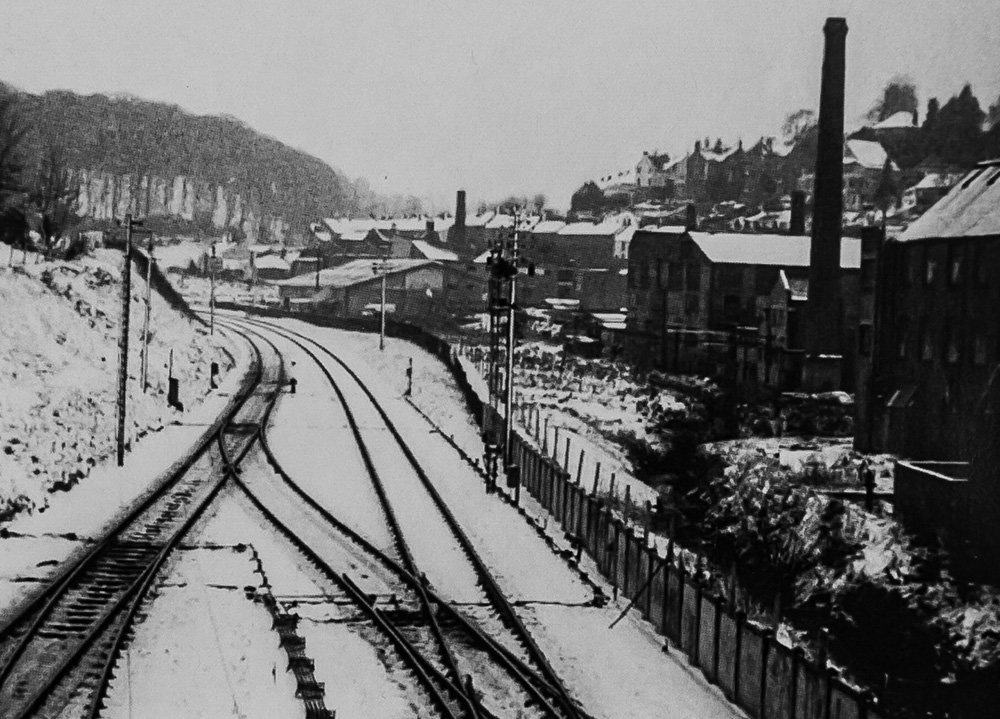
The Signal Box
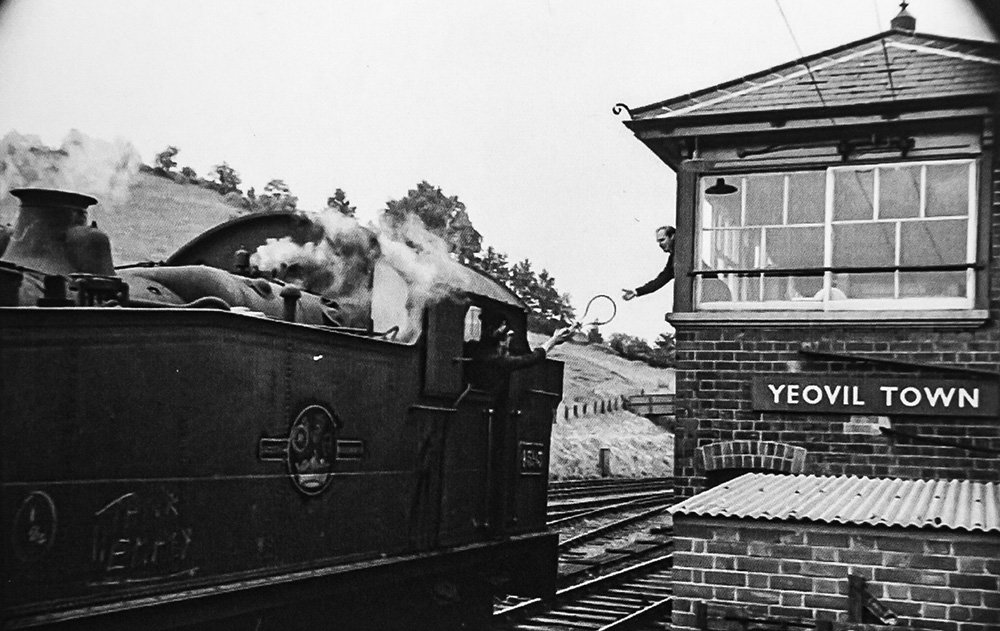
The Town signal box with the driver of the Taunton train handling the single line token for the signalman. Taken circa 1964. Photographer unknown.
Yeovil Town Yard
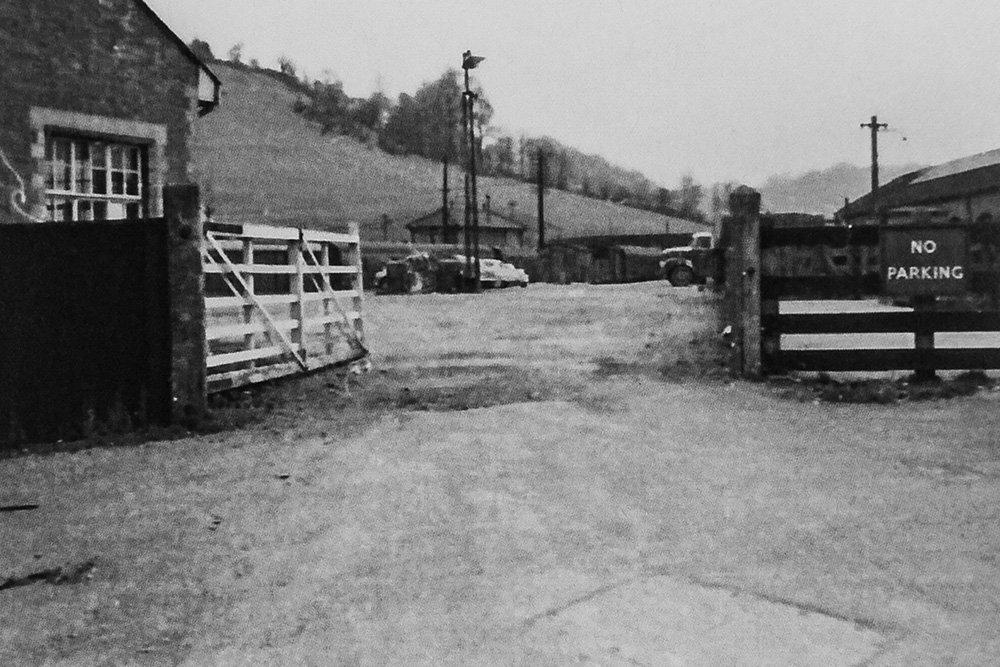
This is the Town Station Goods Yard, circa 1962. The area had previously been cattle and sheep pens with three sets of tracts feeding them. Later, it was converted to handle goods and coal traffic. Photographer unknown.
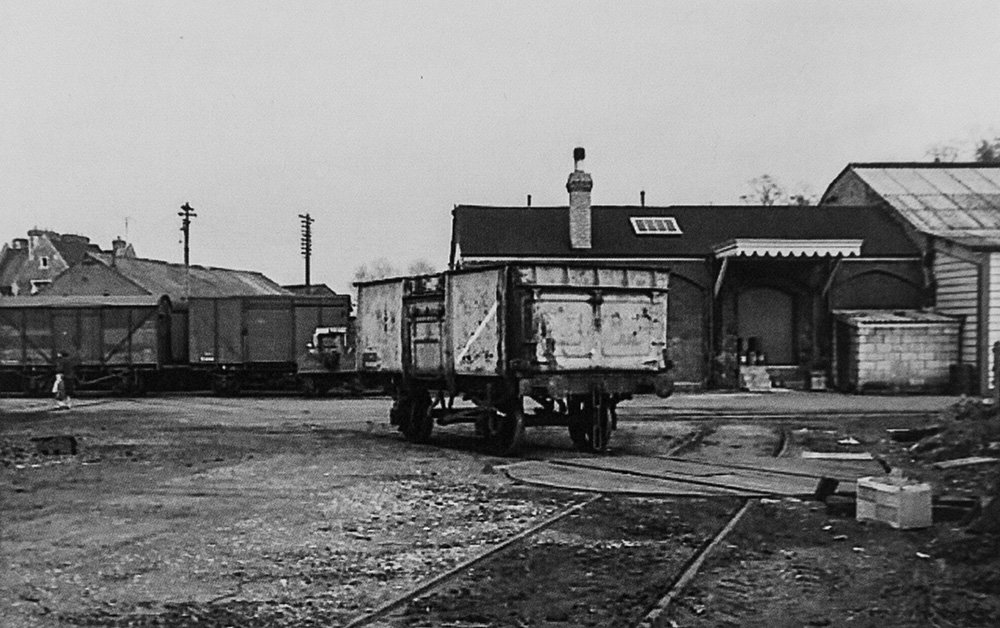
There were four manually operated turn tables in the goods yard. This particular one gave access to the Yeovil Gas Works for coal and tar wagons. Date and photographer unknow.
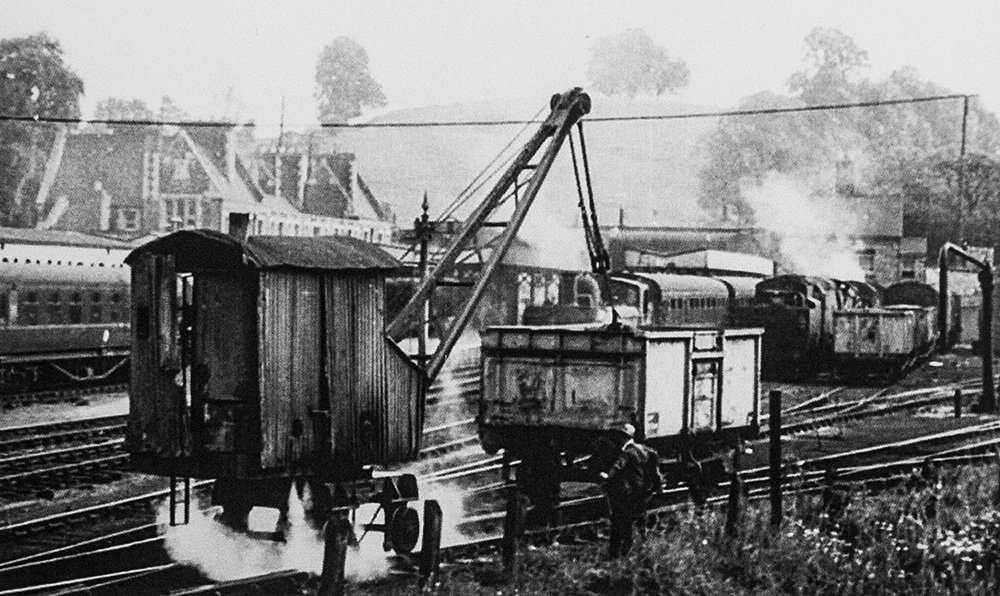
The coaling of the locomotives at Yeovil Town was performed by an ancient steam grab crane. It’s seen here manoeuvring a partly loaded coal wagon. Taken July 1964. Image by John Day.
After the Closure
Sadly, lets see what Yeovil Town looked in the years after the closure.
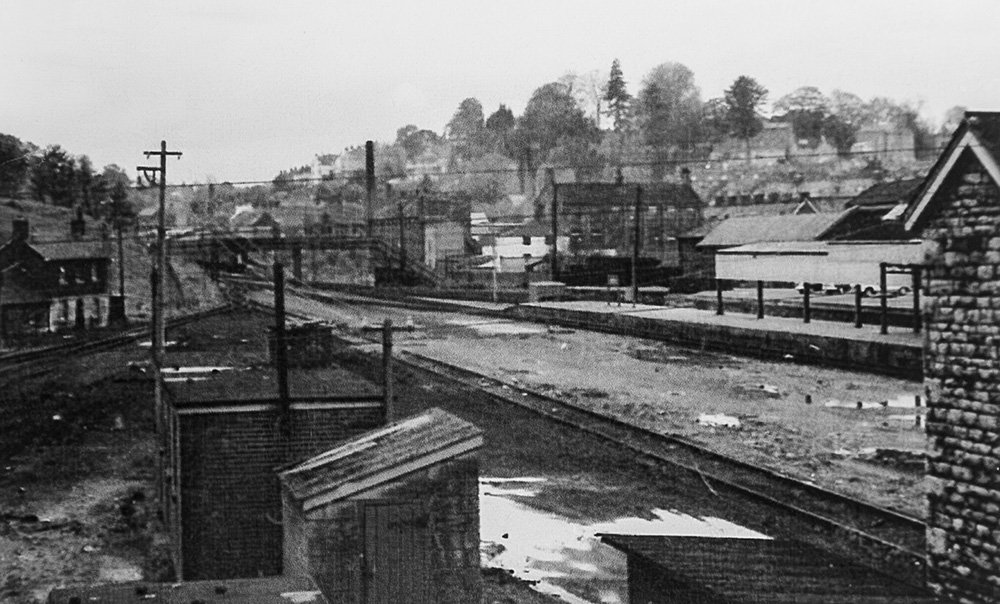
Taken from Newton Road we look down on the derelict remains of a thriving station. In 1971, Ewens & Johnson’s old building (now Foundry House) stands right in the centre, with Dodgham Bridge visible left of centre. Photographer unknown.
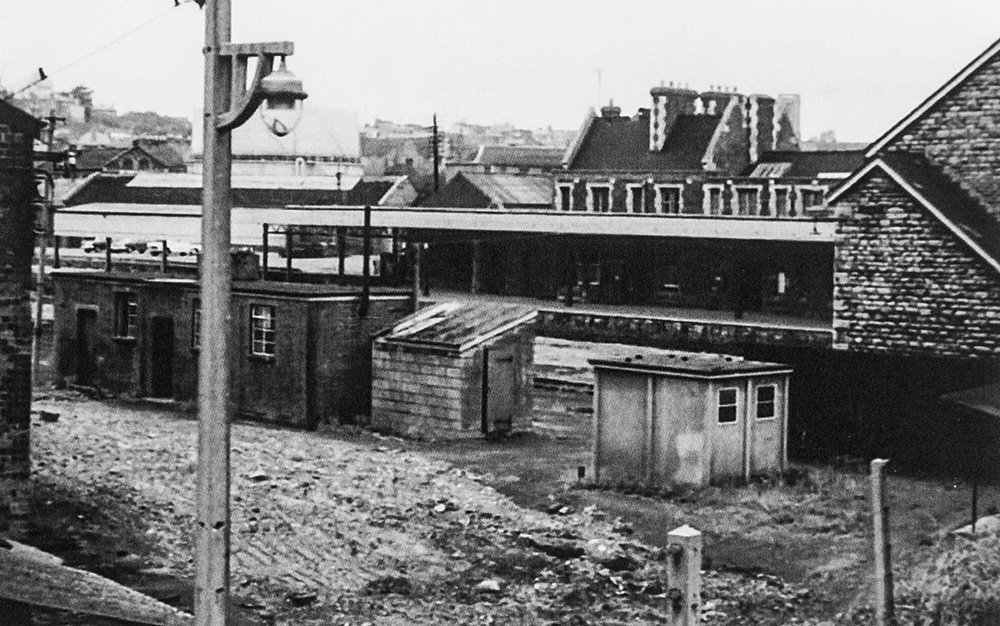
Here is another view, this time after the track removal, circa 1971. Taken from Newton Road, a sorry sight indeed. Photographer unknown.
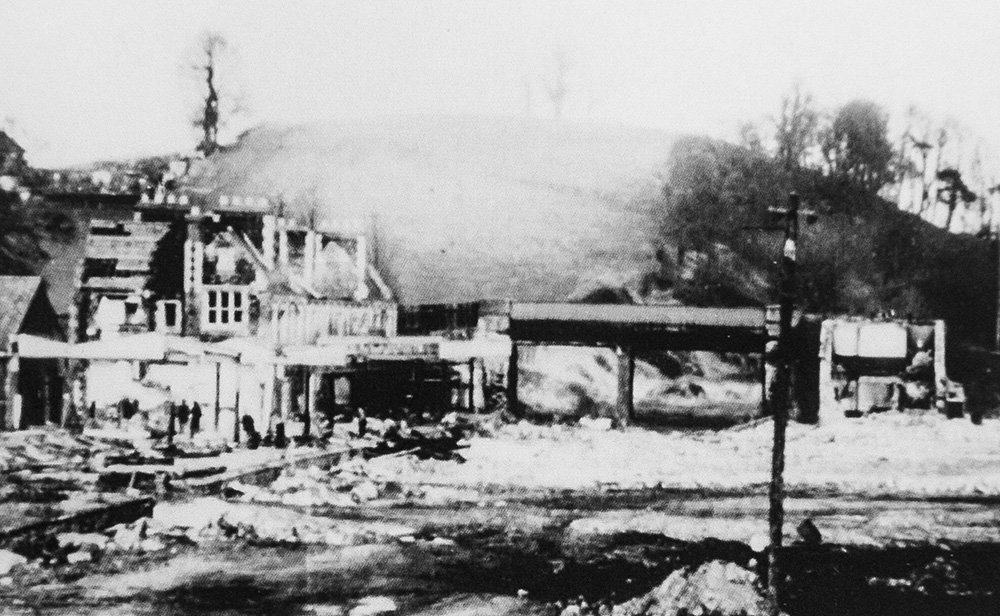
Not the best of images, but during the winter 0f 1973, the demolition of the buildings and clearance of the track beds continues. Photographer unknown.
Yeovil Town Today
After the demolition of Yeovil Town Station, there is almost nothing left of the grand station today. The Yeo Leisure Complex now occupies the area. It features a cinema, a bowling alley, a gym, and a couple of restaurants (although one stands closed and empty).
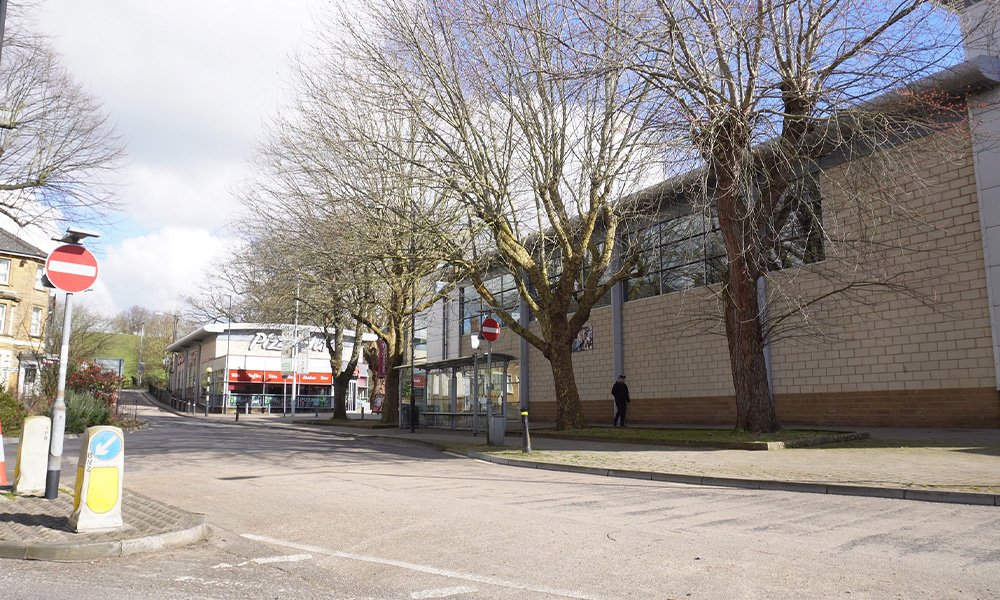
This is where the approach to Yeovil Town, taken on South Western/Old Station Road. This was the drop off point for cars, buses, and horses.
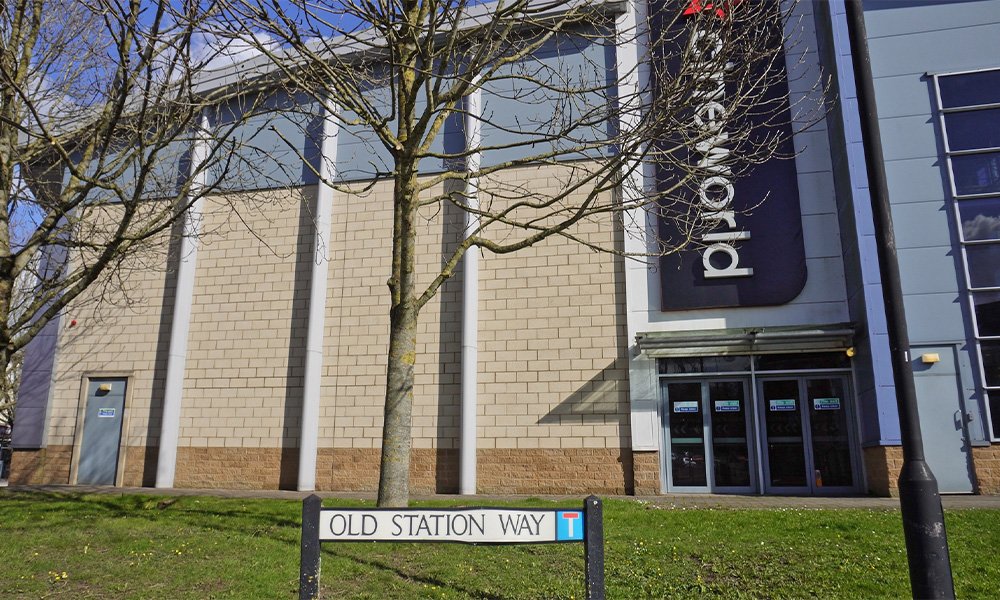
To get into the car park for the complex, you have to drive down Old Station Way. It used to be known as Stars Lane, with the old gloving factory opposite.
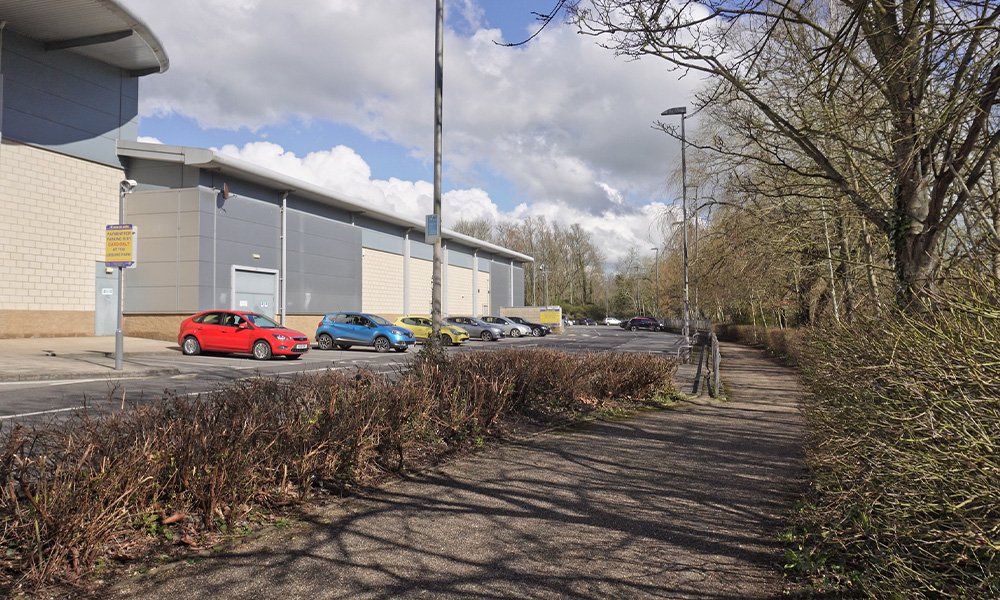
As you drive down the back of the cinema, you drive over the old turntable, which was capable of taking locos up to 43ft in length.
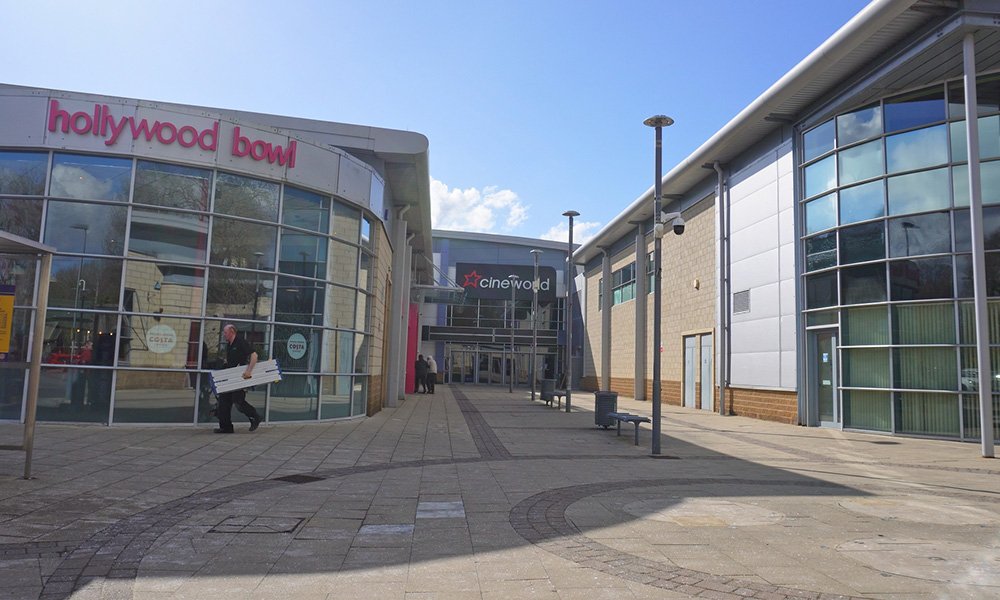
This is where the trackbed used to be, well, it’s a best guess, as it’s so hard to tell. This view looks west toward Hendford, but the cinema, bowling alley, and gym now block the scene.
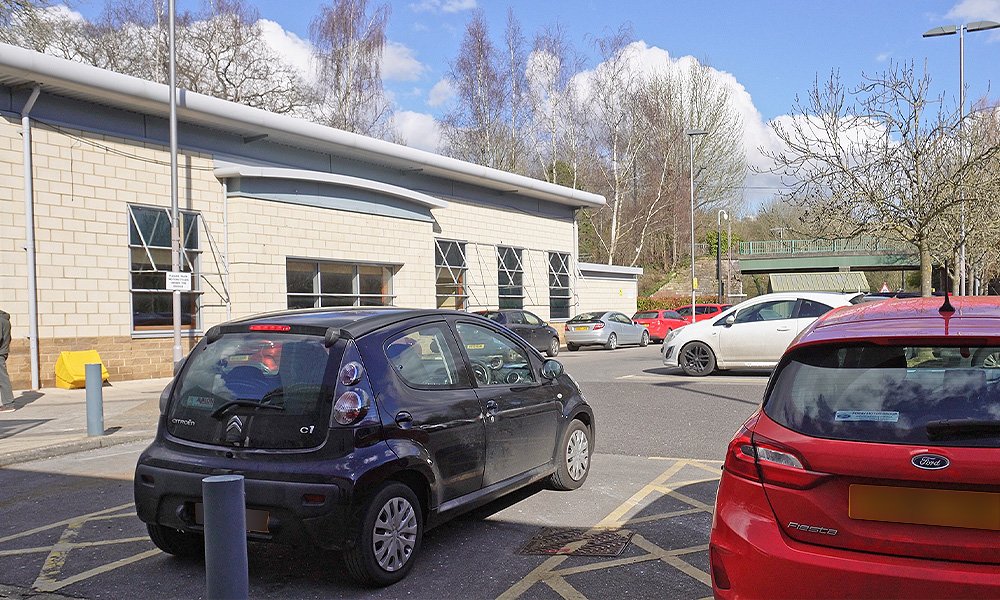
Turning around, looking toward Pen Mill, this is where the station building was. The restaurant is now closed, and the building is empty. Instead of a stunning station building, it’s now lifeless. You can see the Newton Road bridge in the background, which is still in use.
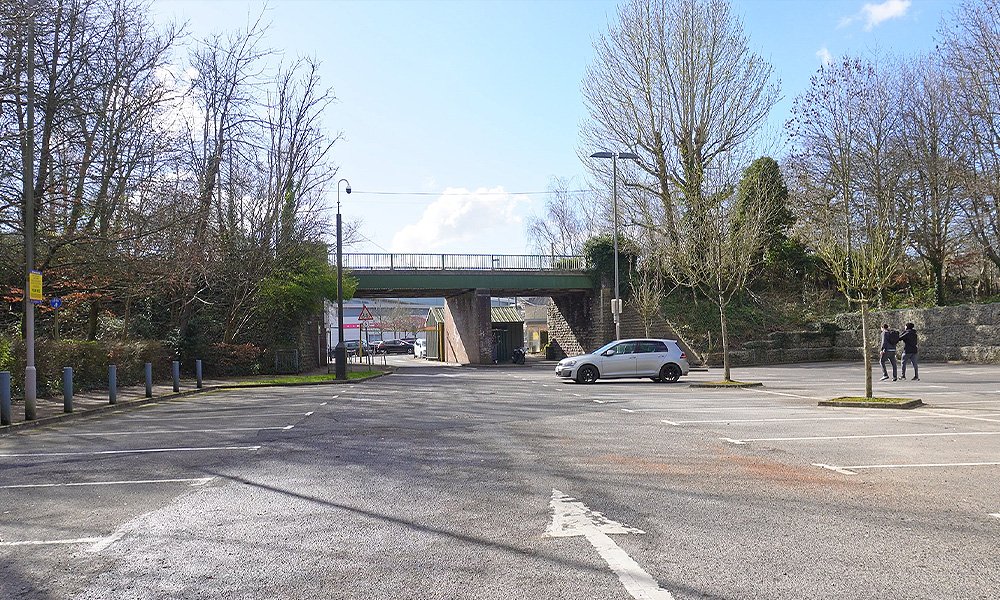
Again, this is where the line would spill, off to the left would head off to Pen Mill. This image is taken where the line to Junction would have branched off.
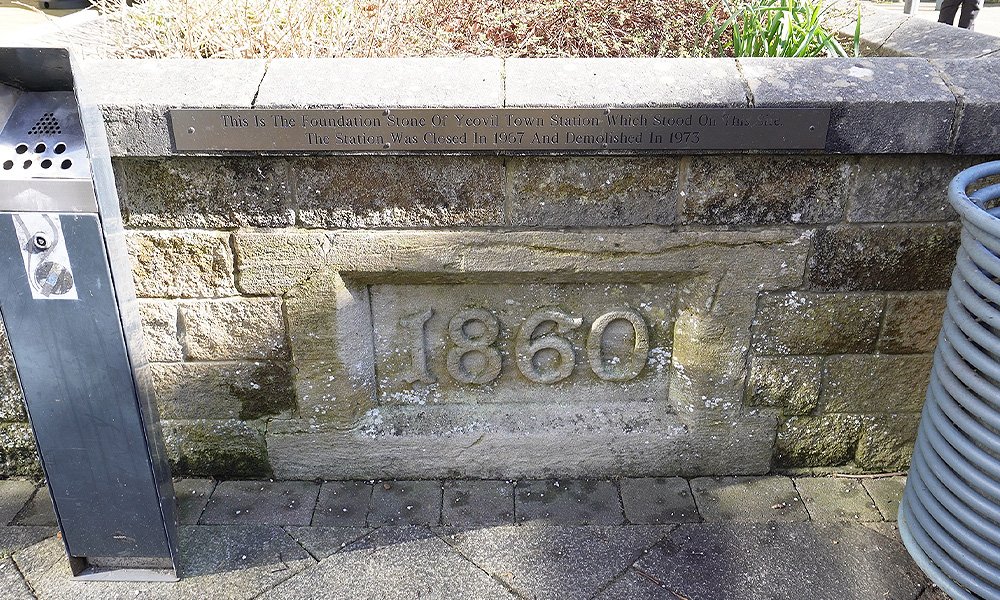
This is all that’s left to remind anyone that Yeovil Town Station ever existed. A stone dated 1860, with a plaque stating:
This is the foundation stone of the Yeovil Town Station which stood on this site. The station was closed in 1967 and demolished in 1973.
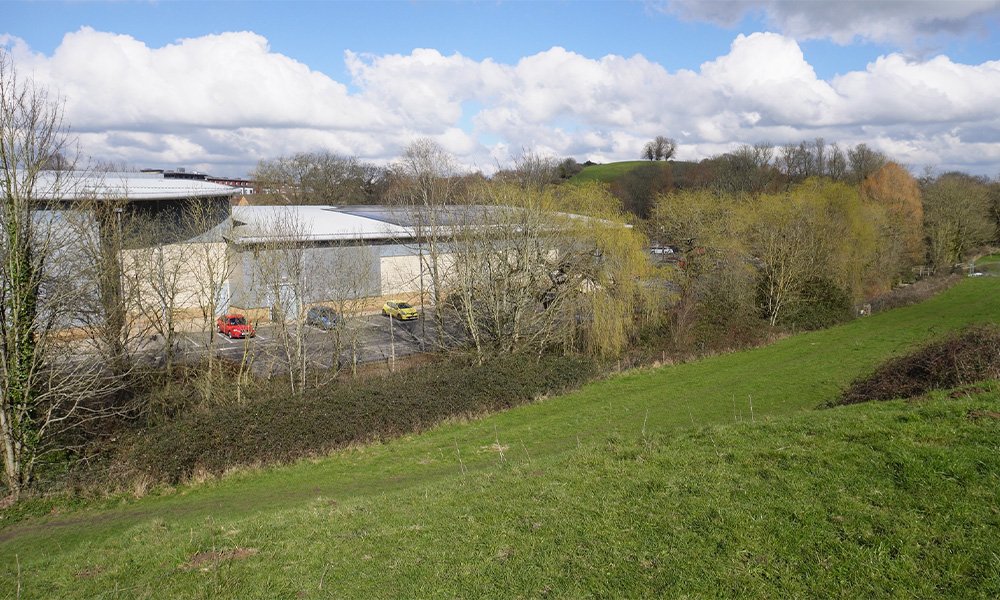
This is just up the hill, looking towards where the station was, you can see Wyndham Hill in the background. The trees obscure the car park, but this is where the engine shed used to sit on the right, with the turntable on the left.
Then and Now
Here are some now and then. As always, I’ve done the best I can, as it’s so hard to tell. With them, I’m not going to label them, you can see the differences for yourself.
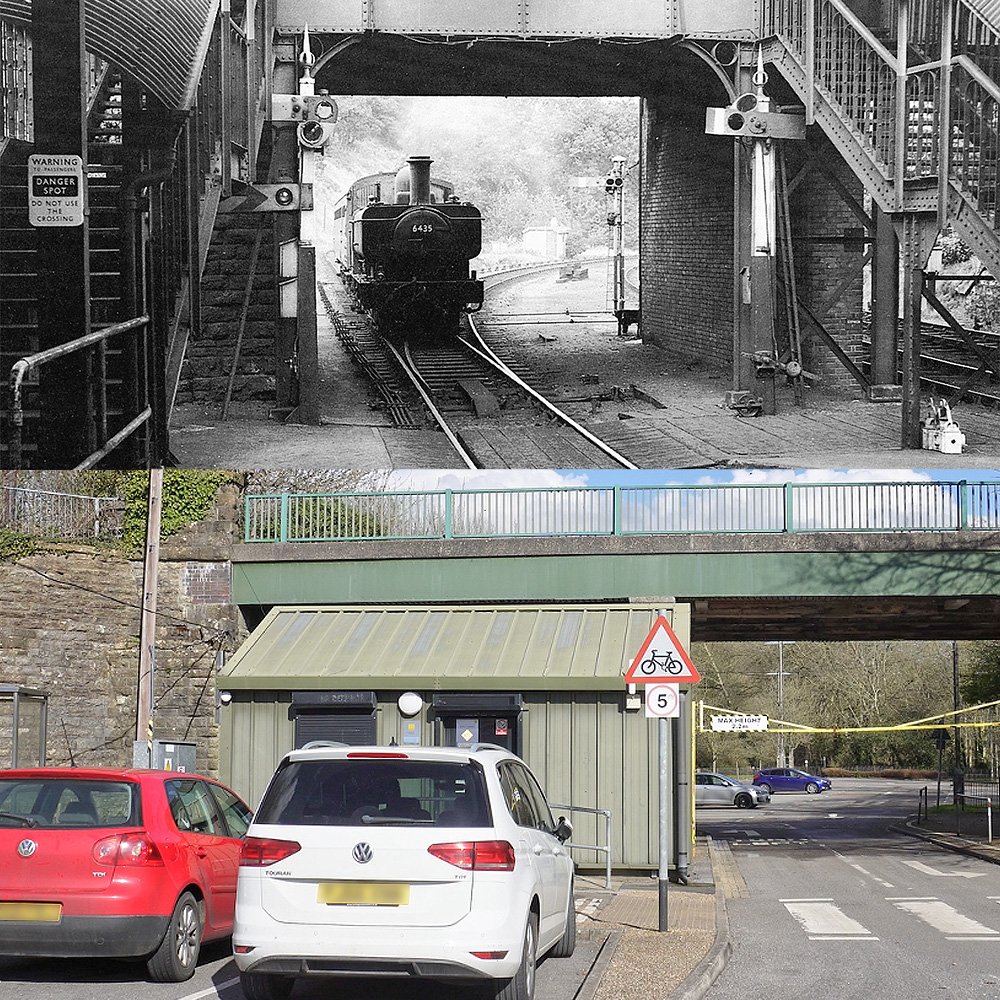
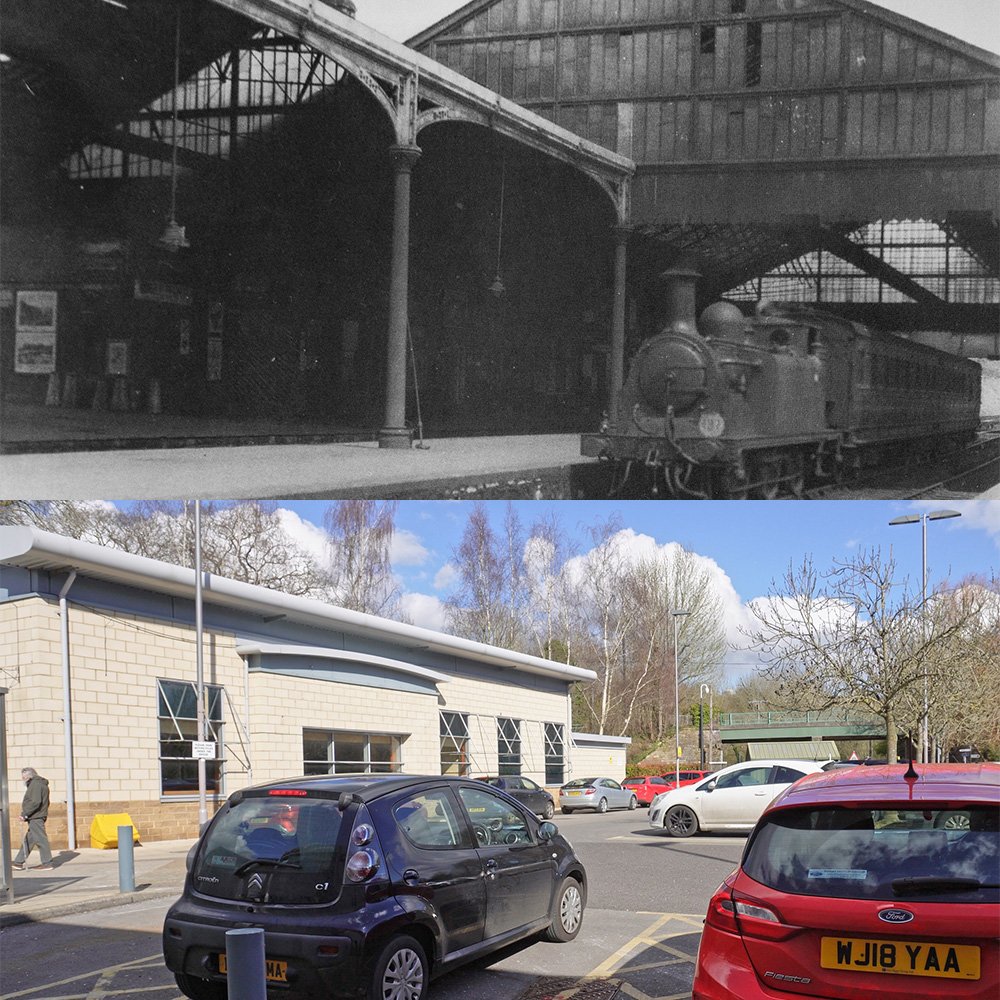
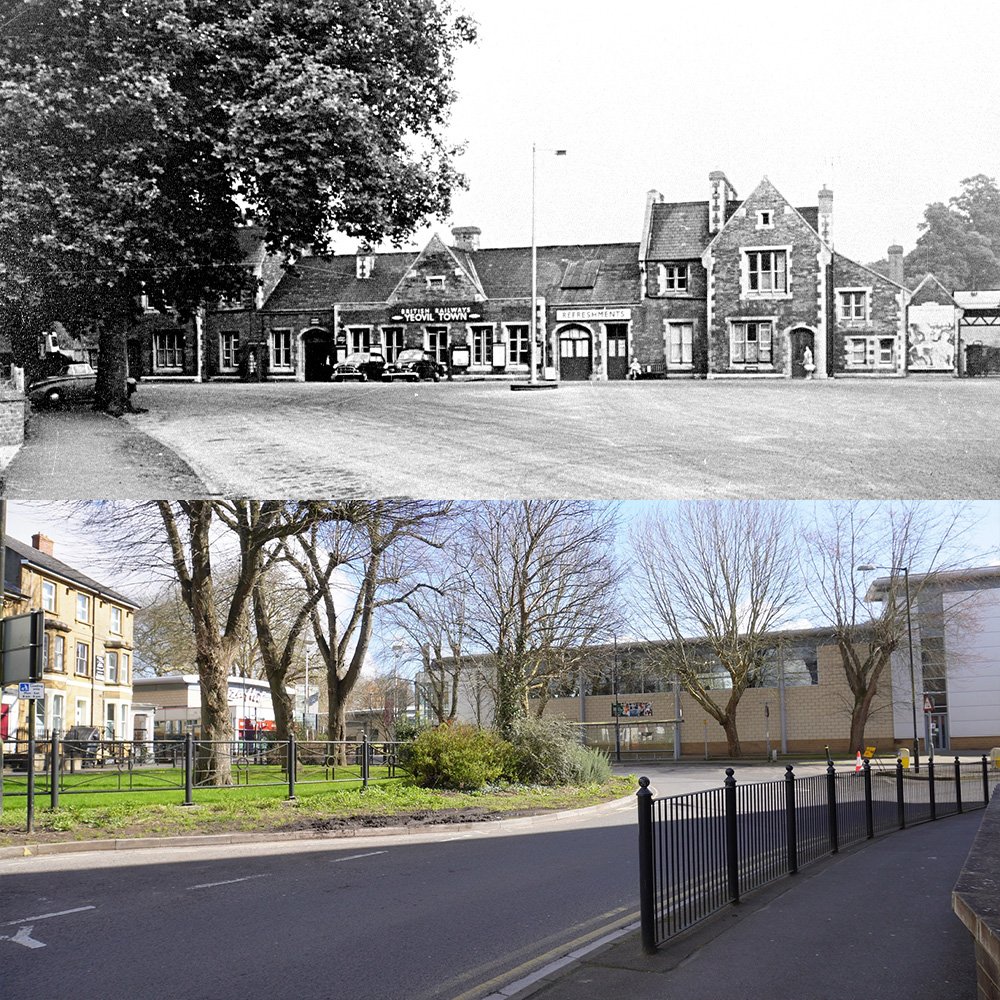
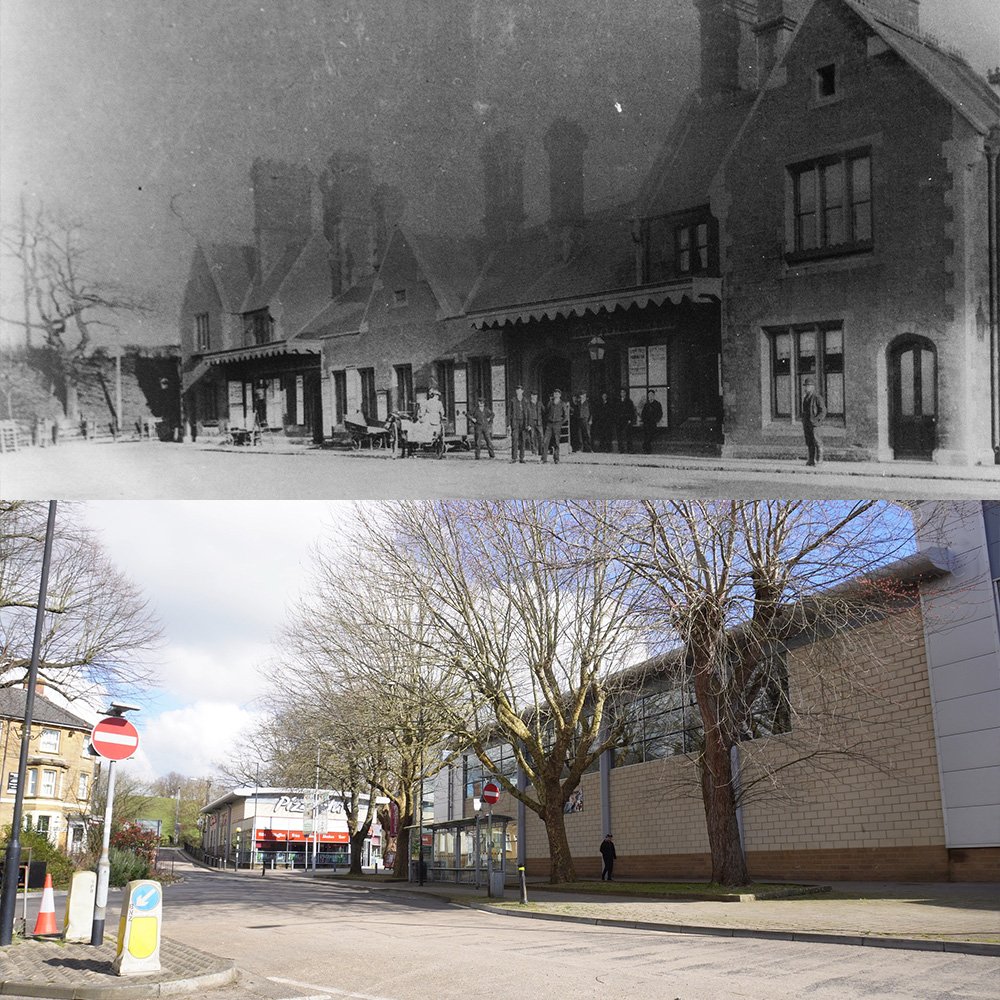
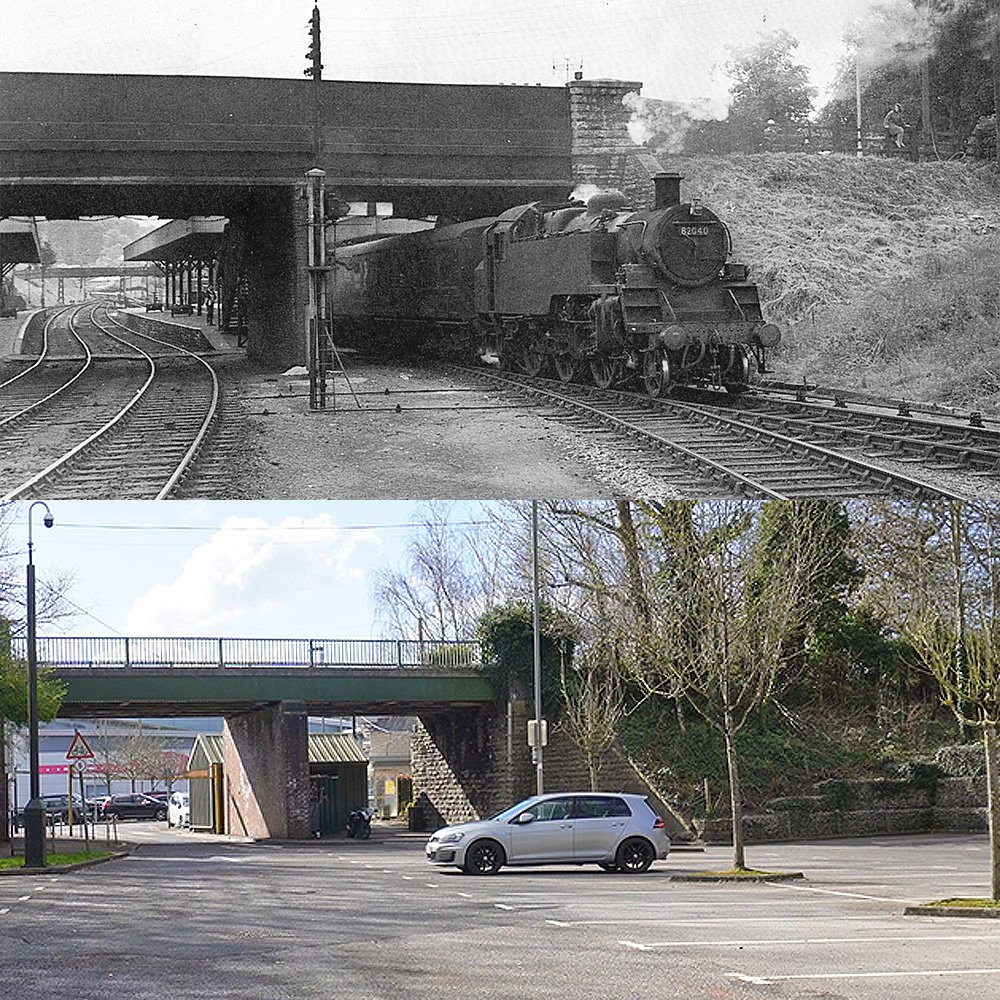
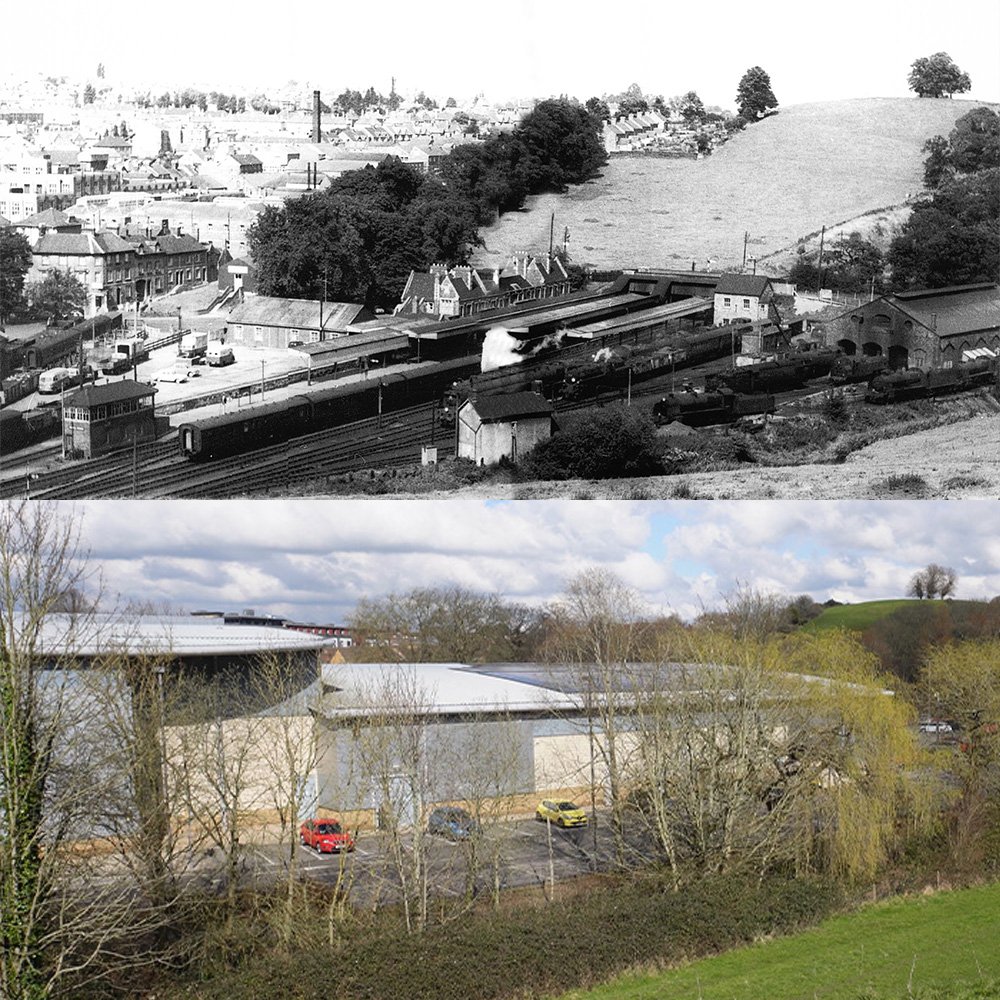
It’s so sad to see these images. The good thing is, I still have a lot more photos to share, but I will put them up another day.
Up Next
As I said, there is more to show from Yeovil Town, but that will be in a later post, so make sure you are subscribed to my newsletter.
Next on the line to Taunton was Hendford, halt and goods yard. I have covered them both before, but it will be nice to revisit them.
Thank you to Derek Philips and Middleton Press for the use of the images from their books on the Yeovil to Taunton railway.