
Technically, the start of the Yeovil to Durston branch line was Hendford, which was the first station in Yeovil. However, in later years, the company extended the line to Pen Mill, as the station also served the line to Weymouth.
I won’t go into great detail about the station’s history here, because I want to explore that more fully with the now-closed stations. Since Pen Mill is still very much alive, this will only be a brief review.
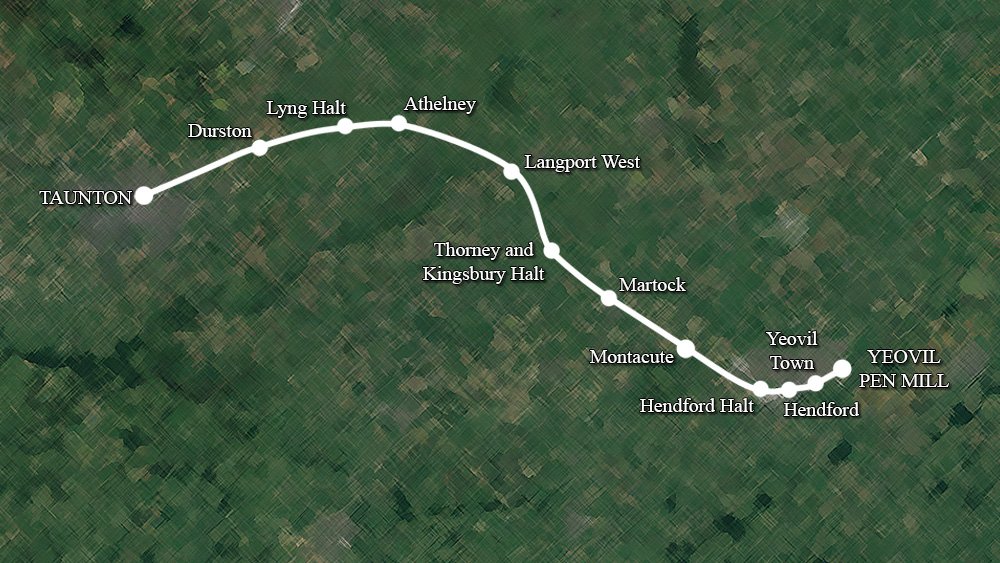
The station is to the east of the town, and still actively in use.
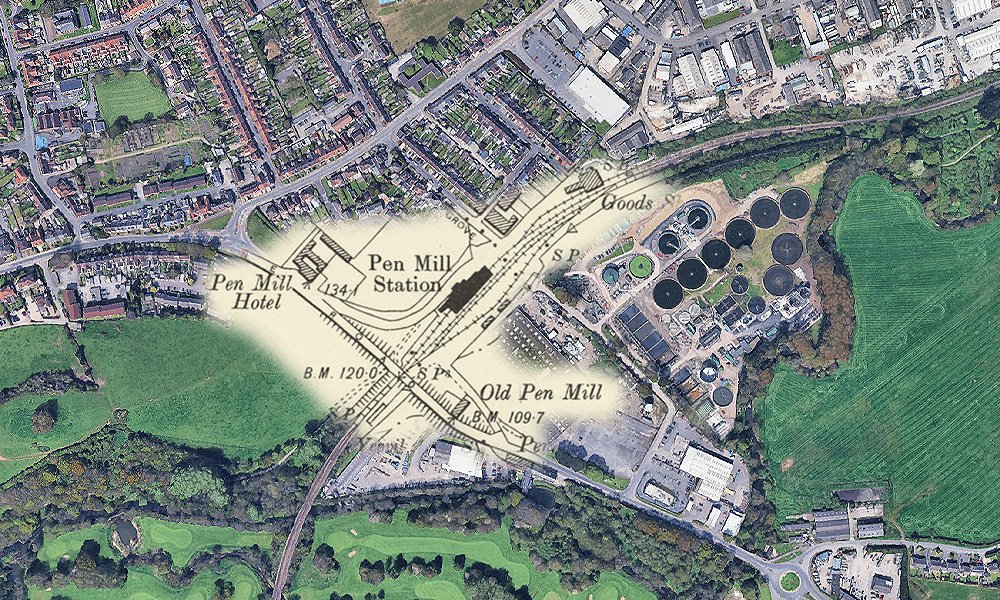
Pen Mill in the Past
Pen Mill, and Yeovil Junction, are the only two surviving stations the town today. The GWR opened the station on 1st September 1857 as part of the Wilts, Somerset and Weymouth route. The Bristol and Exeter Railway, which originally terminated at Hendford, extended its line to meet Pen Mill on 2nd February 1857.
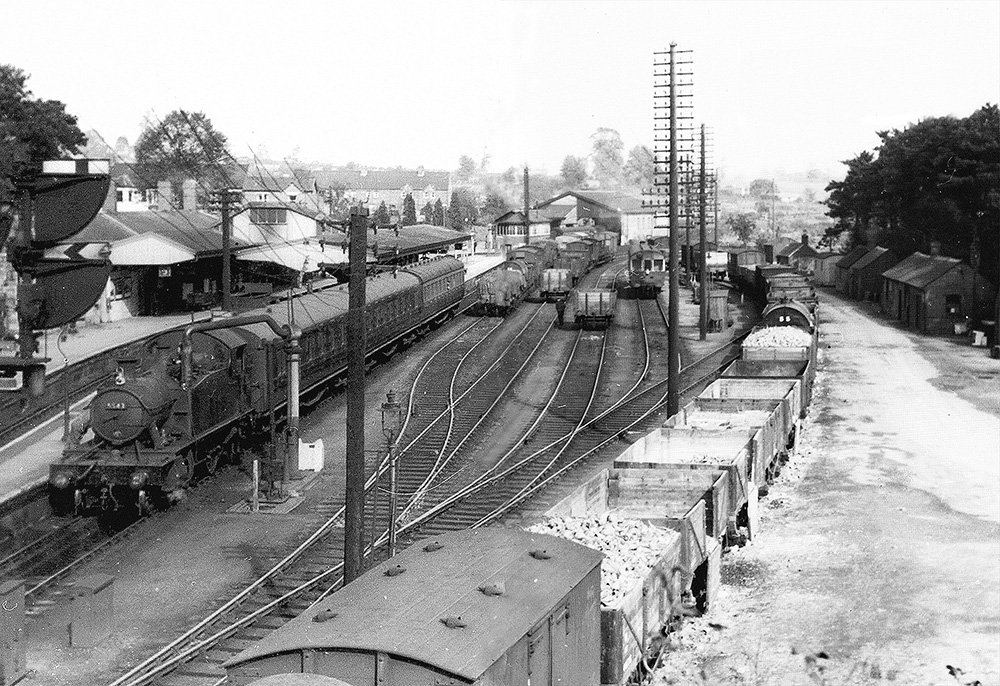
We open with a stunning overview of the station, taken from Sherborne Road, sometime in the 1950s. We see a Prairie 2-6-2T taking on water before departing for Taunton. There is also an autorun in the downs goods yard, which contains a rich variety of merchandise. Image by D. Callum.
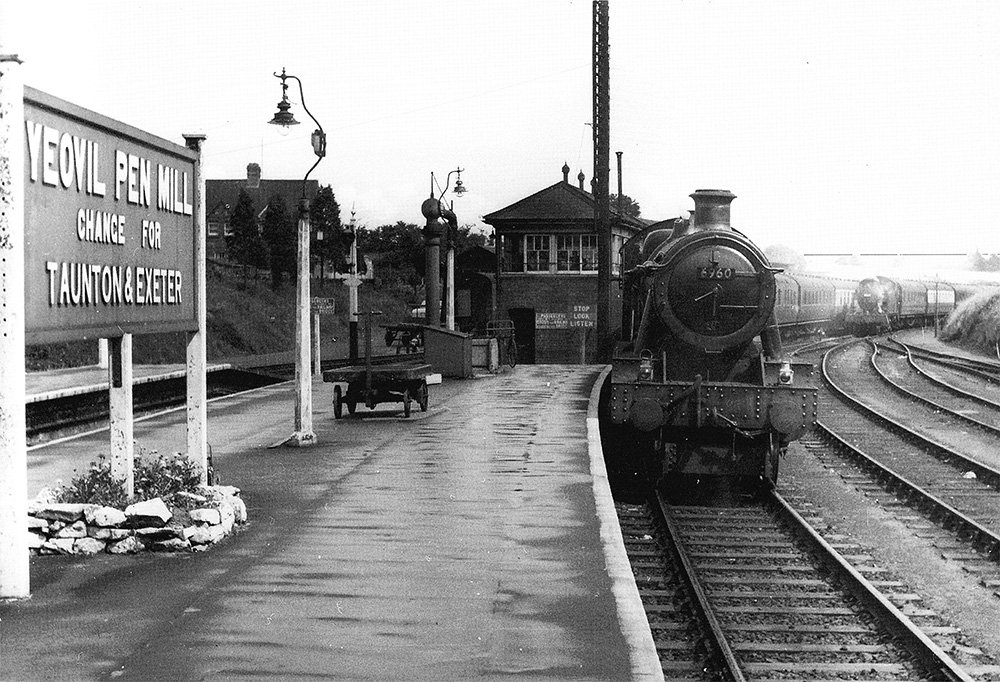
Looking east, the Weymouth train arrives behind No 6960 Raveningham Hall. Through trains to London were withdrawn in 1960. Taken Aug 158. Image by A. E. Bennett.
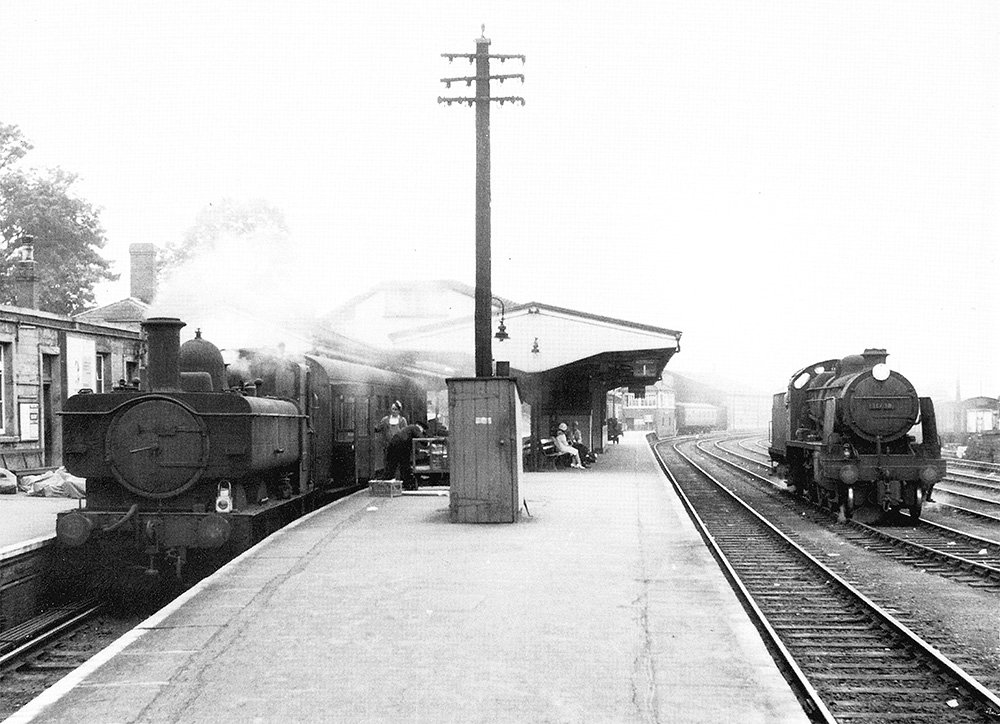
What a great view, No 6419 was working the local service to the town on the 15th Aug 1964, hauling more parcels than passengers. Class U 2-6-0 No 31798 runs through the yard. This engine has been built as a 2-6-4T in 1925 and rebuilt in 1928. Image by M. J. Messenger.
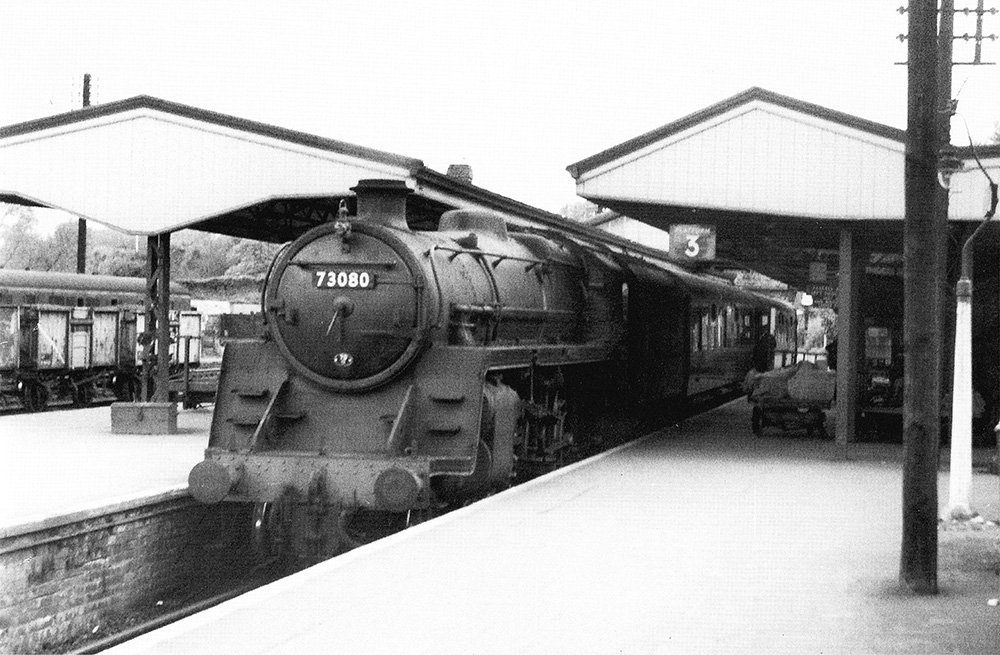
No 73080 Merlin was one of the only 19BR class 5 4-6-0s t carry names. It has arrived from Weymouth and before departing the crew will have to check both sides of the train. Taken May 1964. Image by M. J. Messenger.
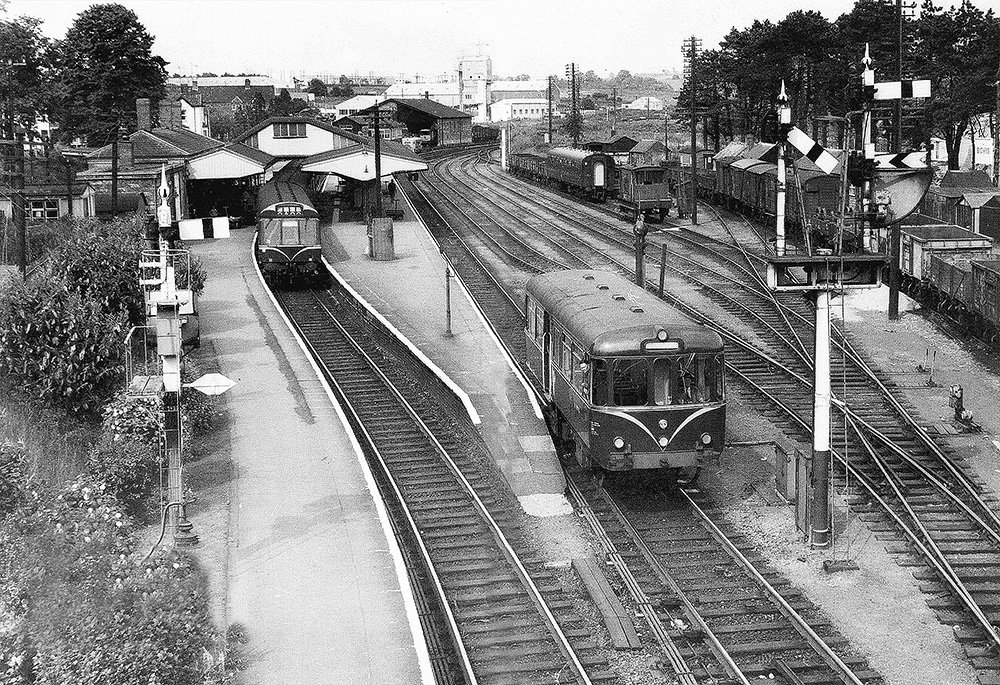
Another stunning overview of Pen Mill, again, from the Sherborne Road bridge. It’s Whit Monday 1965, the same service was operated six minutes later by a railbus. The connecting train from Weymouth waits at platforms 2 and 3. The distant arm for the South Junction would soon be removed. Image by R. Lumber.
Pen Mill Buildings
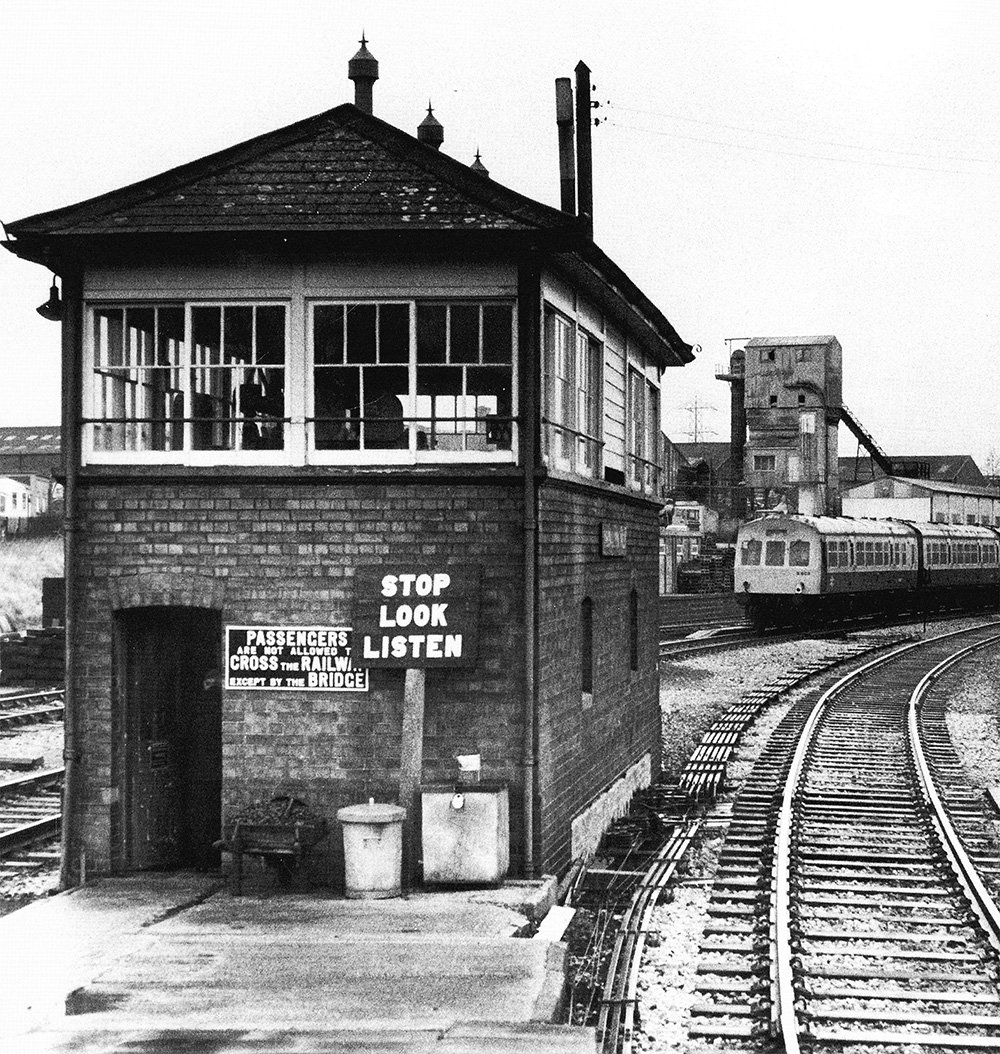
The beautiful signal box, taken in 1968, still stands proud at Pen Mill today, there’s a then and now photo further on. A train departs north, next stop Castle Cary. The intermediate stations had been closed in 1966, and the route singled in 1968. You can see a concrete works in the background; it had a sand hopper loading bay. Image by T. Heavyside.
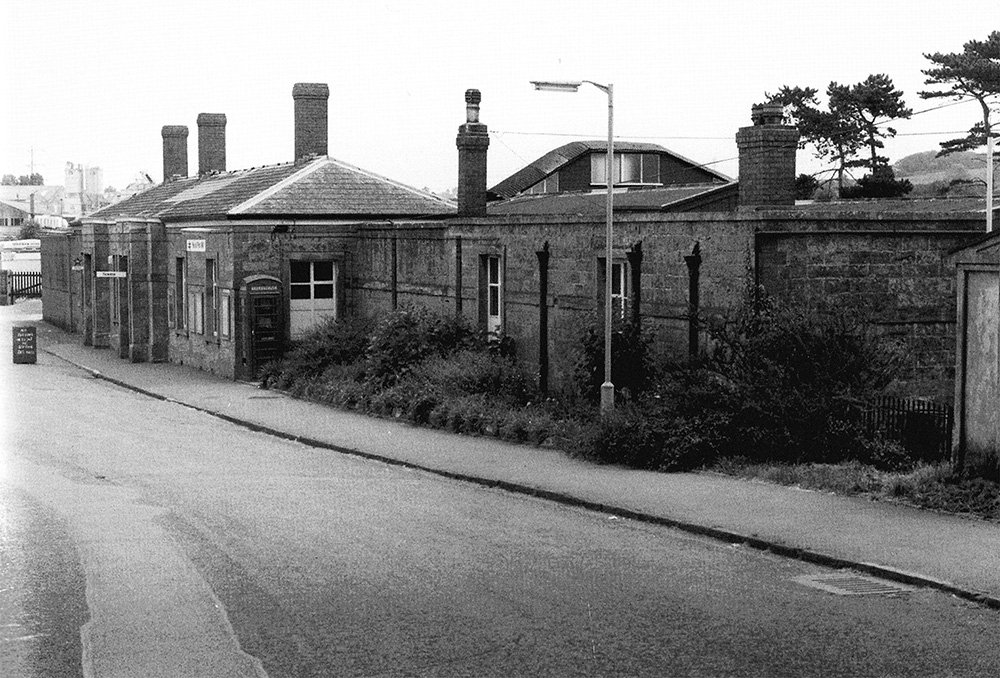
Taken in 1989, here is the outside of the station, as you approach it on Pen Mill Station Road. The main building has remained almost untouched since it’s original construction. The Red Star office later became a privately owned coffee shop. Image by V Mitchell.
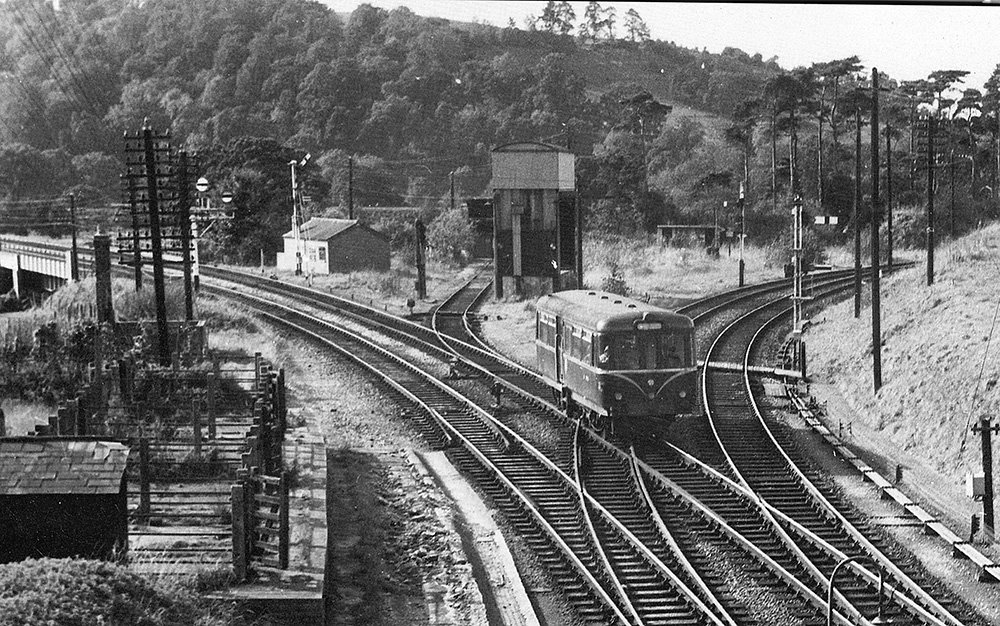
Just to the west of Pen Mill was the branch off to Weymouth (left), and the line to Yeovil Town (right). The final allocation to the shed had been two class 4575 2-6-2Ts and six class 5700 0-60PTs. The cattle dock (on the left) is shown on the earliest plans and was in use until the 2nd February 1954. The railbus is working the short-lived Junction-Pen Mill service on the 13th of October 1966 and has just passed the banner repeaters of South Junction. Image by H. C. Casserley.
Pen Mill Today
I live in Yeovil now, and the station is a short walk from my house. I did take a lot of photos, but I won’t share them all here at the moment.
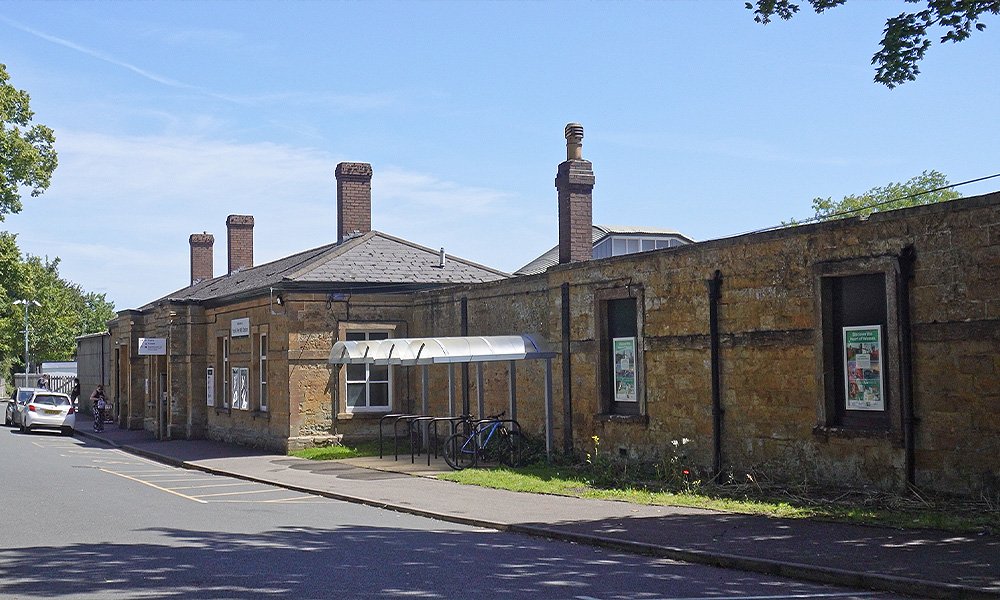
As you can see, the main station building is still in very good condition and still an impressive welcoming sight.
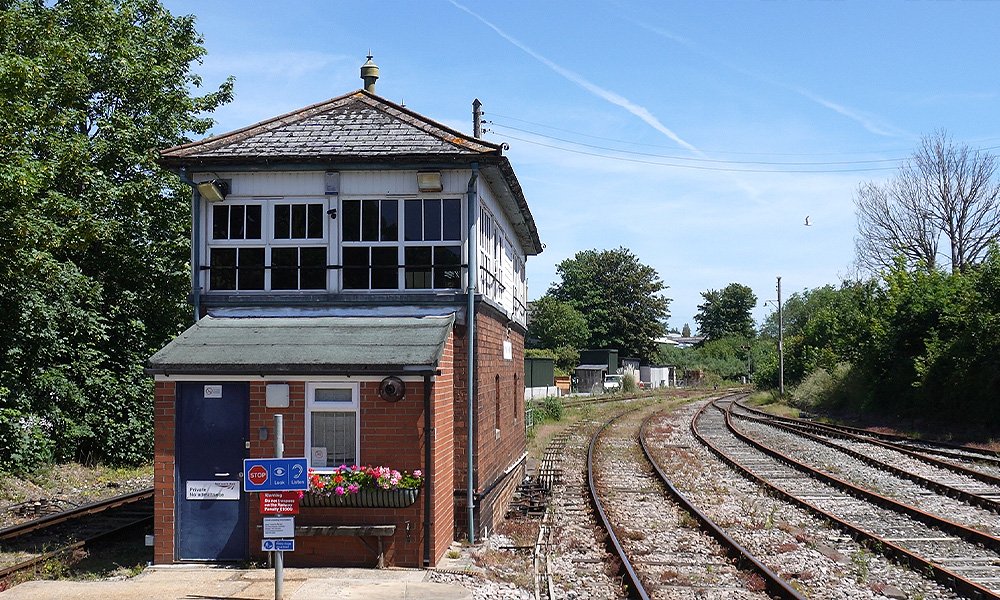
The signal box still stands watch over the trains as they come and go. It’s had minor alterations, but the structure hasn’t changed.
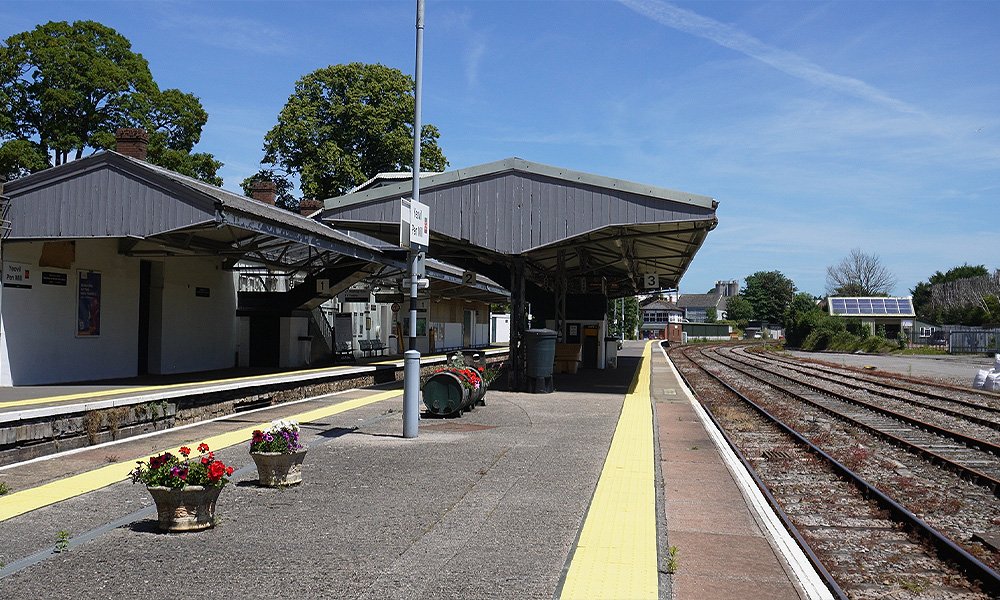
It was a beautifully sunny day when I went there. The canopy’s are still there, although in need of a little tender loving care these days. Only the two lines on left are in use now, the rest have to watch the trains come and go, but without their use.
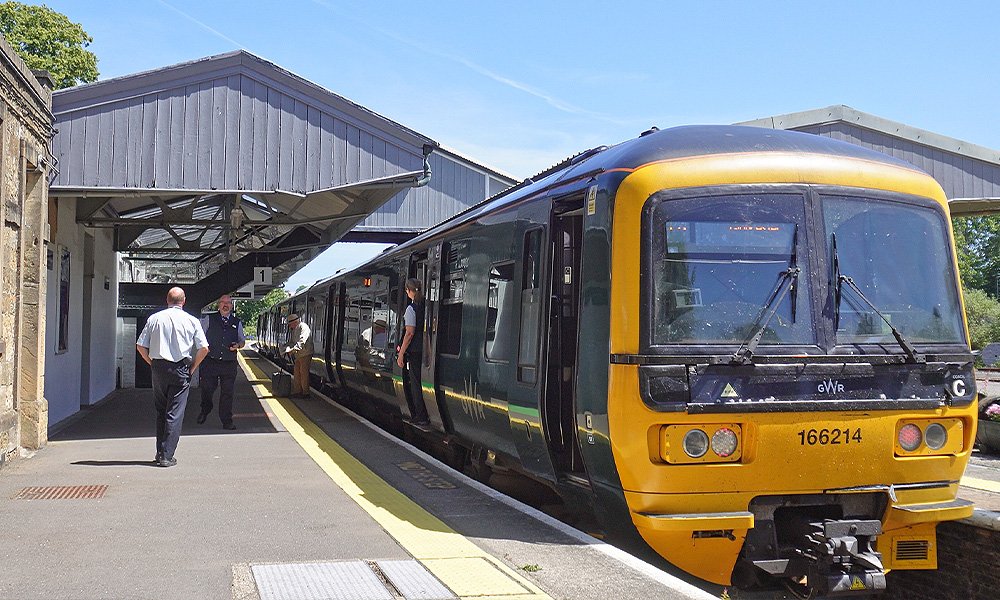
Pen Mill is still in good use today, annoyingly, I didn’t see where this train was headed, but I can tell you there were a lot of people waiting for it.
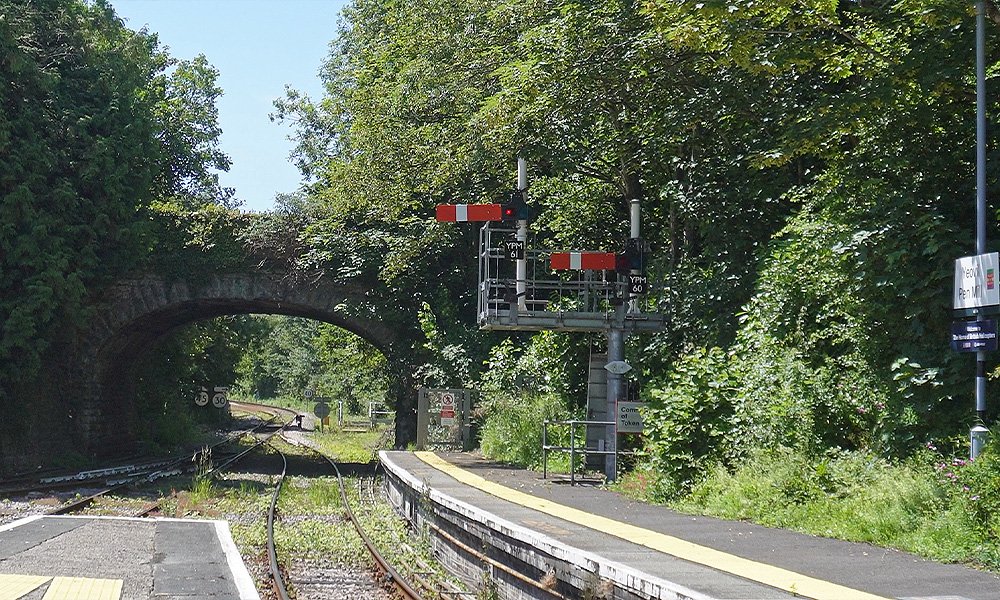
Looing west, this is the Sherborne Road bridge, and signals. The original nameboard, which said ‘Yeovil Pen Mill – change for Taunton & Exeter’ is no longer there.
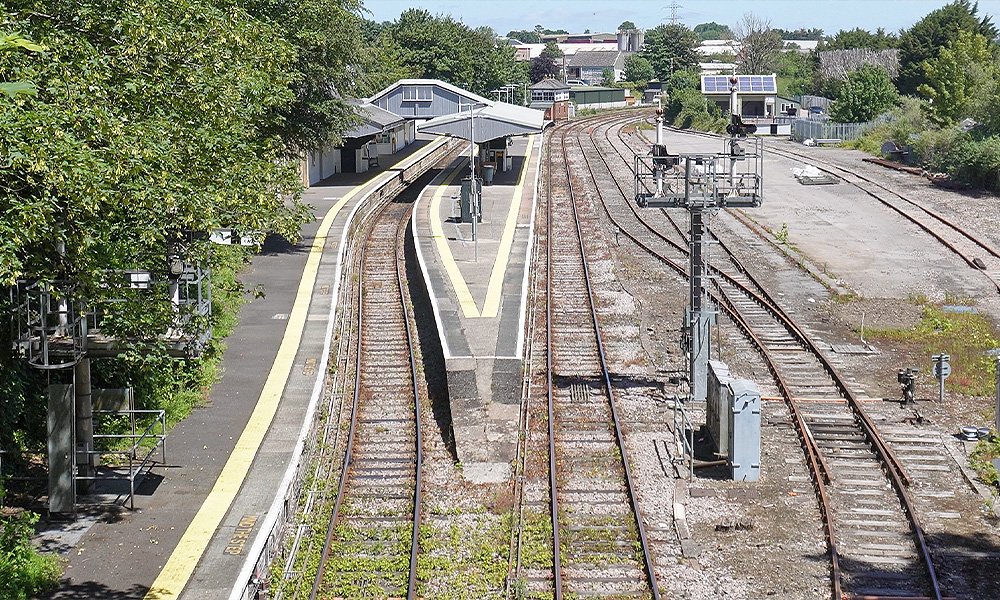
Standing on the Sherborne Road bridge, this is an over view of the station today. Most of the station is still in the same, just some updates to the technology.
Have a Look Around
Something new I wanted to try with these blog posts is a 360 image of the station site today.
Maybe you cannot get down to Yeovil Pen Mill, but you can use your mouse to move around the image below and see what it looks like today.
I hope that works for you and you like it. Dad would have loved all this new technology while reliving the past.
Then and Now
It’s sometimes very difficult to make the Then & Now photos, but at Pen Mill, since the station is still alive and well, it was nice and easy to make the comparisons.
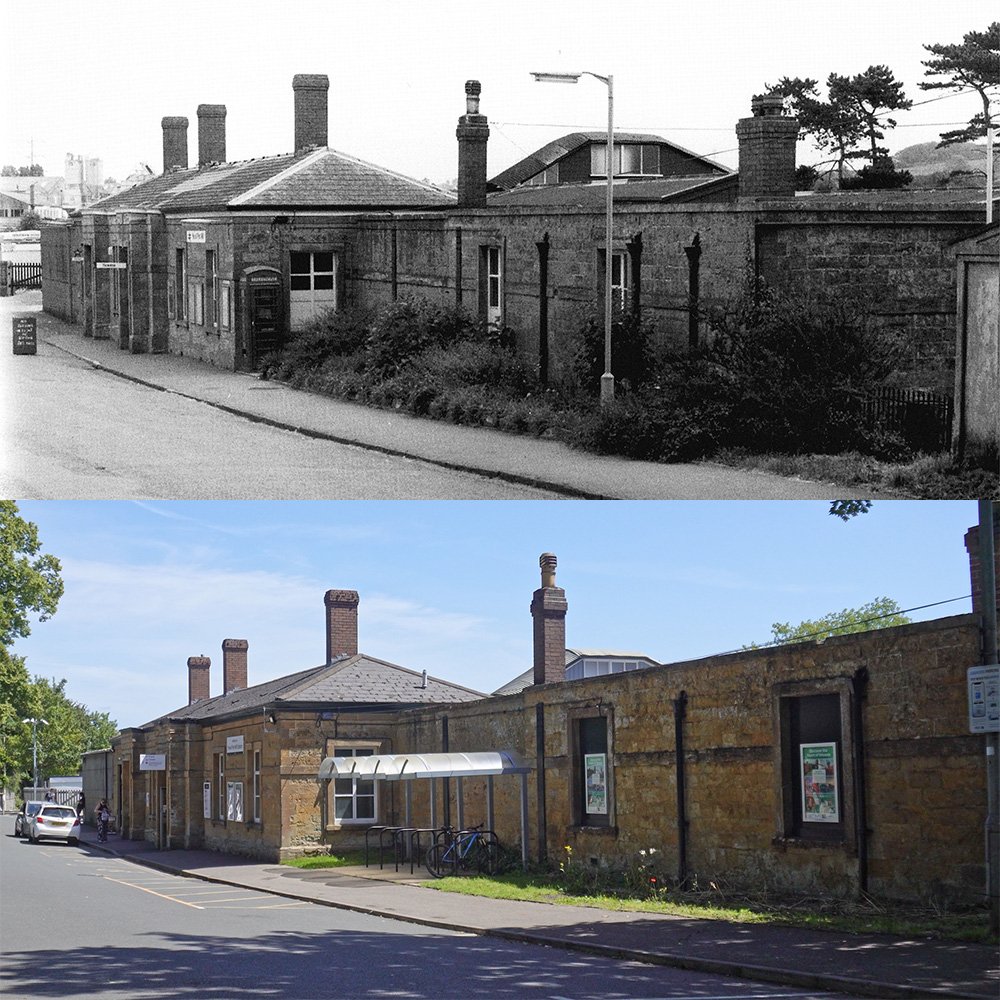
The approach to the station hasn’t changed at all, well, the trees are all a little taller. There is now a cover bike park, but the rest of the main build looks just as good.
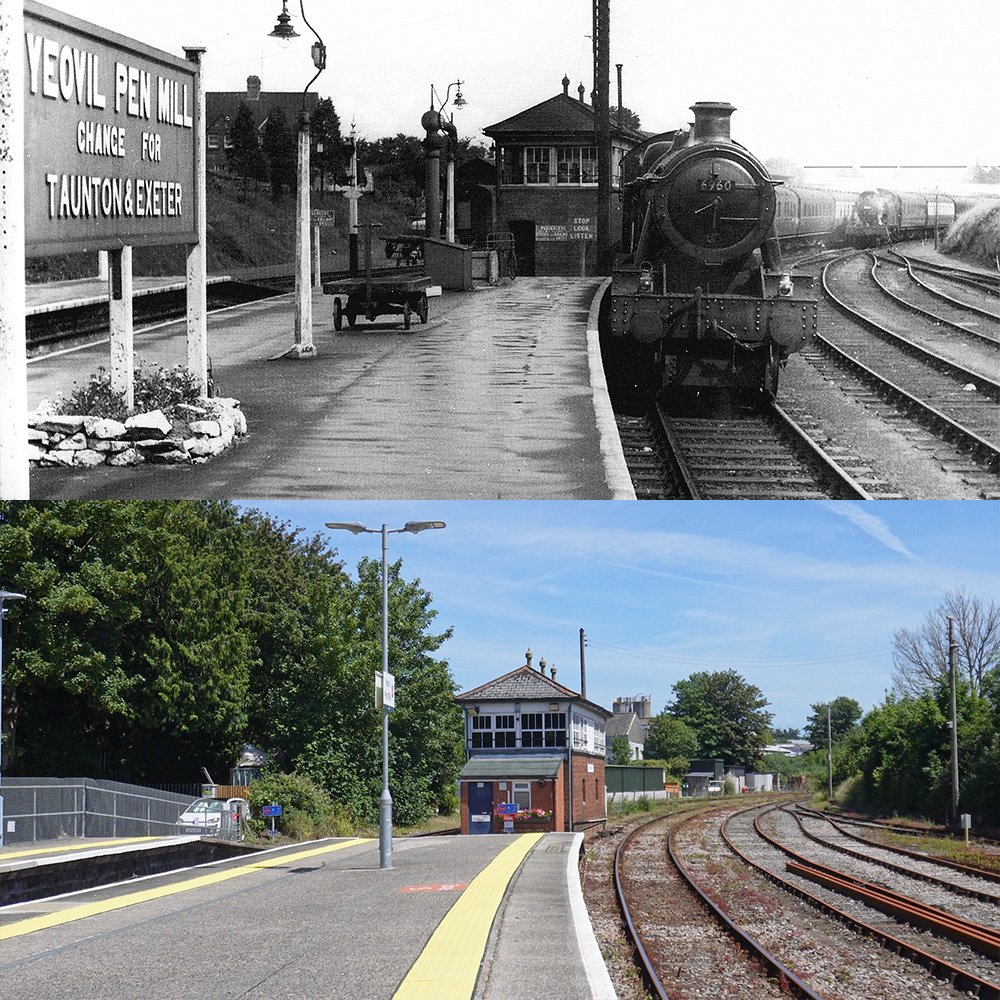
Yes, the steam is missing, but the station still has the sense of wonder as you stand on the platform. Pity the nameboard is missing, as it was very impressive, there was no chance of the passengers missing it.
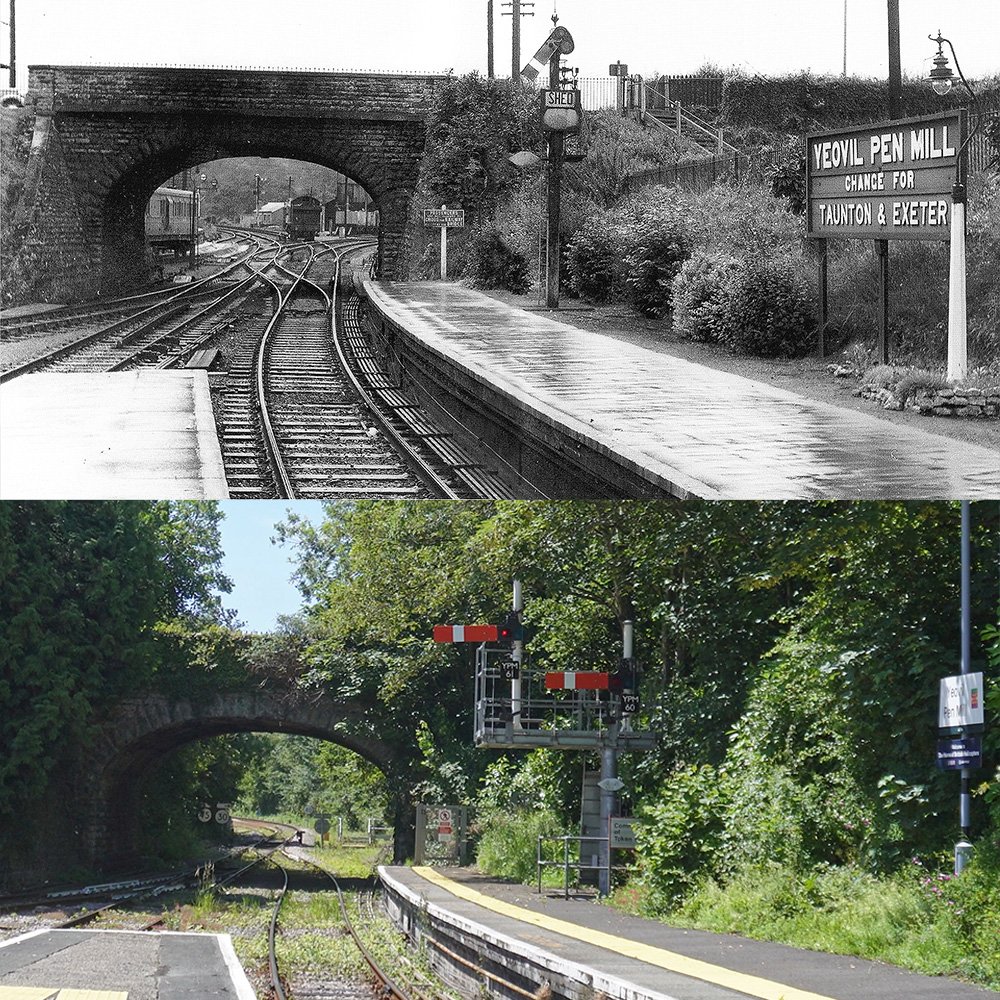
This time, looking west, just past the Sherborne Road bridge, you can see the line branch off towards Weymouth. The signal has been upgraded, but sadly, the nameboard has been reduced.
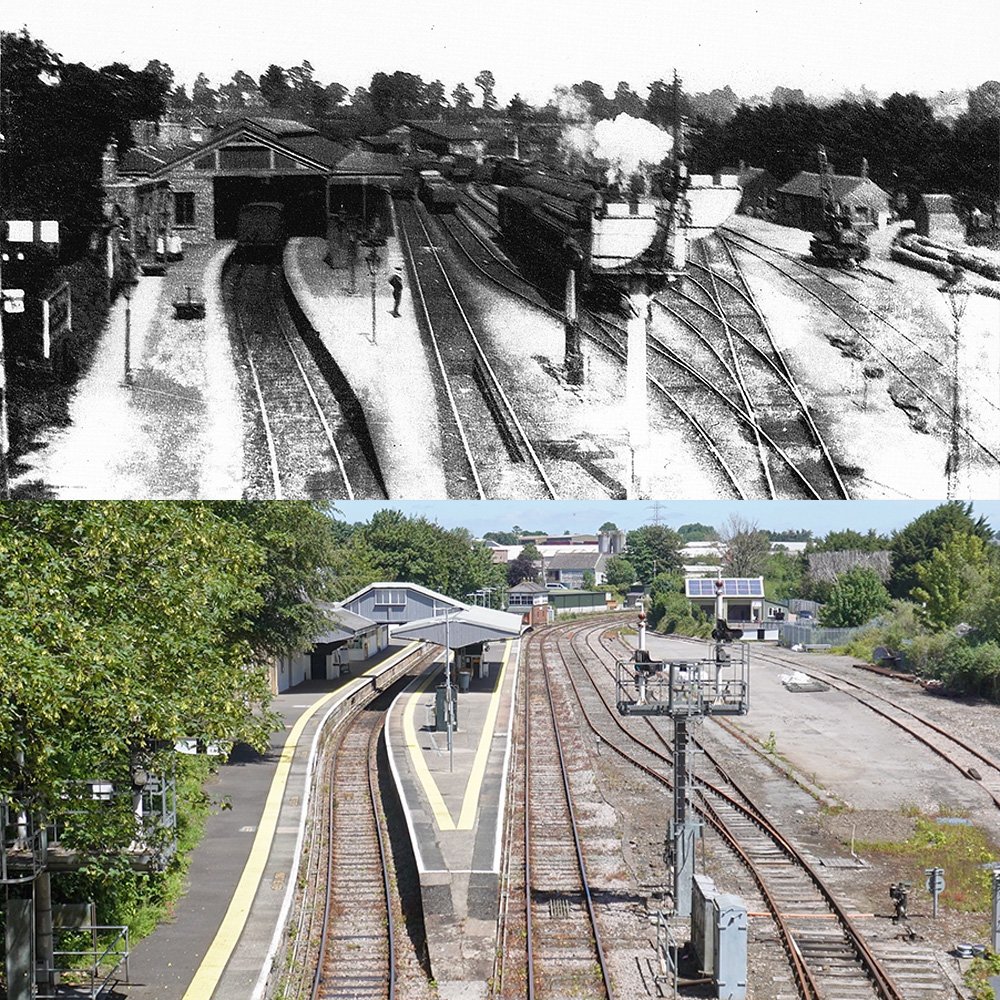
The ‘then’ photo was taken in 1933, and features the roof over the up line up, the roof was removed in 1934. Over to the right, a ‘mobile’ crane on short length of track near a stack of round timber. Today, there have been updates to the signals, but sadly, only two of the tracks are in use now.
Next On the Line
Well, we’ve started the journey from Yeovil to Taunton. As I said, Pen Mill wasn’t the first station on the line, but we will get to Hendford very soon. As we leave Pen Mill, the next station was Yeovil Town, which was a very impressive dual station, but sadly, it’s no longer there. Make sure you are subscribed to see when the post goes up.
Thank you to Middleton Press for the use of the images from their books. They have an amazing series of railway books, a number of them about Yeovil.

This Post Has 4 Comments
I look forward to reading these posts, thank you for taking the trouble to publish them. It’s at times like these that I miss being able to look at my dad’s copy of the Ian Allen UK pre-grouping railway routes book!
Pingback: Yeovil's Hidden Railway Triangle between Town, Pen Mill and Junction - Aarchive Films
Pingback: Yeovil Town Station, Somerset - A Forgotten Treasure - Aarchive Films
Pingback: Montacute Station, Somerset - On the Yeovil to Taunton Branch - Aarchive Films