
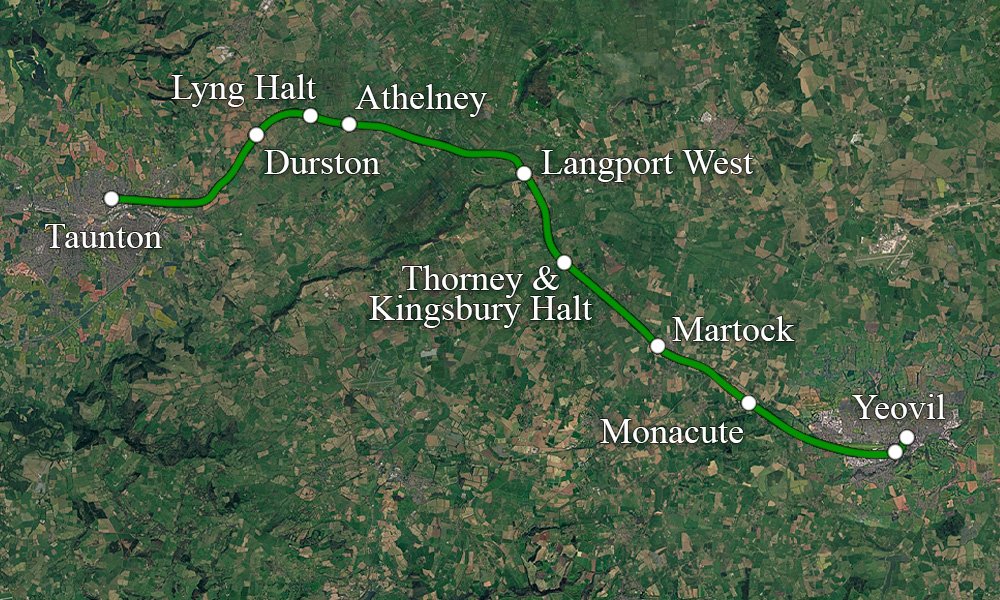
As the Yeovil to Taunton train left Pen Mill, through Yeovil Town and the stations at Hendford, it would carry on towards Taunton. The first stop on the outskirts of Yeovil was Montacute Station.
Montacute is probably best known for the stately home, which was build by Sir Edward Phelips in 1601. The old trackbed is where the A3088 is now, that runs between Yeovil and the A303.
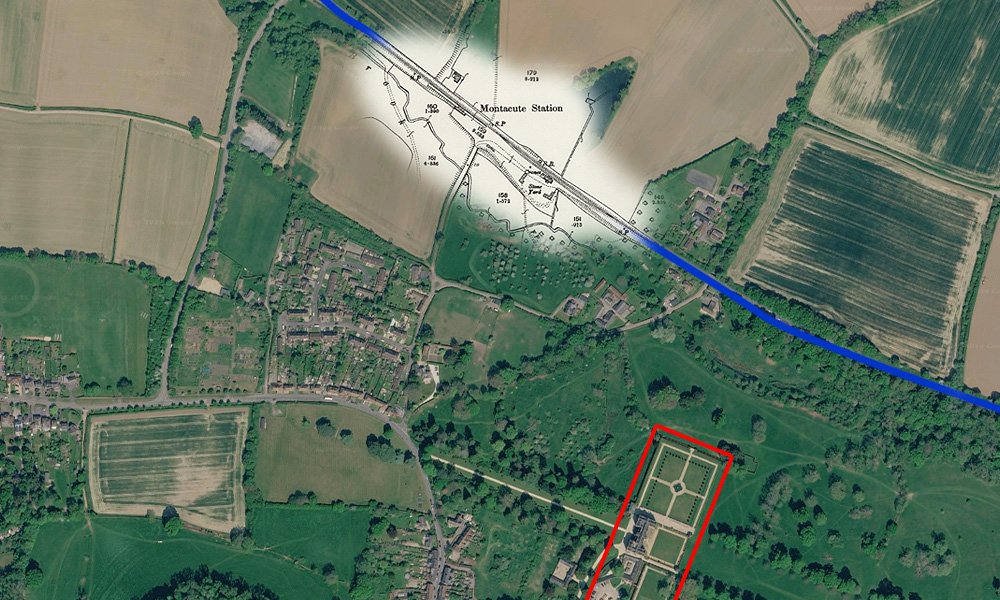
Highlighted in blue is the trackbed/A3088, and in red is Montacute House. Station Lane, that ran from the station to the village is now a dusty track and only the rusty crossing gates remain, as we will see later on.
Photos of Montacute
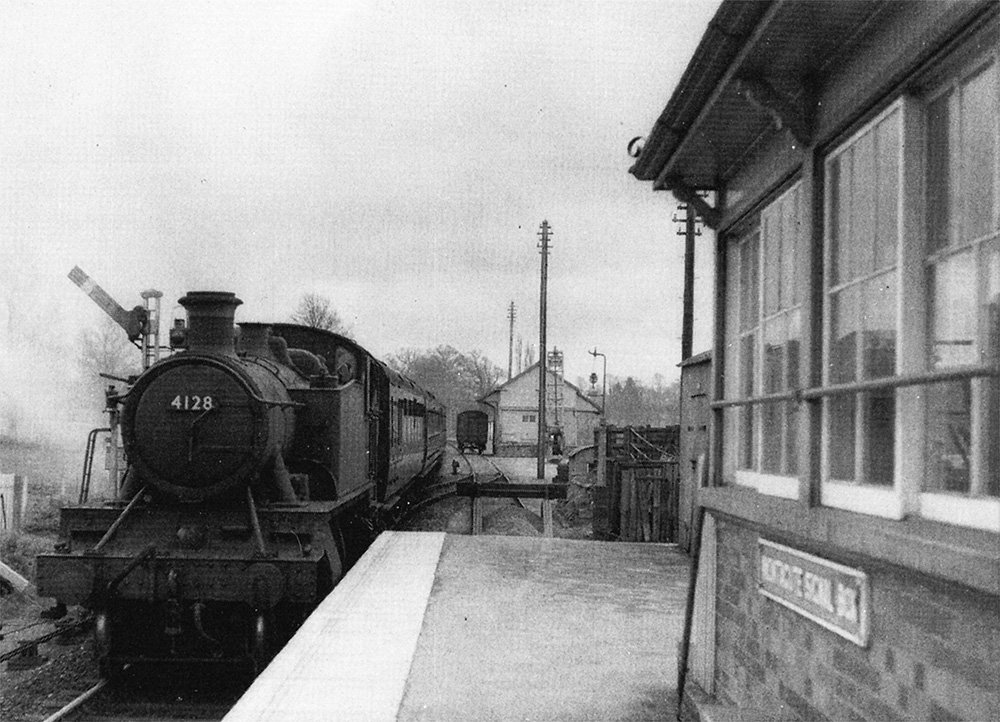
A class 5100 2-6-2T no. 4128 on the 11th April 1962, while working the 11:21am from Yeovil to Taunton. They withdrew the goods facilities on 30th September 1963 and soon lifted the siding. The upper-quadrant signal replaced a bomb-damaged GWR one in December 1950, but staff had switched out the box, except during shunting, since about 1930. Image by R. A. Lumber.
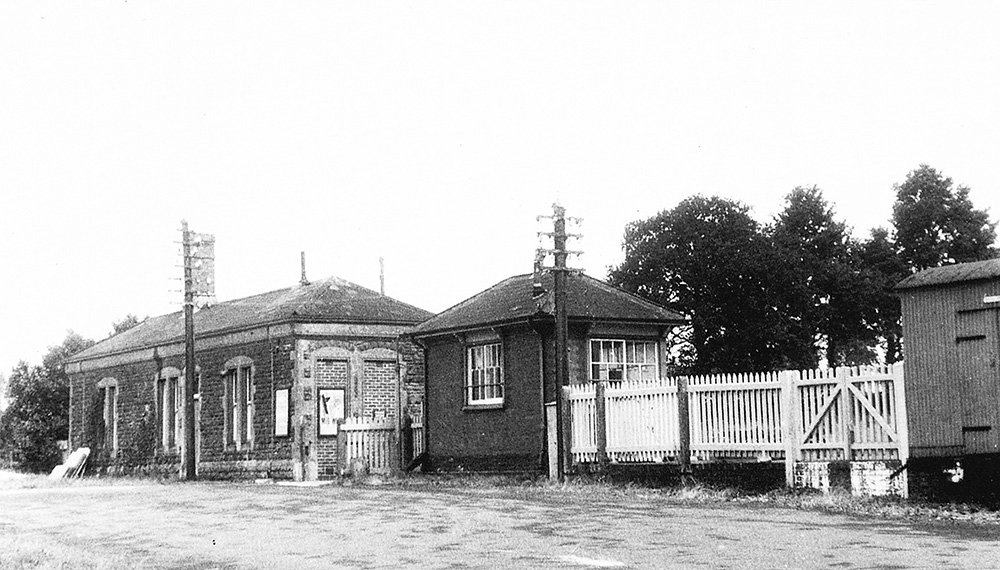
This was the passengers perspective as you approached the station from Station Road, taken on the 12th July 1962. Only a few saw this side, as the residents of the village only totalled about 800 at the time. The station was almost equidistant between Yeovil and the A303, with the now road venturing two miles each way from this point. Image by H. C. Casserley.
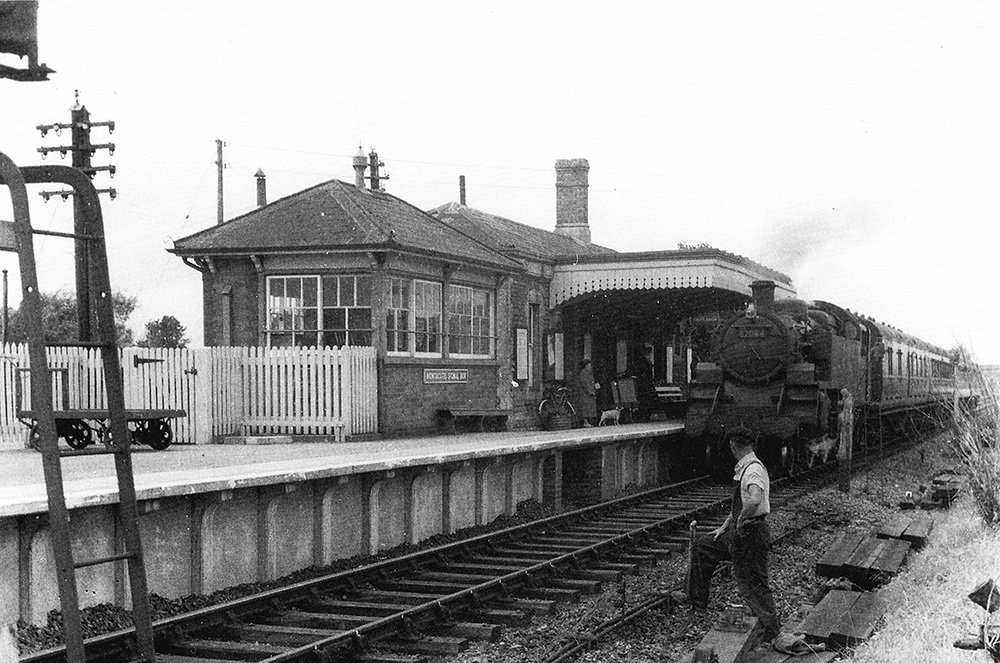
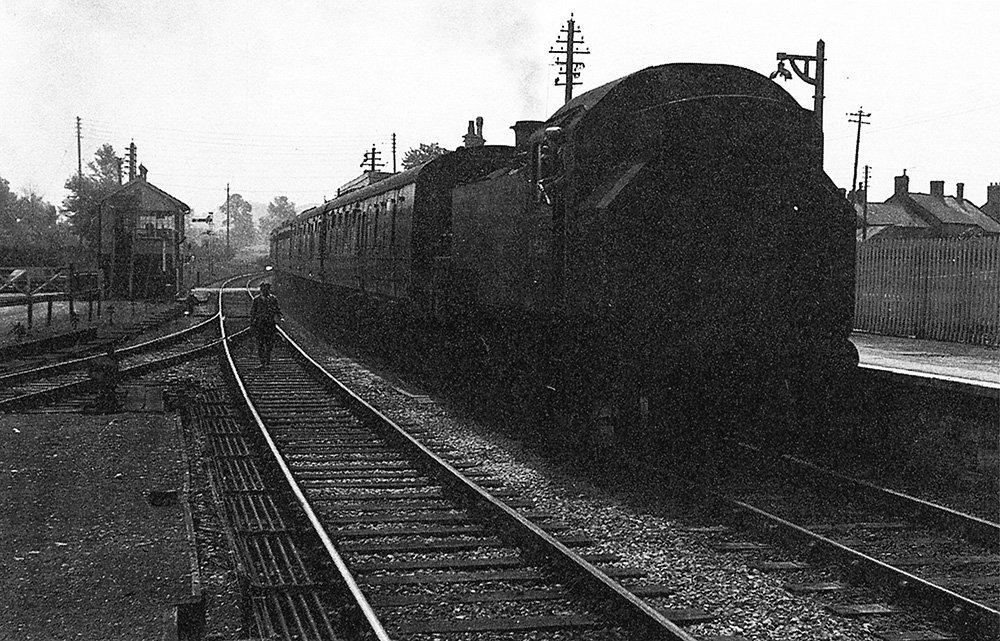
No 82044 was one of the BR class 3 2-6-2Ts introduced to the routh from Yeovil to Taunton in its final months. The 1906 signal box closed on the 8th March 1964, just before this photograph was taken. Note that re-sleepering was waking place was taking place weeks before closure. This was not uncommon in those days of drastic cuts. Image by Lens of Sutton.
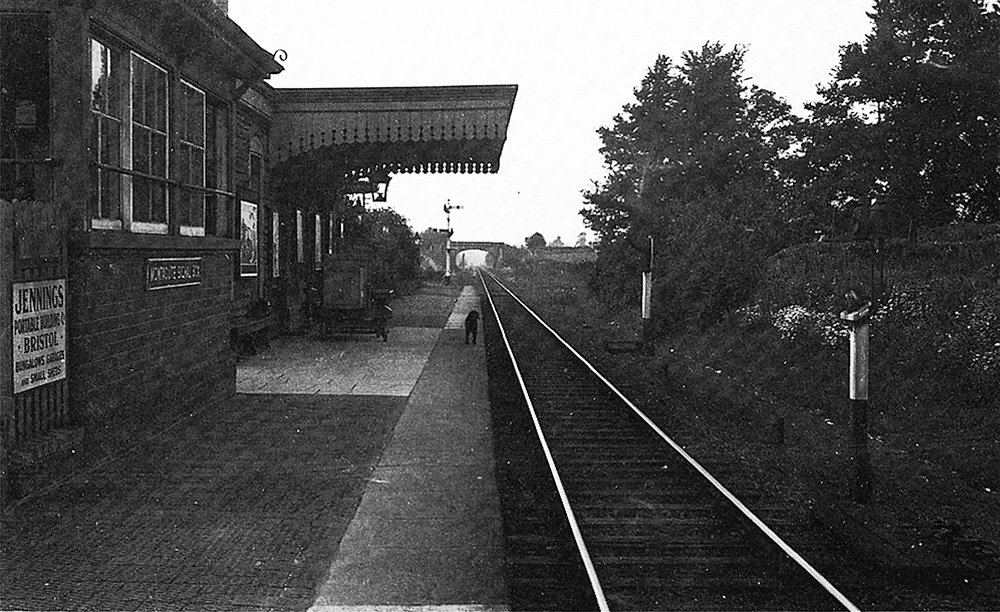
No one waiting for the train, well, apart from that little dog on the platform. This was Montacute in the GWR days. Notice the unusual signal in the background with the starting and inner home signals sharing the same post. In later years, it had gone, as was the advertisements for Jennings, Portable Buildings, Bristol. The two token catchers to the right of the track were there to the end, but fell in use in later years. Image by Lens of Sutton.
Near the Last Days
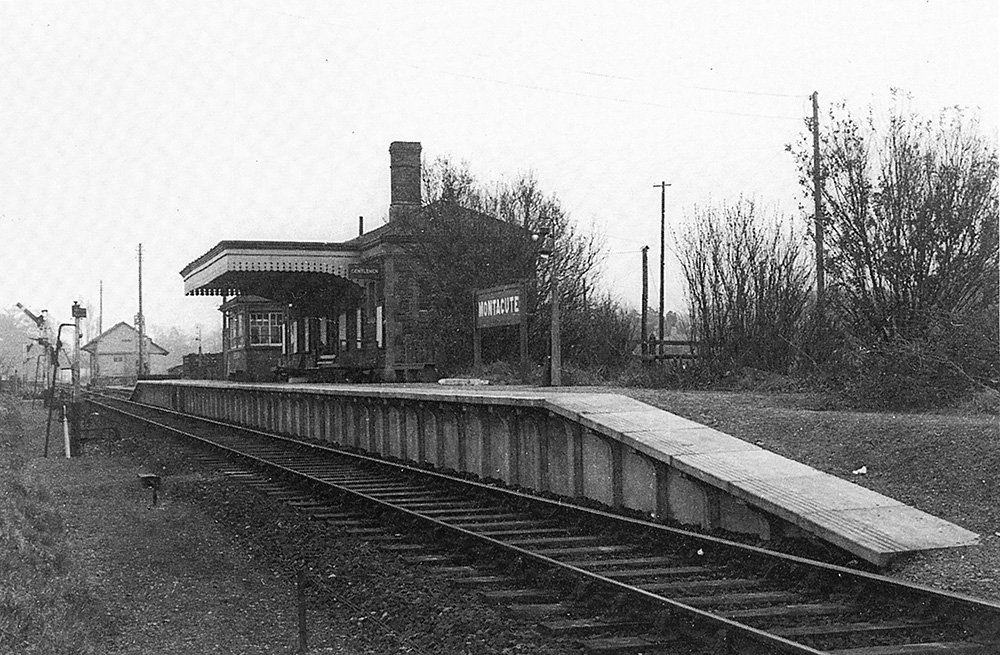
Stood looking towards the station, on the same side as the Station Masters House, this was Montacute on the 17th March 1962. It had attractive buildings and canopy, and you can make out the goods yard in the distance. It was considered the best looking station on the line from Yeovil to Taunton. Image by C. L. Caddy.
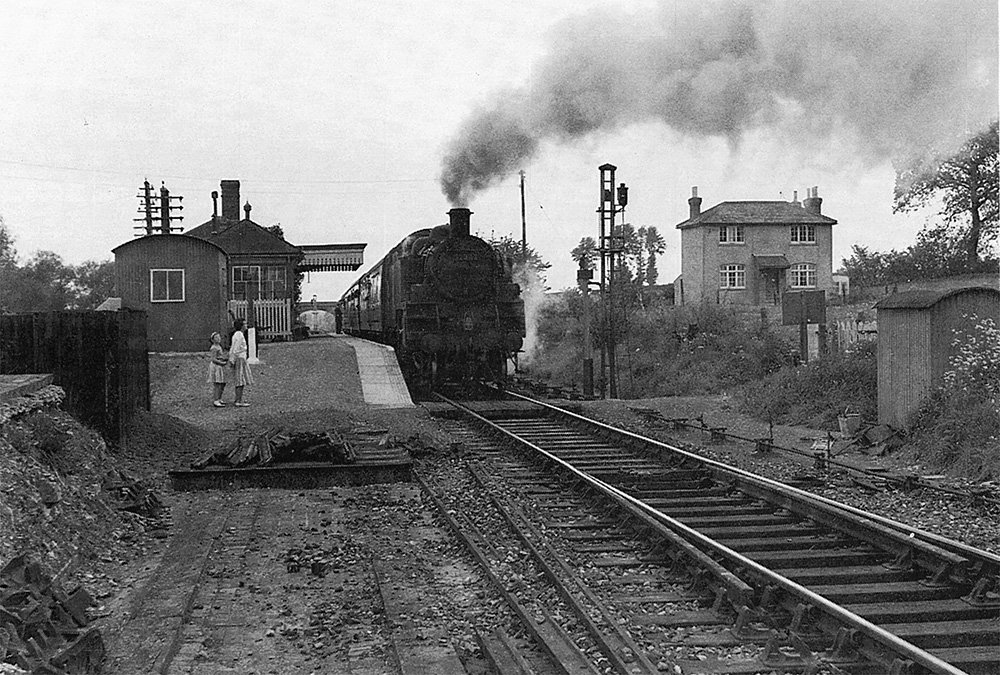
A stunning photo by R. Lumber, taken in May 1964. A class 3MT 2-6-2T 82042 in trouble at Montacute on Whit Monday. It is the 9:45am from Taunton to Yeovil. The engine was there for a 10 minute blow up before getting enough stream to continue the journey. You can see that they have removed the signals and sidings in readiness for the closure. Image by R. Lumber.
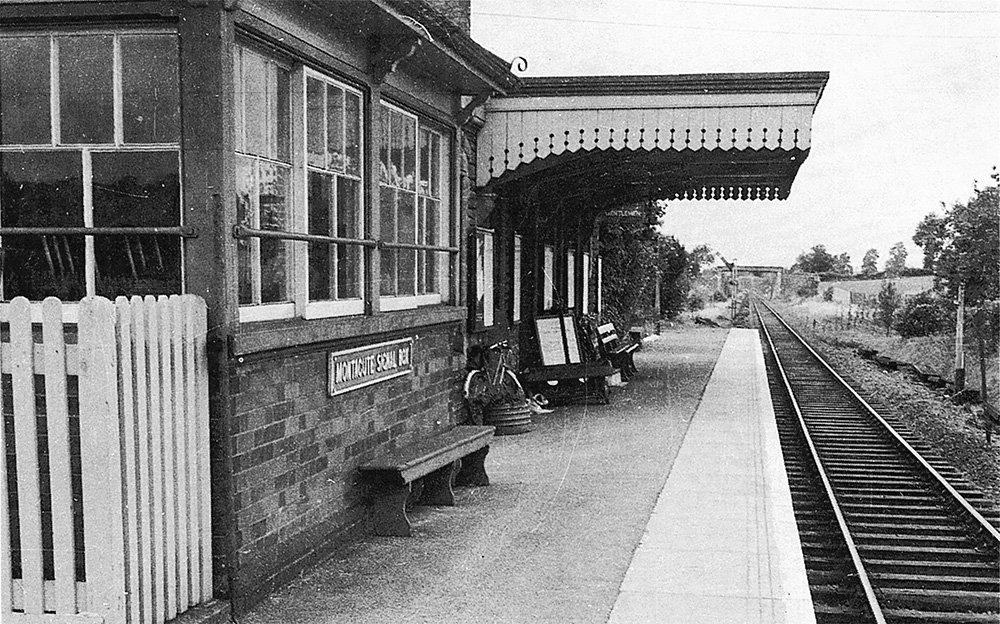
Another lonely platform, with the signal box, which was opened in Jan 1882. The box was closed in March 1908, with a new box standing on the Yeovil end of the single platform opened at the same time. The new box had a 13 level frame with stud locking, closing switch provided. The box was 11ft by 10ft and on platform level. It finally closed in March 1954.
In the background is Two Acre Bridge, which is no longer there, but at the turn off from the main road into Montacute. Image by C. L. Caddy – I think.
After the Closure
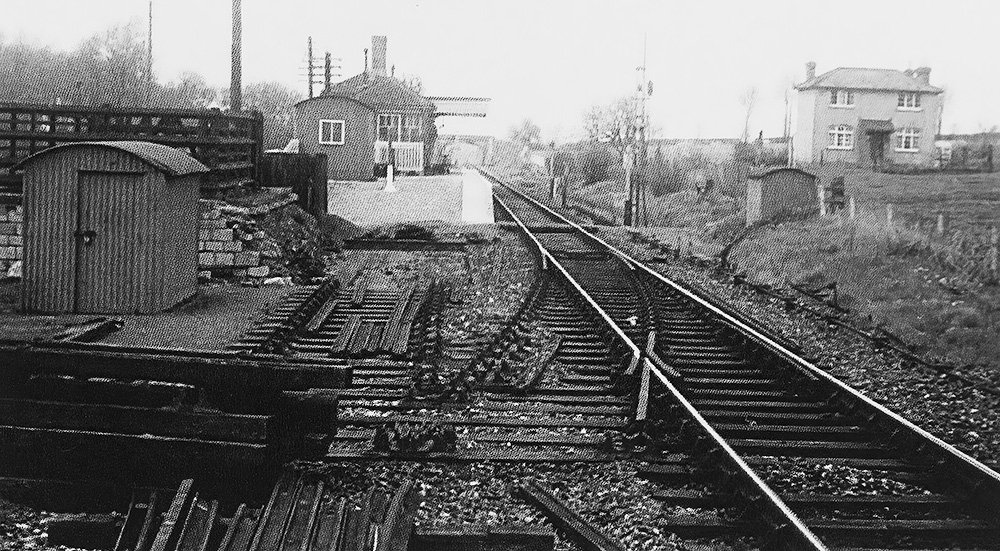
Taken on the 25th April 1964, the siding were being lifted, ready for the closure of the line. Today, the station masters house is still there and lived in, but the trackbed is the A3088 through road to the A303. Image by John Day.
Film of the Station
The good news is, there is some film footage of Montacute. The first part of it was given to me on 16mm and transferred by myself. Sadly, the second part was from a VHS video given to me. I have tried to track down the original footage, but to no avail.
Montacute Today
That was the then, sadly, looking at Montacute today, the only thing left is the Station Masters house. As I said, the main road the A3088 is now where the trackbed was.
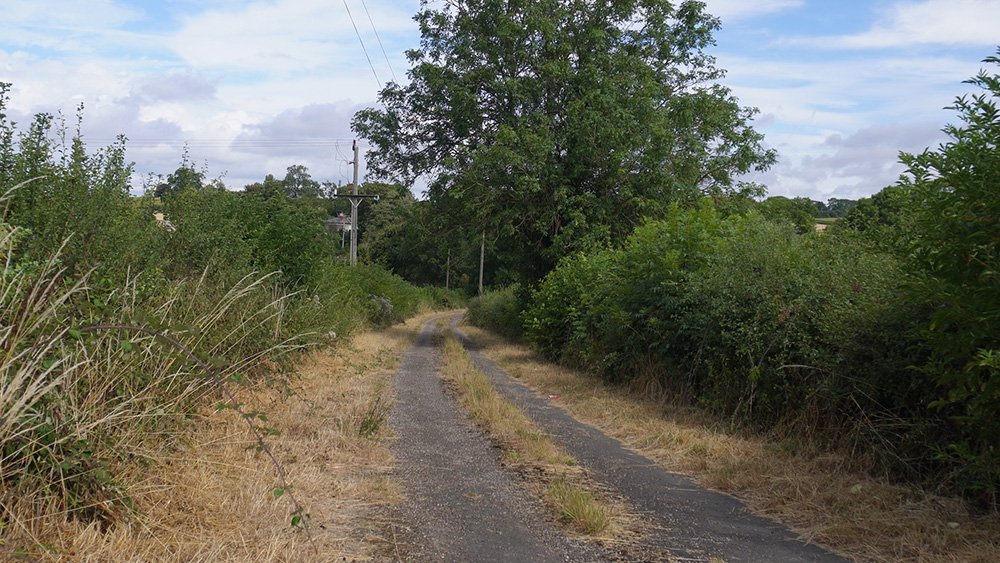
This is what is left of Station Road, running from main road in the village down towards the A3088 and where the station used to be.
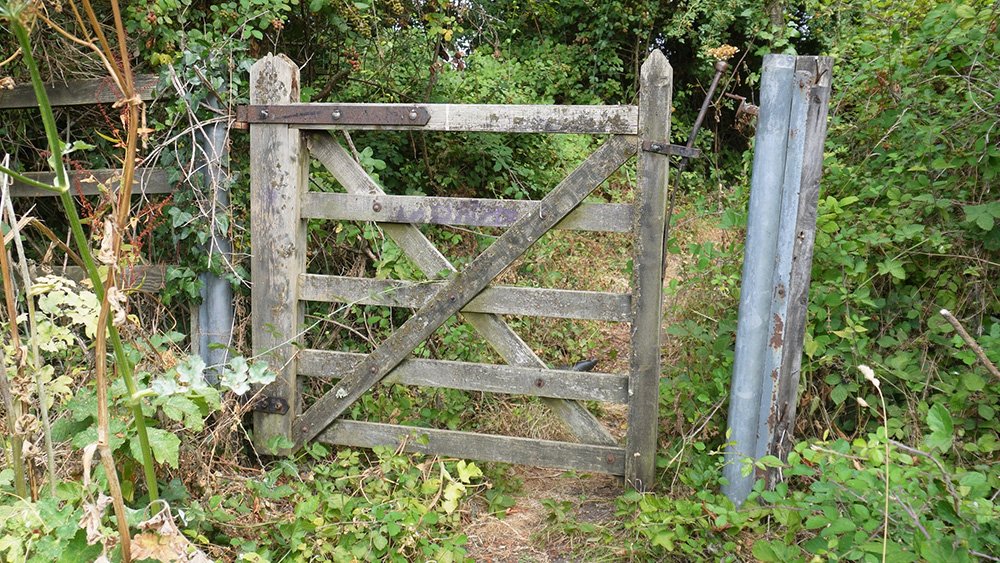
The old gate is still there, but you have to go looking for it. If you drive past the spot on the A3088, you would miss it in the blink of an eye. I had to get to it from Station Road, where I had parked in the village.
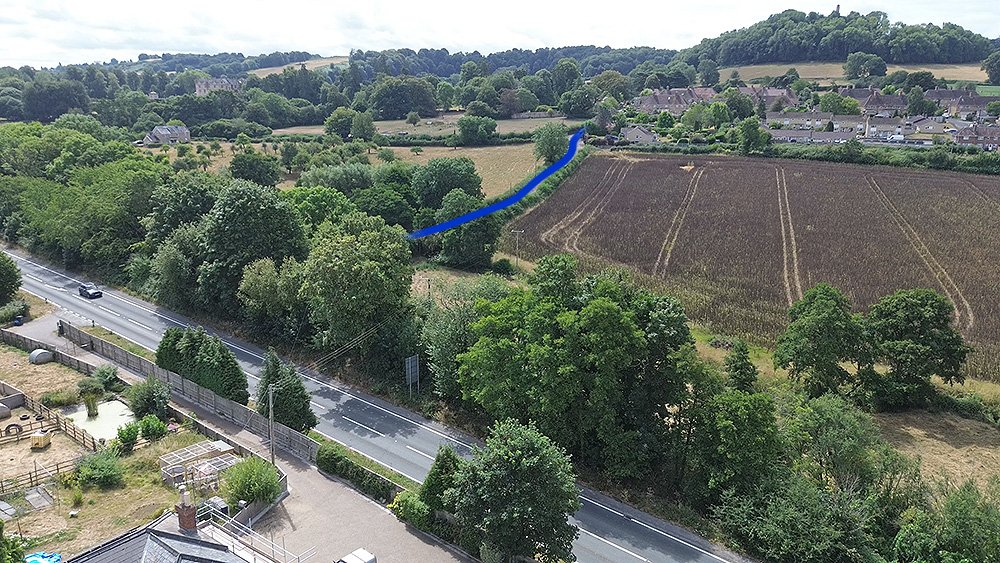
I took my drone up (abiding by all of the rules and regulations for flying) and took this from above the Station Masters house. I’ve highlighted the blue line, which is the old Station Road, from the images above. Again, you can see there is nothing left of the station now.
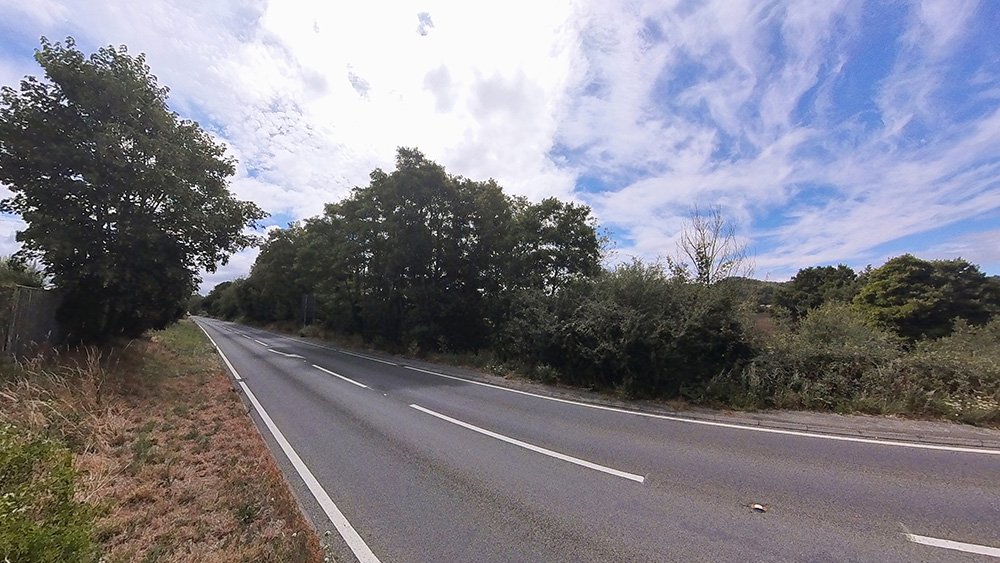
This is looking towards Yeovil, on the Station Masters House side of the road. Just to the right is the turn off to Montacute. What you are looking at is where the station platform used to be.
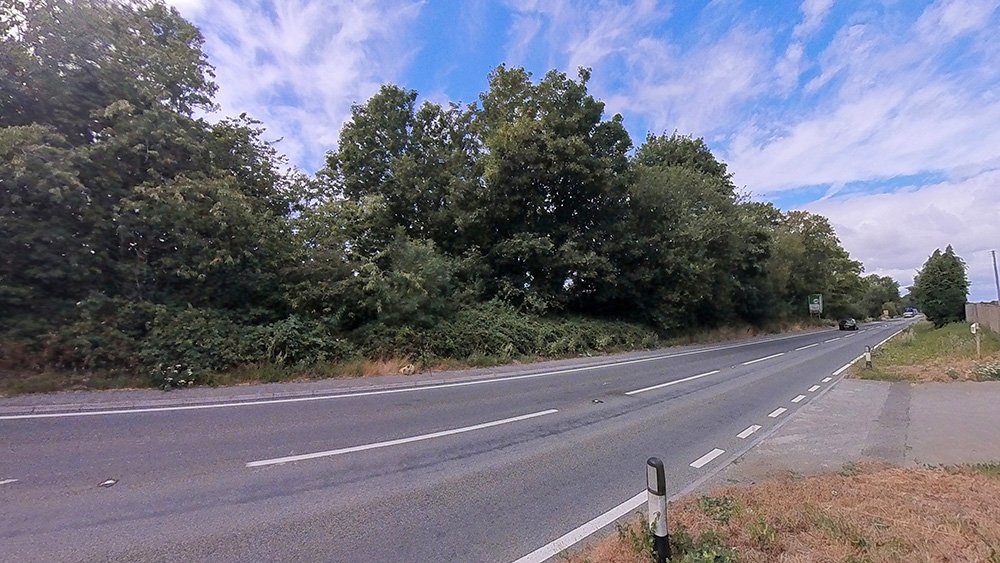
On the same side as the previous image, this time looking towards the A303 and Martock.
Have a Look Around
I love new technology, and I love my 360 camera. I took an image at the station location, so you can have a look around yourself.
Then and Now
I love creating these then and now photos, but only for the technical side of it. To see how much has changed it not so nice. As with all of these images, it’s always a best guess of where the images are. The only real frame of reference I had was the trackbed, which is now the main road.
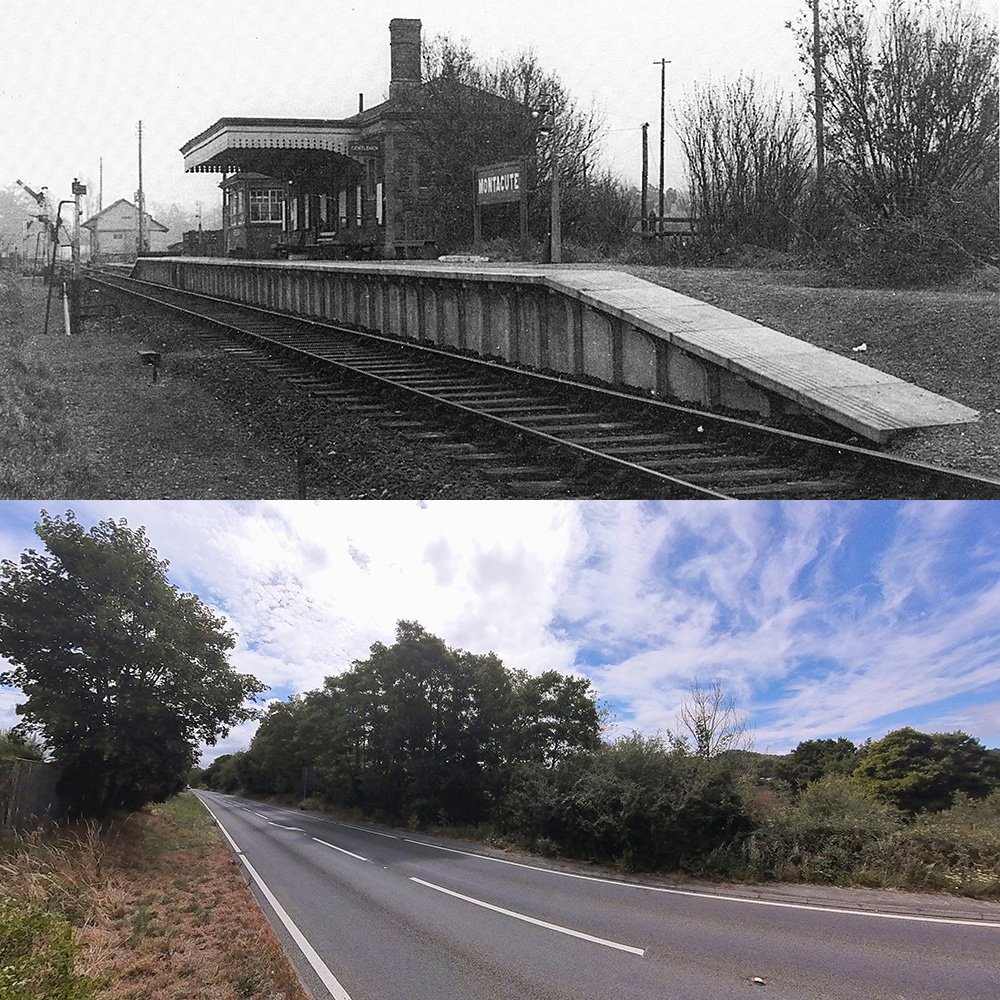
All gone. The trackbed is now the road and where the station and signal box were, all over grown with nothing left to see.
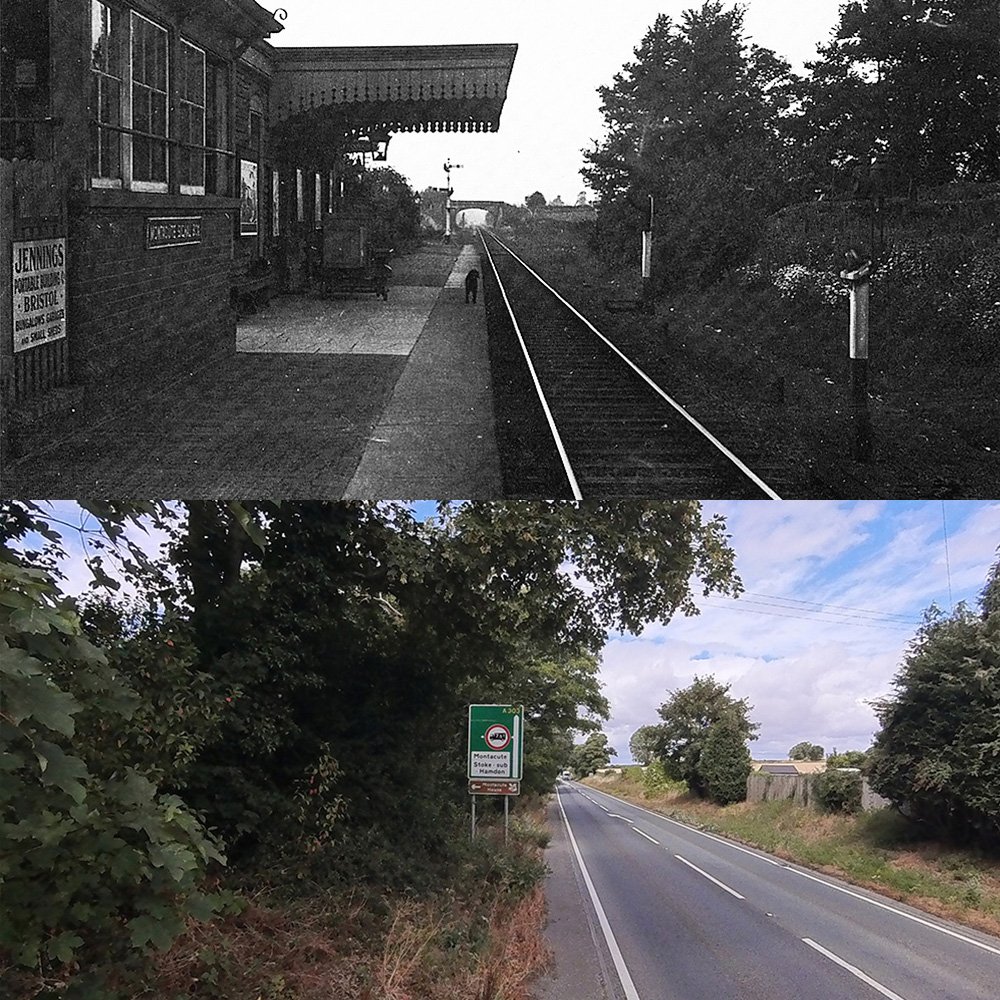
Looking towards Martock, you can see the sign for the turn off to Montacute. On the right is the Station Masters House. I tried to take this from the same height, with a very tall selfie stick. With the trees in the way, you cannot see where Two Acres Bridge was, which was in the ‘then’ image.
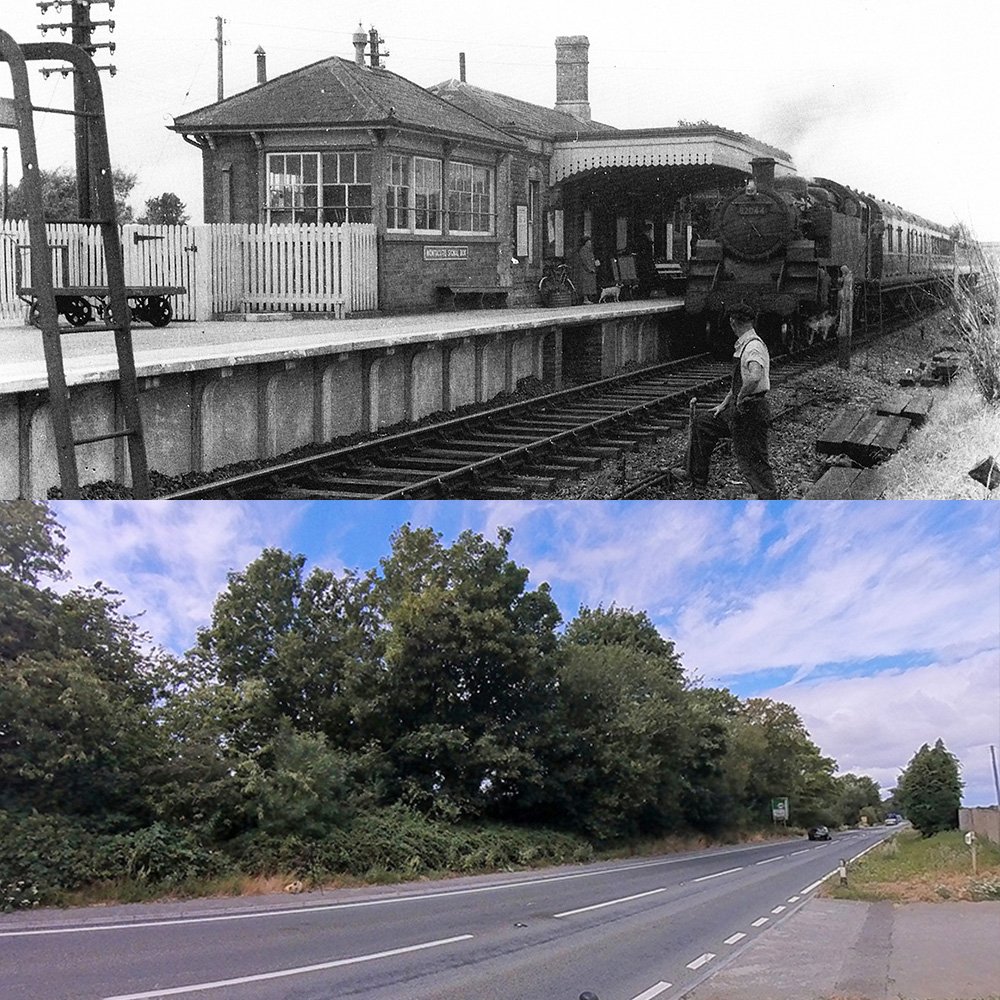
There is no point in me saying which image you prefer. One had an iron road, thundering through with trains on a regular basis. No traffic jams, not cars, just sitting back and letting the loco do all the hard work.
Montacute Moved
Let’s end on a happy note, well, more interesting than happy. Montacute station is not really gone, just moved.
After the line was closed, the station was disassembled and moved to Doniford, North Devon. Doniford is on the West Somerset Railway. It is situated near the Doniford Beach on Helwell Bay between Watchet and Williton.
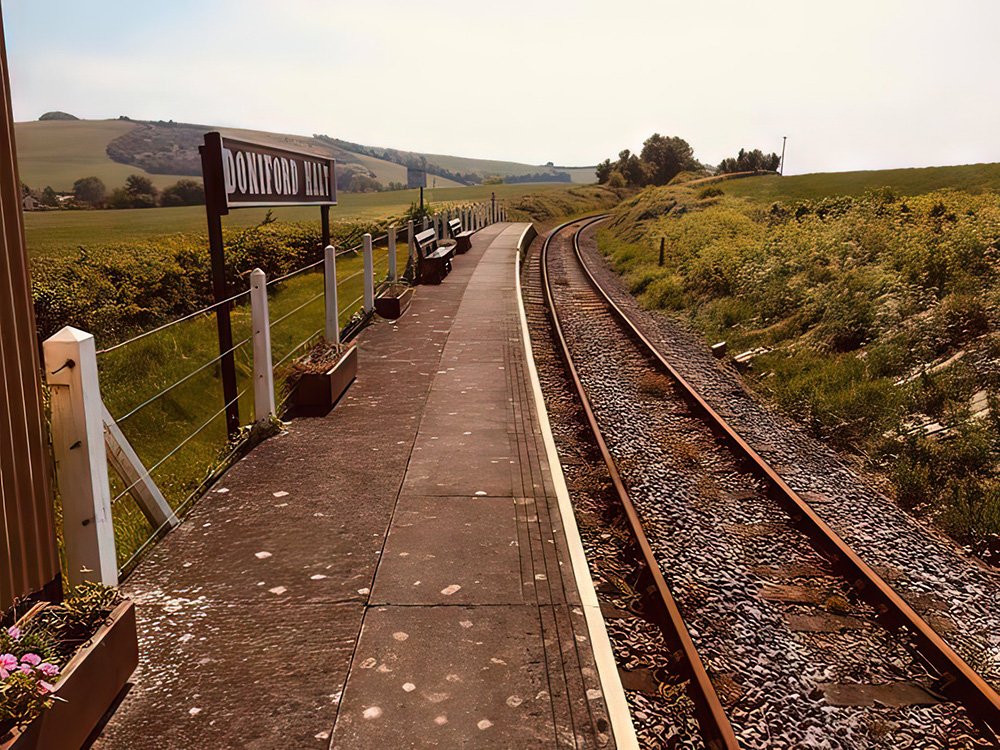
The curved platform stands on the north side of the line where it passes beneath the Watchet to West Quantoxhead coast road.
Builders constructed Doniford platform from concrete panels that workers recovered from Montacute. The shelter is a former Great Western Railway pagoda of corrugated iron that workers recovered from Cove Halt on the Exe Valley Railway.
Up Next
I hope you’ve enjoyed this little history of Montacute. I know it’s a shame to see it’s gone, but at least it still has these wonderful images to remember it by. In due course, I will make the trip up to Doniford Halt and get some photos and video of the station today.
A huge thank you to Derek Philips, Middleton Press, and South Somerset Heritage Collection for the use of their images from books and museum.
Next on the line was Martock, again, another beautiful station, but again, sadly little left.
And just a reminder, if you have any movie footage, photos or stories about the line from Yeovil to Taunton, please feel free to contact me.

This Post Has 3 Comments
Somewhere round that area there’s a stretch of main road that passes under two or three occupation type bridges that appear to be quite stylishly built stone arches, quite out of keeping with the road itself – at least as far as I could tell from the back of a minibus. Would that be this A3088 road with the bridges retained from when it was the railway line? I would love to know, it’s been bugging me since last summer!
Hello Dan, I think you’re talking about the bridge over the main A3088, it’s just as you leave Yeovil heading to the A303. It’s called Agusta Bridge on Montacute Road, and I haven’t got any images of it, but I will have some soon.
Pingback: Update: Yeovil On The Track - Aarchive Films