
We’ve cover most of the stations and halts on the Plymouth to Launceston, but there were also a lot of bridges and viaducts. The line crossed and weaved over the rivers throughout Devon, and had some very impressive bridges along the way.
When the line opened, Isambard Kingdom Brunel originally built the main viaducts in timber. He later rebuilt them in masonry. I’ve done my best to put the bridges in the correct places.
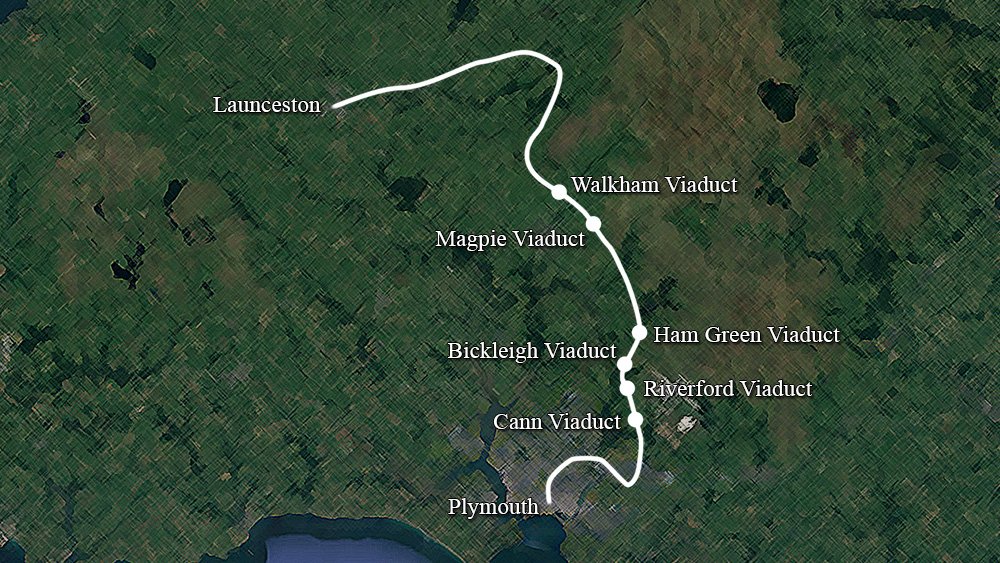
I’m not going to cover all of the bridges and viaducts, but the main ones, which generally had the most stunning views.
Cann Viaduct

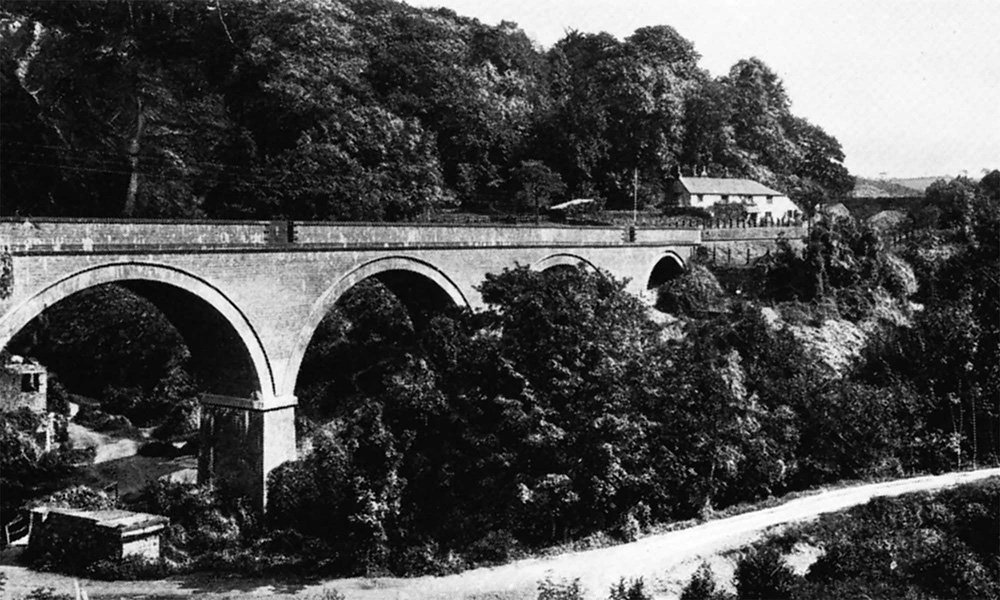
This is an early view of the Cann Viaduct in the Plym Valley. Taken circa 19120. Image by F. Frith & Co. Ltd.
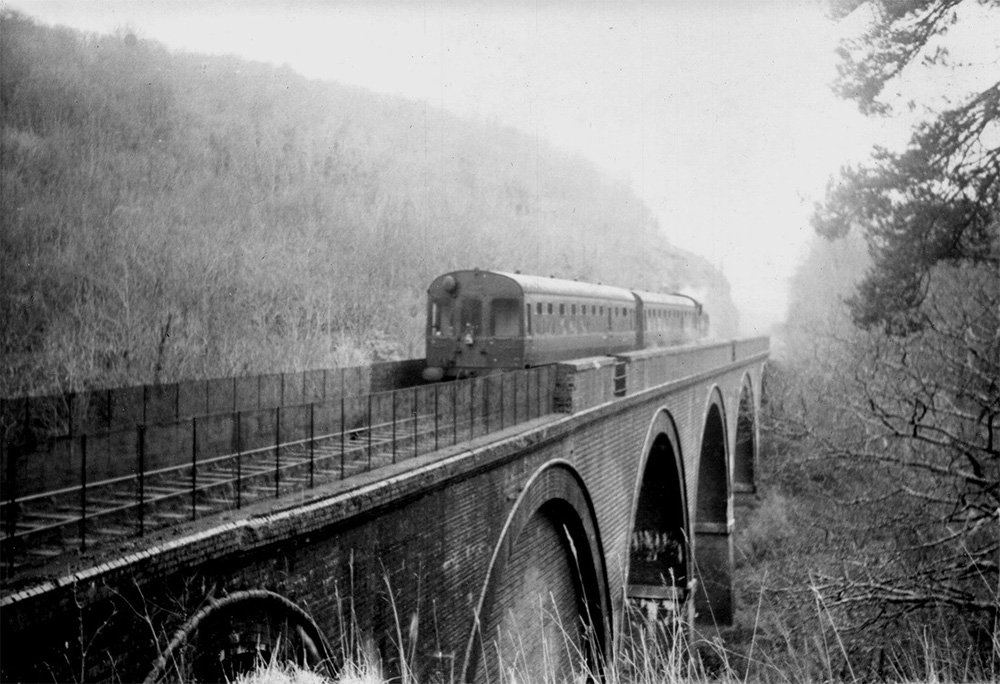
Another striking view of the viaduct. Sadly, I don’t know when this was taken or by who.
The rebuild of the viaduct was of blue Staffordshire brick and replaced Brunnel’s original timber design. It crossed the Plym river at a distance of 2m and 15c.
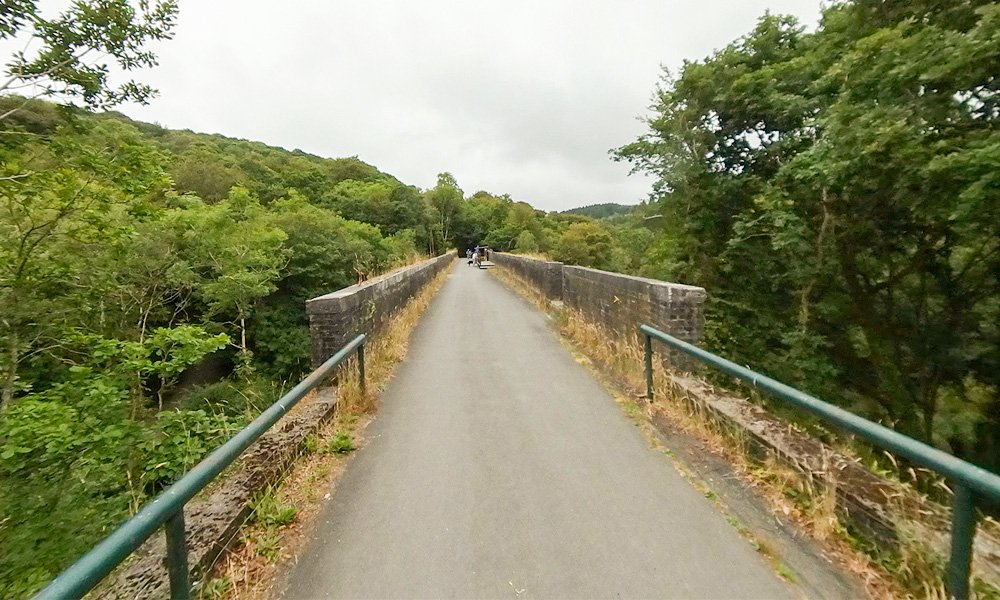
If walk along the path of the old track bed, you can still cross today.
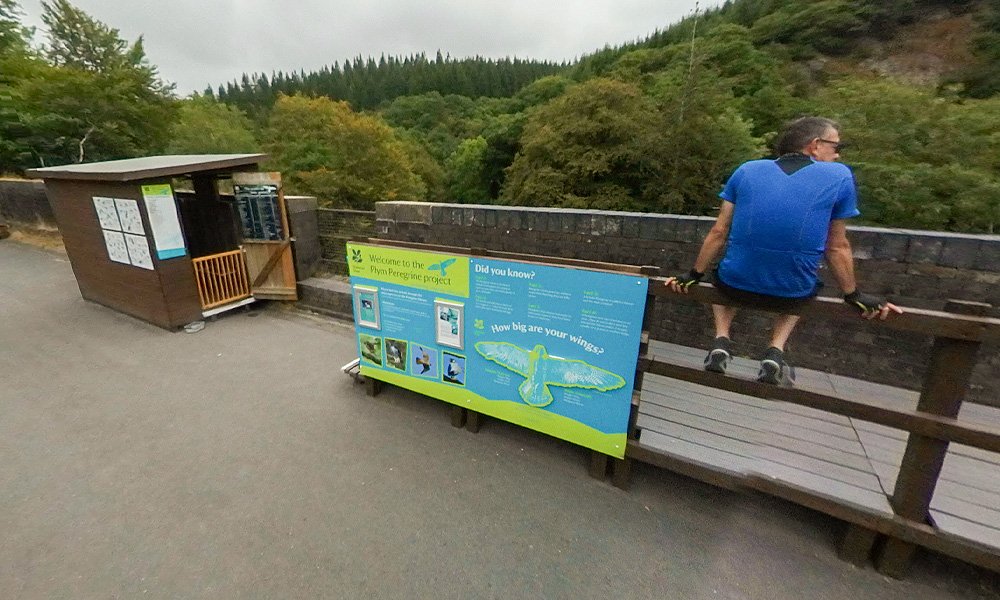
Half way across, there seems to be a stopping area for bird watchers, or anyone who would like to admire the incredible view of the Plym Valley.
Riverford Viaduct
Sitting at 2m and 65c, Riverford is now known as the Plym Valley Viaduct.

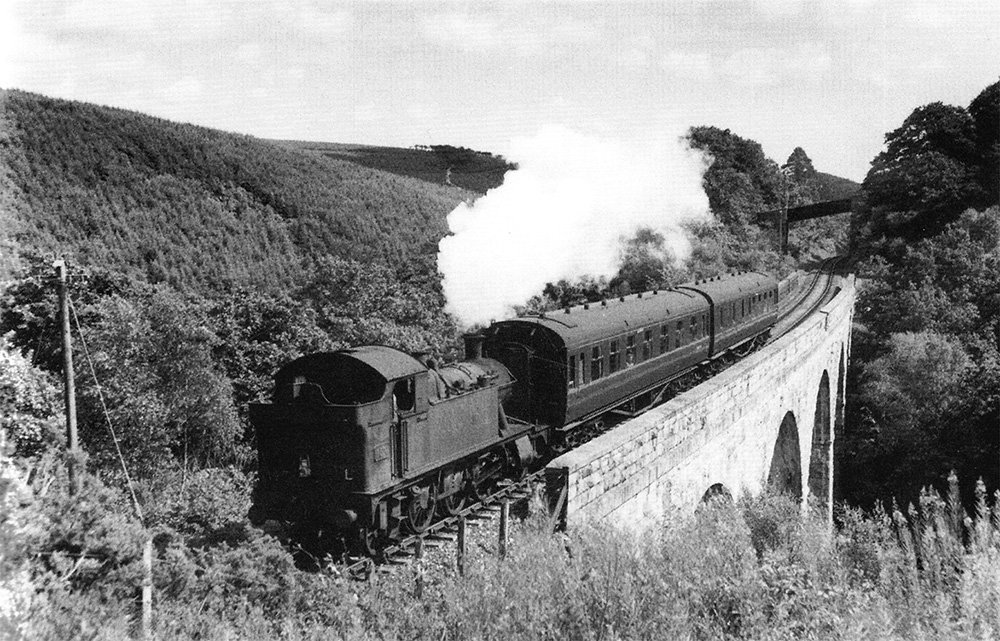
Just to the south of Bickleigh, Riverford Viaduct comprised five granite arches after rebuilding from timber in 1893. No 4570 is working the 3.5pm from Plymouth North Road to Launceston on the 4th August 1962. Image by S. C. Nash.
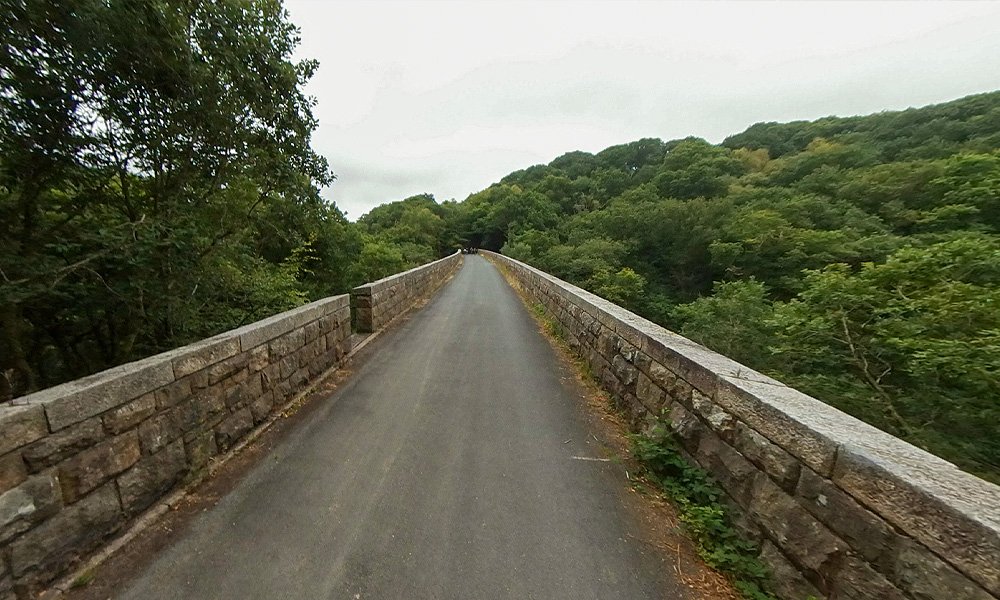
You can still walk along the old track bed today, with the bridge still standing proud over the river Plym.
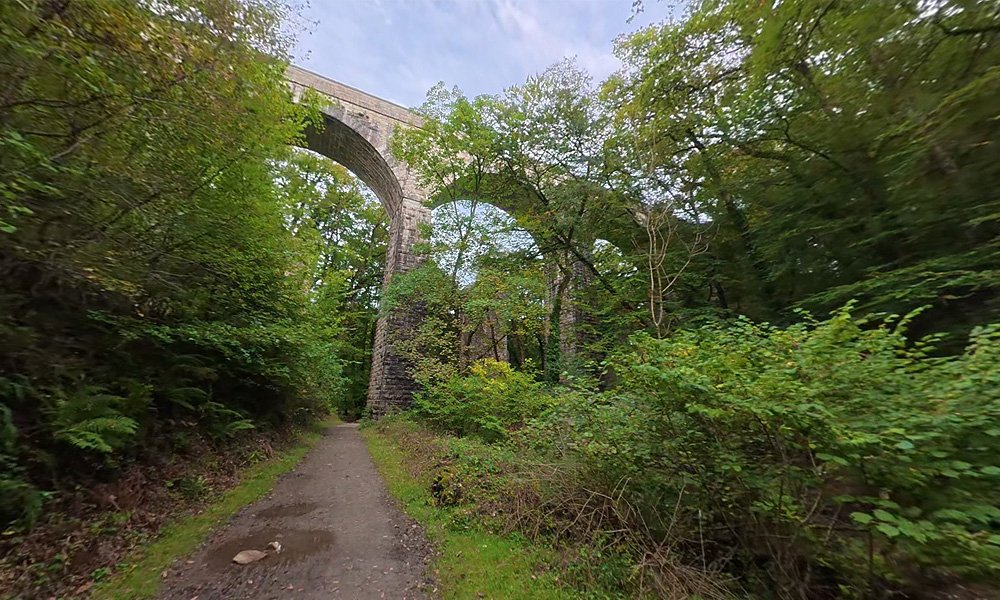
Following alongside the river, gives you a more spectacular view of the viaduct, with it’s 5 arches, which you can pass under, and cross over the river via a small footbridge.
Bickleigh Viaduct
Just before Bickleigh station, the viaduct was 3m and 37½ c. It provided stunning views of the south of Dartmoor.

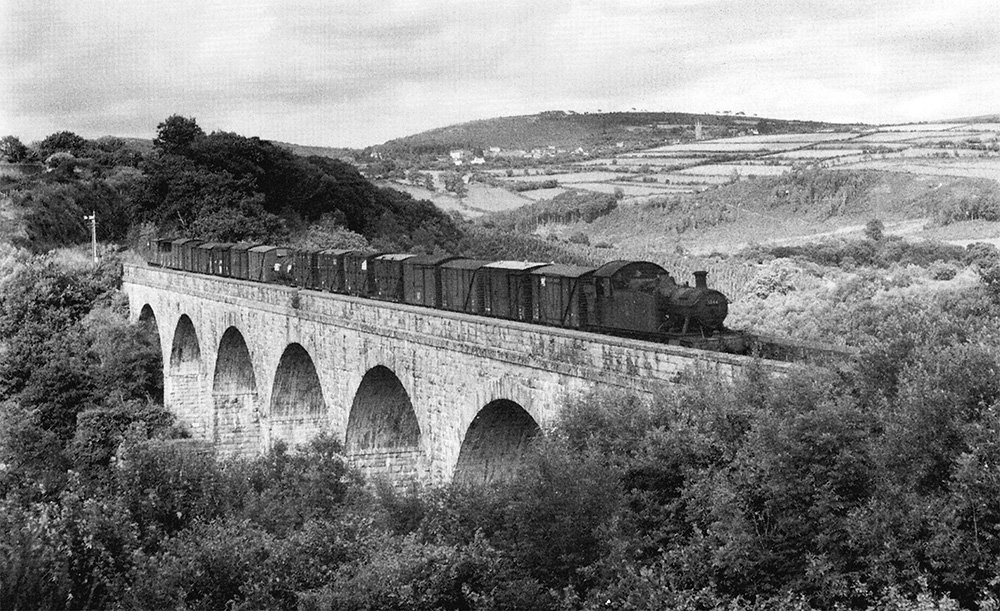
No 5544 is running south on the 4th August 1962, with freight from Launceston. Also evident is part of Dartmoor and Bickleigh fixed distant signal. Image by S. C. Nash.
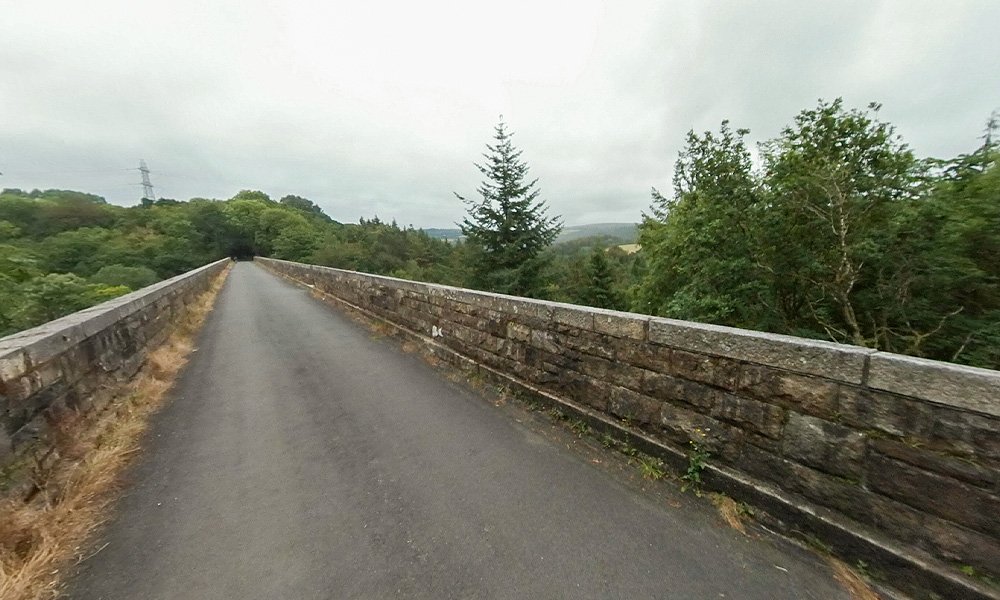
Standing at the southern end of the viaduct, looking north towards Bickleigh, the walkway still provide stunning views of the moors.
Ham Green Viaduct
A short distance north of Bickleigh, was Ham Green Viaduct.

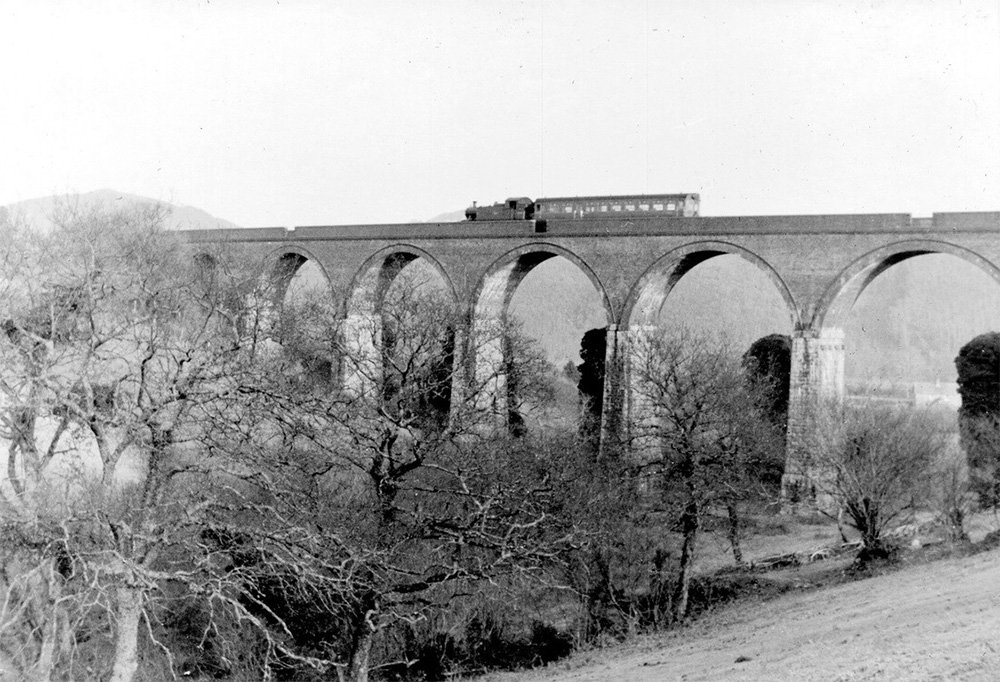
I found this image via a Google Image search, so sadly do not know much about it. This was an impressive structure, since it only crossed the Plym again, which wasn’t ‘raging river’ at this point. Date and photographer unknown.
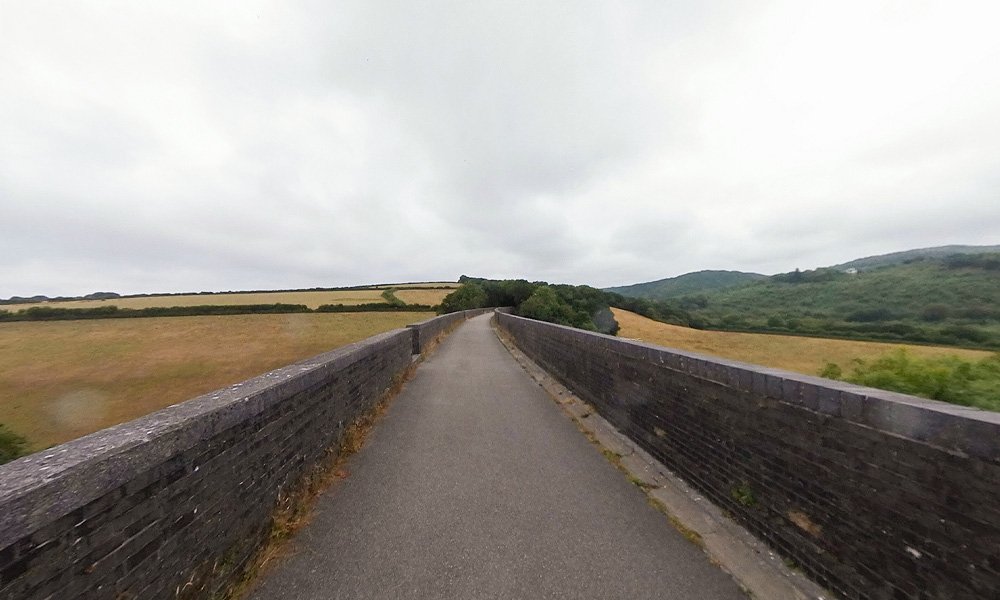
Again, from the south and looking northwards, Ham Green viaduct had impressive views as it still passes over the Plym below.
Magpie Viaduct
Resting at 9m 46c, Magpie Viaduct was just north of Horrabridge Station, and westerly of the village.

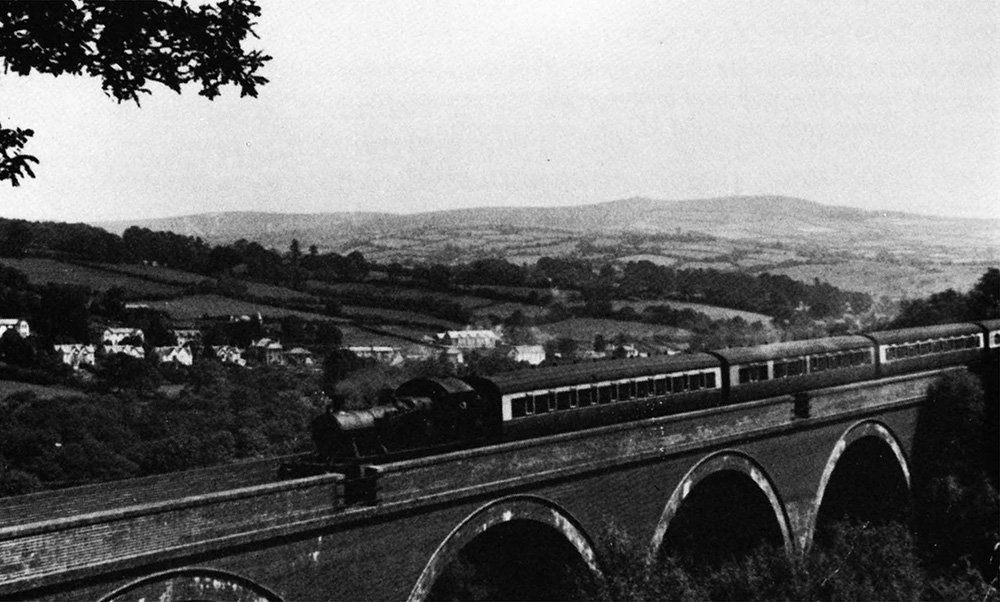
This image is of a 1950 vintage, showing a four coach train for Launceston, crossing Magpie Viaduct, just north of Horrabridge. Image by Anthony Kingdom.
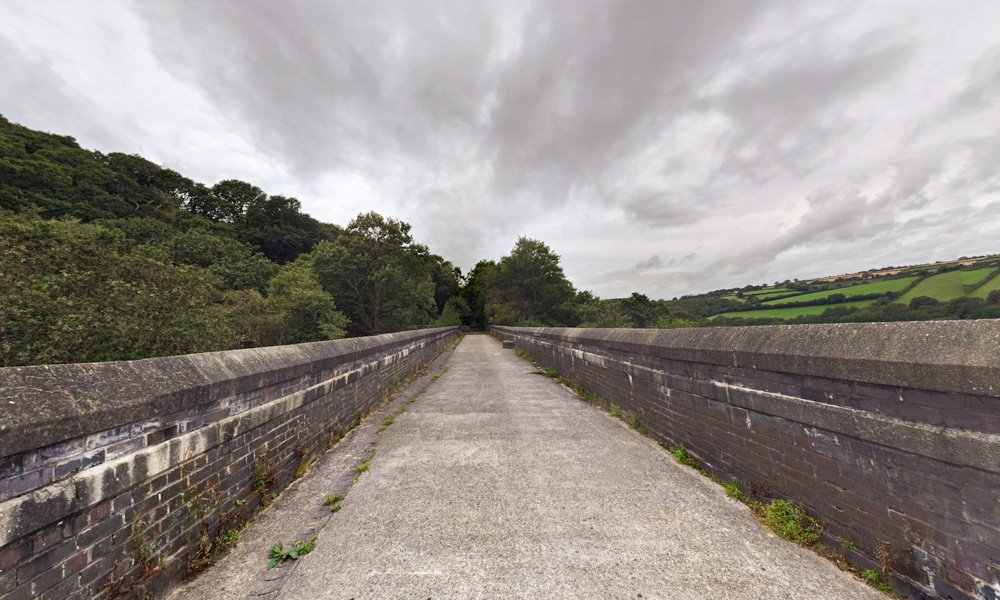
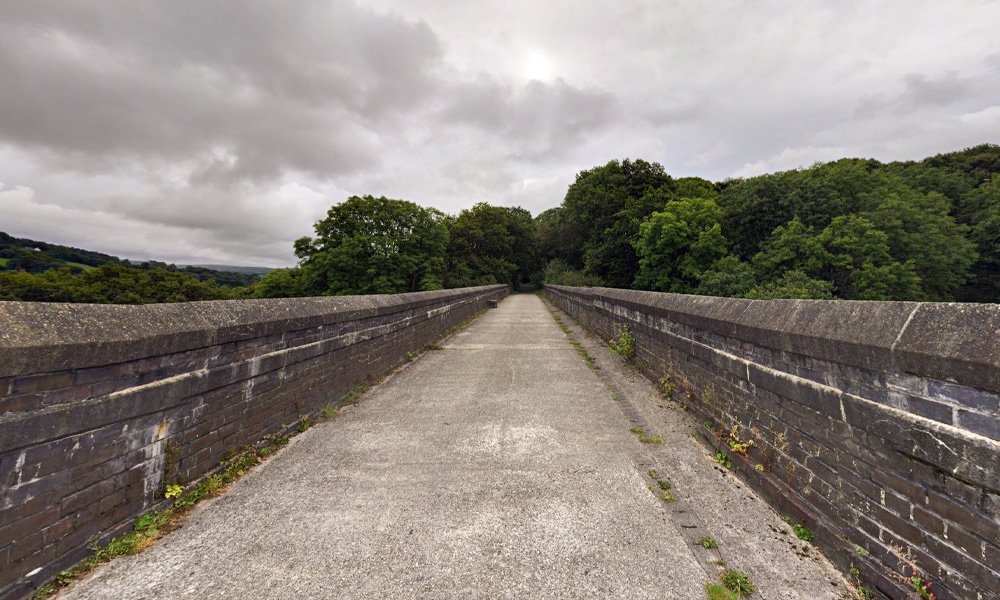
Two photos, taken from the middle of Magpie today. The top image is looking north towards Tavistock, the second image looking south, back towards Horrabridge.
Walkham (or Grenofen) Viaduct
Walkham Viaduct, also known as Grenofen, was 10m 14c and passed over the river Walkham.

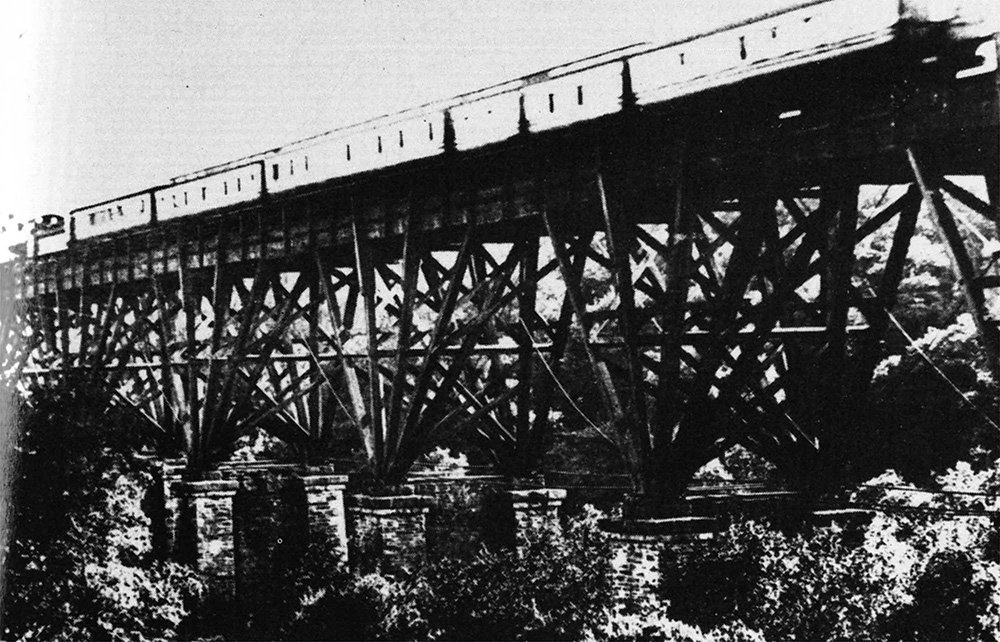
Taken in the summer of 1903, a five coach train crosses Walkham Viaduct towards Tavistock. Image by S. Taylor.
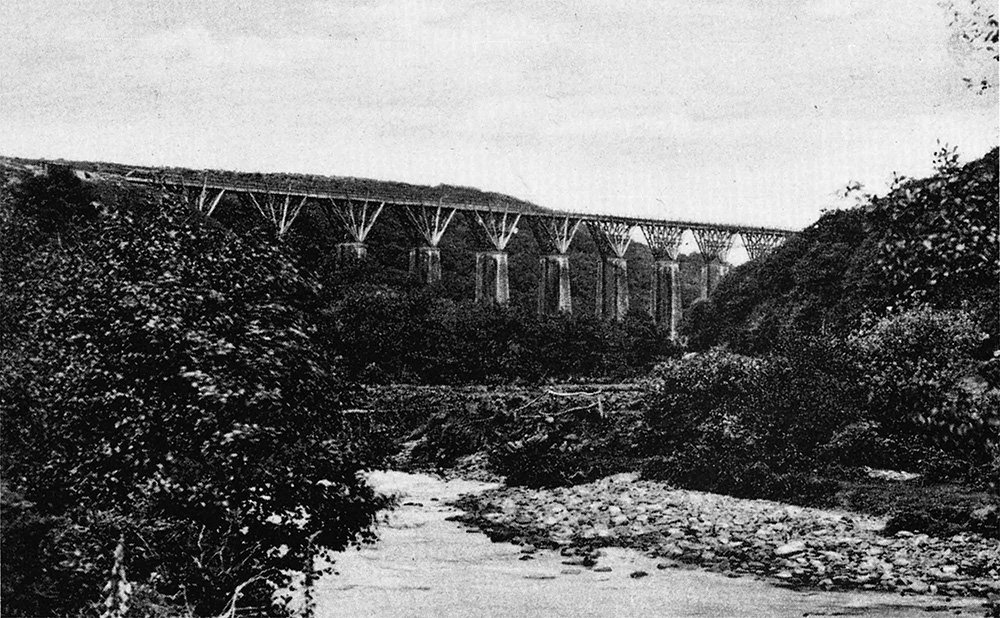
Walkham was an impressive feet of engineering. Originally designed and built by Brunnel, the massive timber superstructure was replaced with steel in 1910. Taken circa 1905.
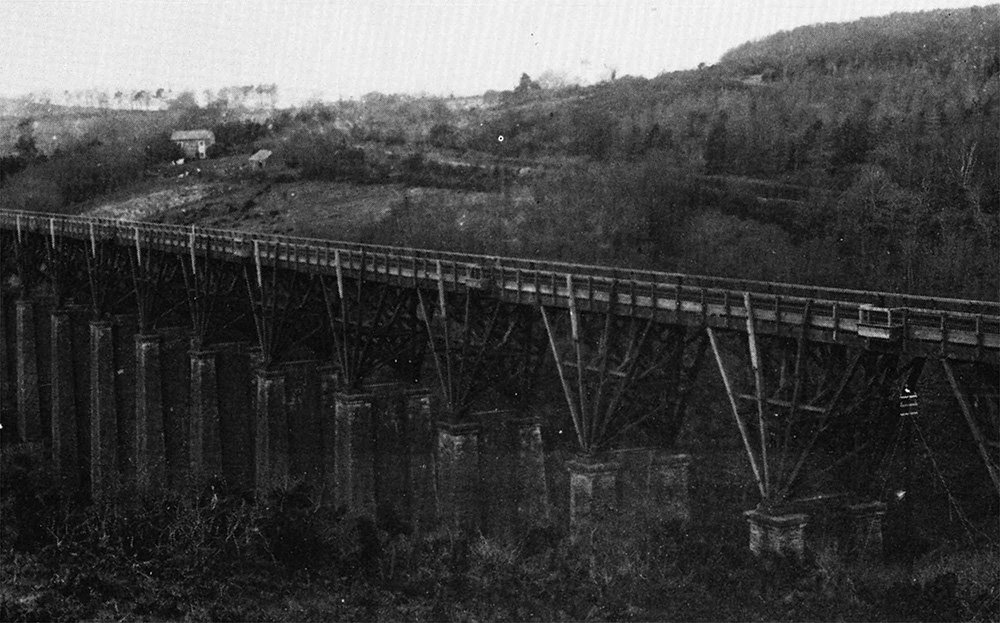
Another incredible view of Walkham (or Grenofen) Viaduct, showing some of the 17 spans. Above two images by F. Frith & Co Ltd, courtesy of R. T. Coxon, and Launceston Railway Circle, courtesy of C. Barrett.
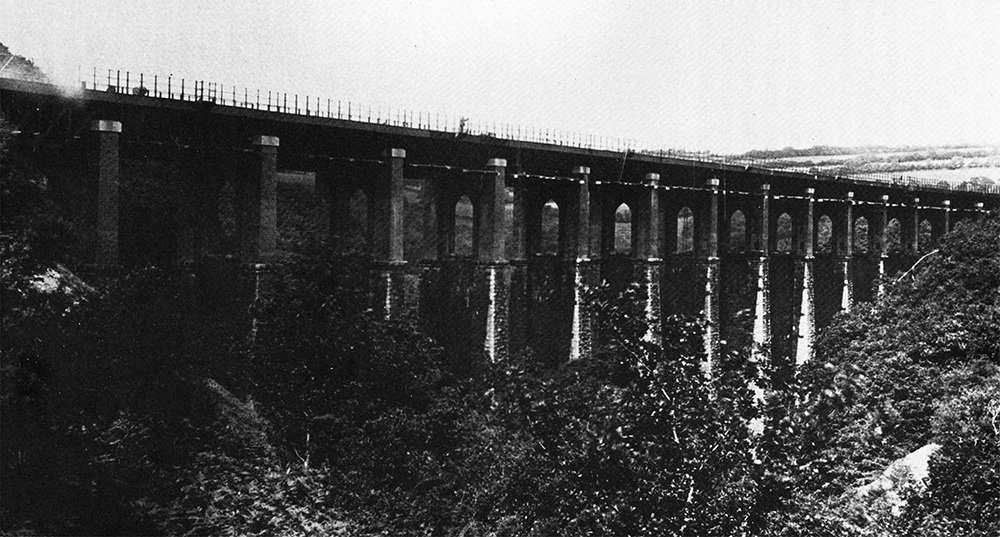
Another very impressive panoramic of the same viaduct. Note the maintenance engineer with ladder down to the super structure. Taken early 1950s. Image by R. Nash.
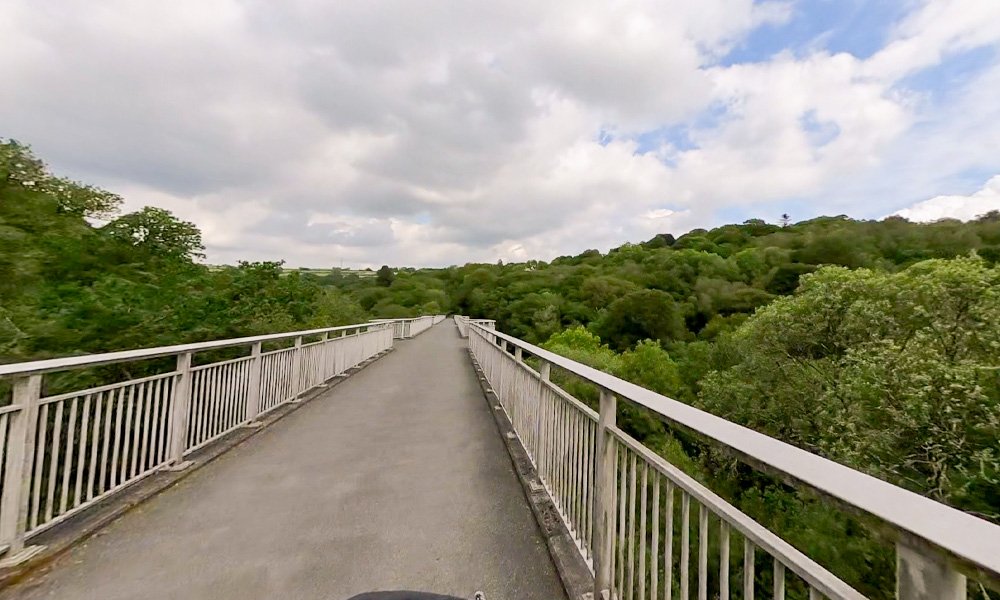
Today, known as Gem Bridge on the cycle/walk path of the old line, the views are still stunning.
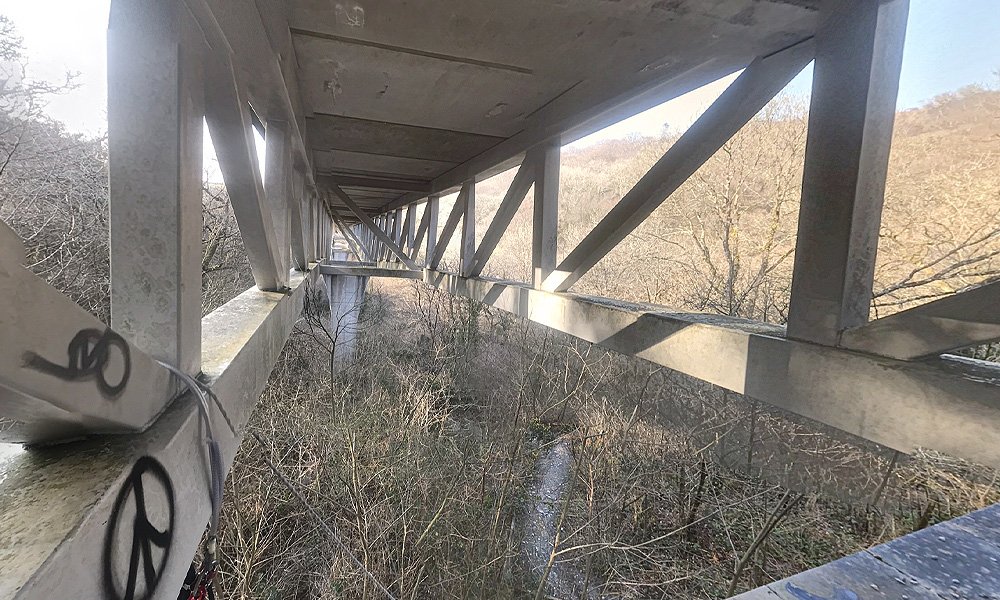
And here an unusual shot from Google Maps. It was taken via, what looks like, an inspection. There are two gentlemen, with climbing gear, under the bridge.
I was hoping to have some movie footage of the some of the viaducts, but sadly, it’s only a few precious seconds. You can see the entire journey from of the branch line, on my video, Plymouth to Launceston via Tavistock South.
Walking the Line Today
A lot of the branch line has been repurposed into multi-use trails, allowing walkers and cyclists to follow the historic alignment through varied landscapes. You can find more information on the Railway Paths website.
Highlights include the Cann Quarry Viaduct (popular for peregrine falcon watching), the modern Gem Bridge over the River Walkham, and glimpses of industrial heritage alongside natural beauty. The trail is signposted, with parking and refreshments available at points like Yelverton, Horrabridge, and Clearbrook. While some northern sections involve on-road or hillier parts, the railway-era stretches provide easy, traffic-free walking with a real sense of stepping back in time along the old line.