
I first thought that the Plymouth to Launceston branch line was about half in Devon and half in Cornwall. As I’ve been covering the line, I find that Launceston is the only station in Cornwall, all of the others, like Lifton, are in Devon.
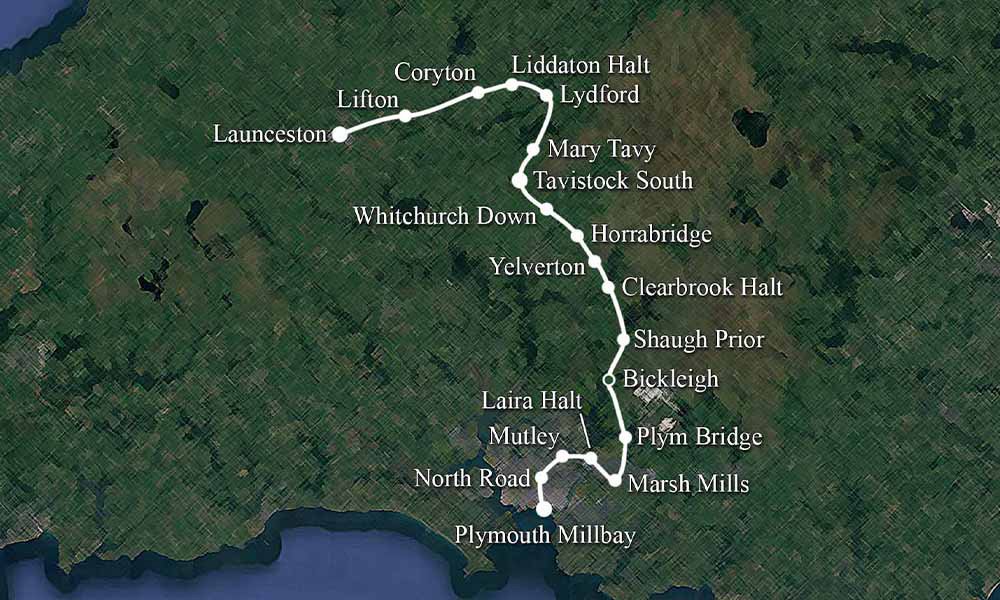
Just outside the town of Lifton, the station was on Station Road, in an area known as Tinhay.
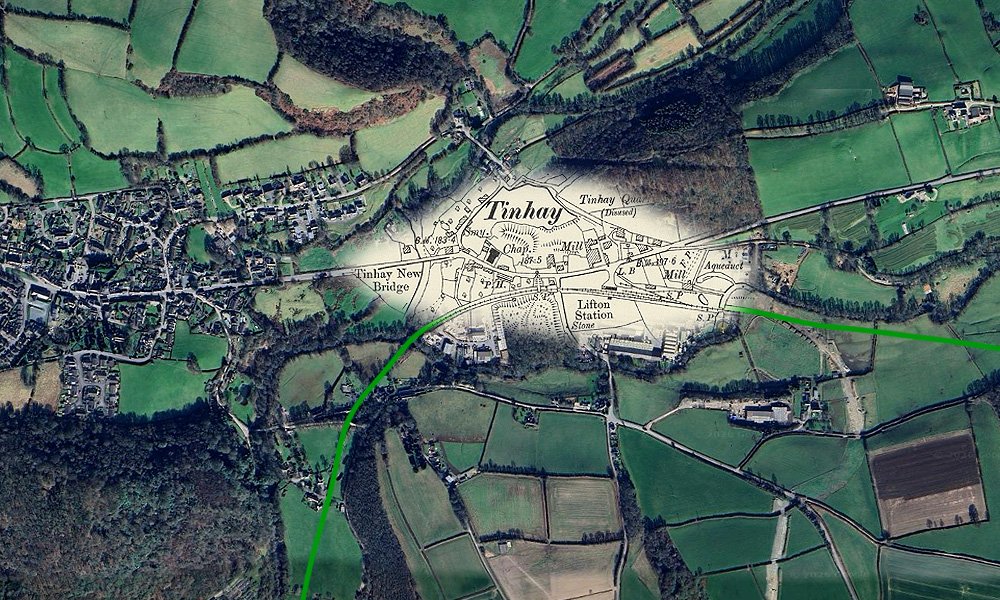
The line would head in from the east, through the station, then head south, through Lifton Quarry, and on into Launceston.
The railway opened the station on 1 June 1865. The main building stood on the platform that served trains towards Plymouth. A loop and second platform allowed trains to pass. A level crossing lay at the west end of the station.
The goods yard occupied the same side as the buildings. In 1894, the operators opened a private siding to serve a corn mill. In 1917, they opened a factory in the goods yard that handled milk and later produced “Ambrosia” rice pudding. Passenger trains and public goods traffic stopped on 31 December 1962, but the line to Lydford remained open to carry trains from the milk factory until it closed on 28 February 1966.
Photos of Lifton
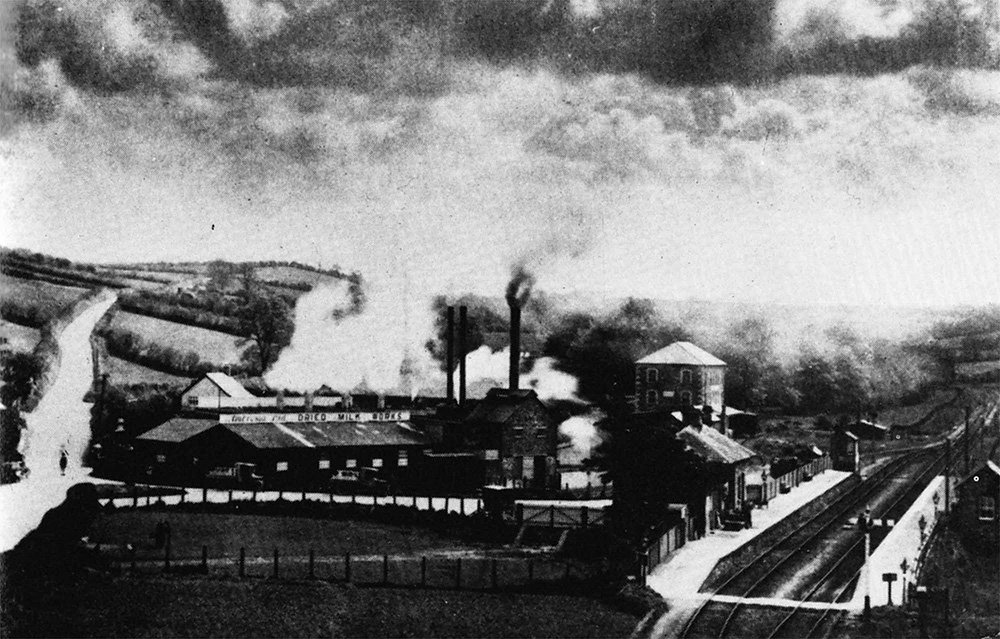
This is Lifton station, looking eastwards. The factory sign here shows ‘Ambrosia Ltd, Dried Milk Works’. Taken circa 1910. Image by Lens of Sutton.
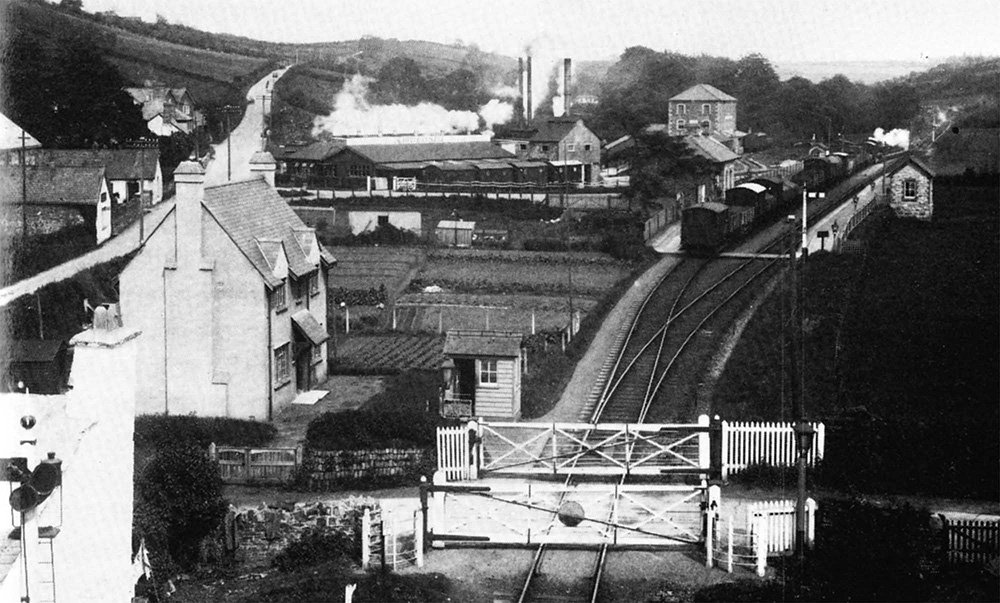
Taken a few years later, in the 1920s, there is an impressive panoramic of Lifton, showing Station Road on the left of the photo. It was taken from the former bridge over the line, which no longer seems to be there. You can also see the comparatively small Ambrosia dairy produce factor, and an up freight train departing. Image by Chapman & Son.
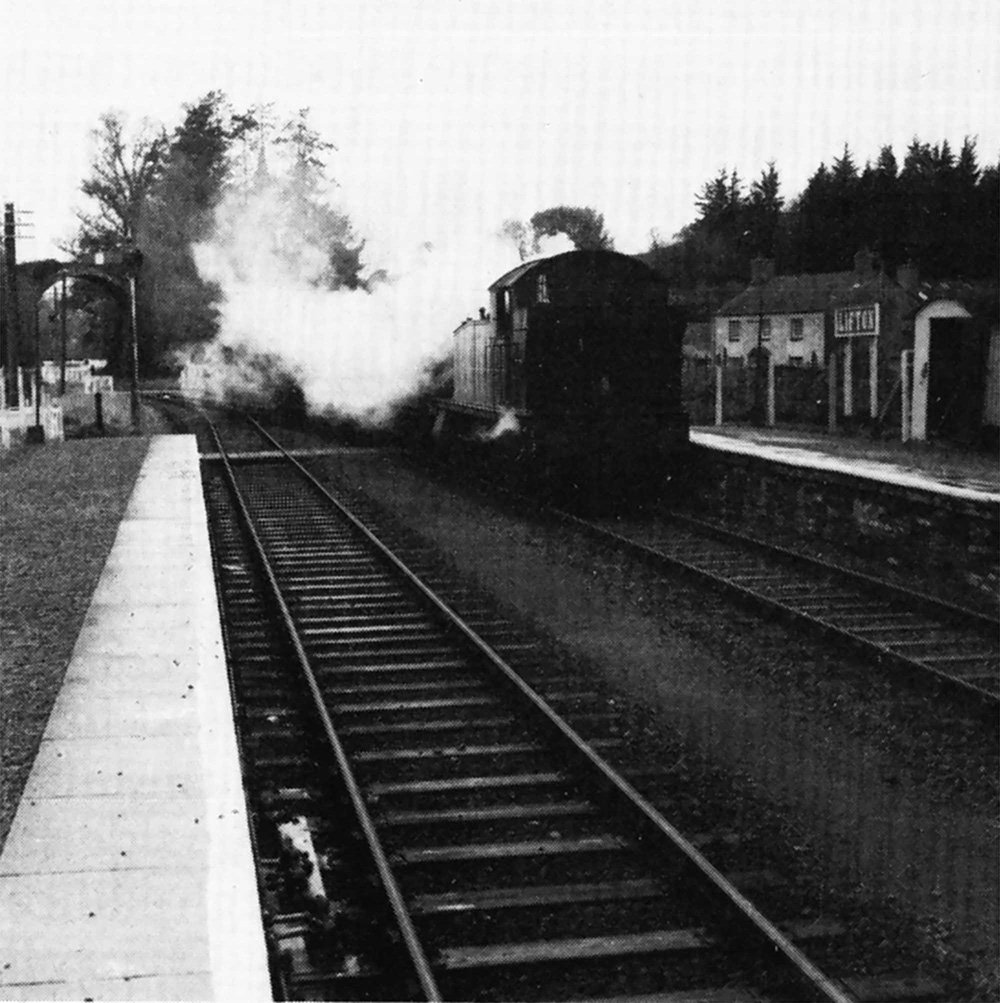
Here is a 45XX class running bunker first with an ‘up’ passenger train to Plymouth during the 1960s. The defunct overbridge on the far side of the level crossing is a relic of the former Tinhay Quarry line. Image by L. W. Croiser.
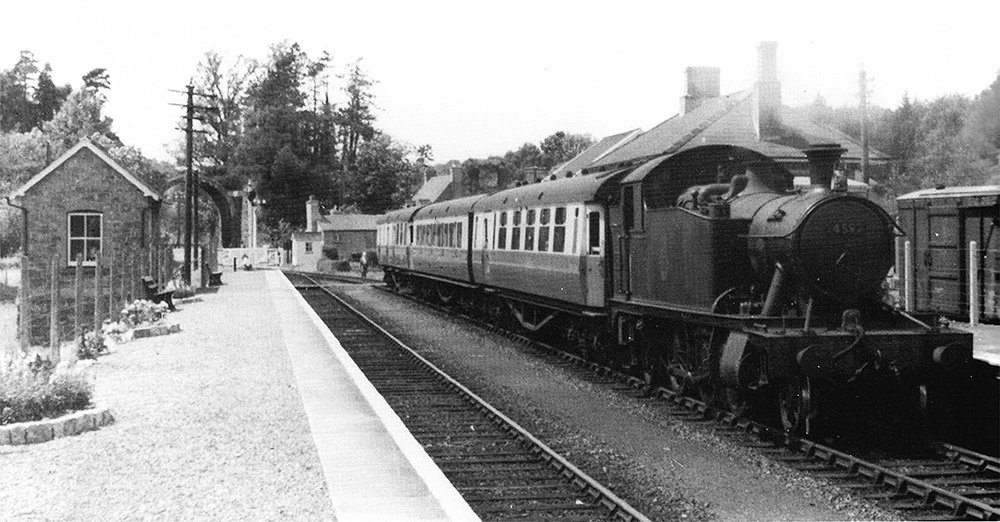
Here, No. 4592 obscures the main building, which was of a similar design to that at Coryton. The arch in the background once carried a narrow gauge line to Tinhay Quarry. The inset door of the leading coach indicates that it is one of an extra-wide batch built for London-Plymouth boat trains. Taken June 1956. Image by J. W. T. House/C. L. Caddy.
The Last Days
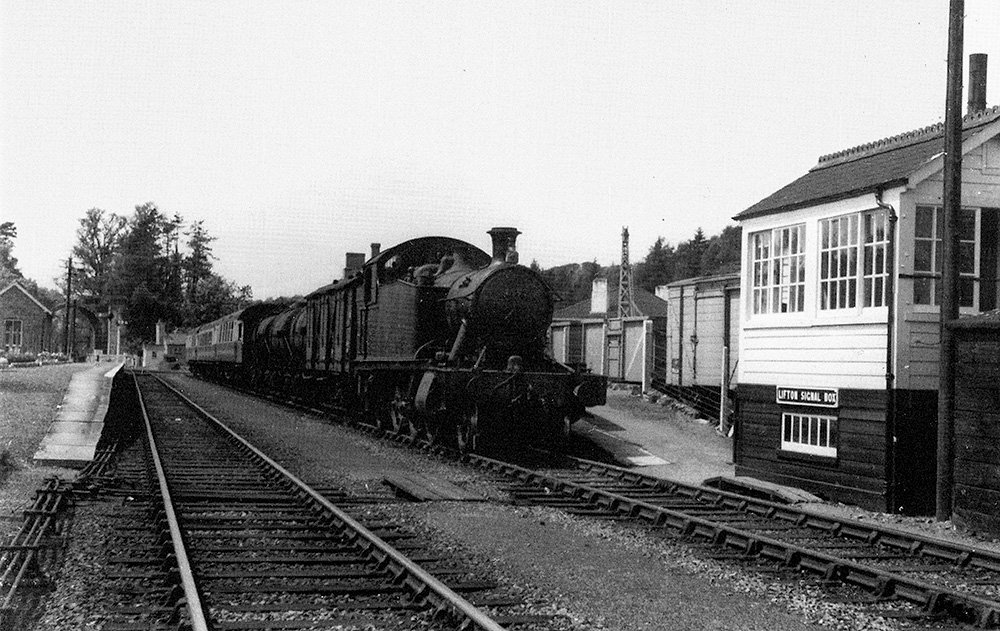
Inside the signal box there were 17 levers, but the single line staff instruments were situated in the booking office. The six-ton goods crane is just visable as are cans and milk tanks in the waiting passenger train. Taken June 156. Image by J. W. T. House/C. L. Caddy.
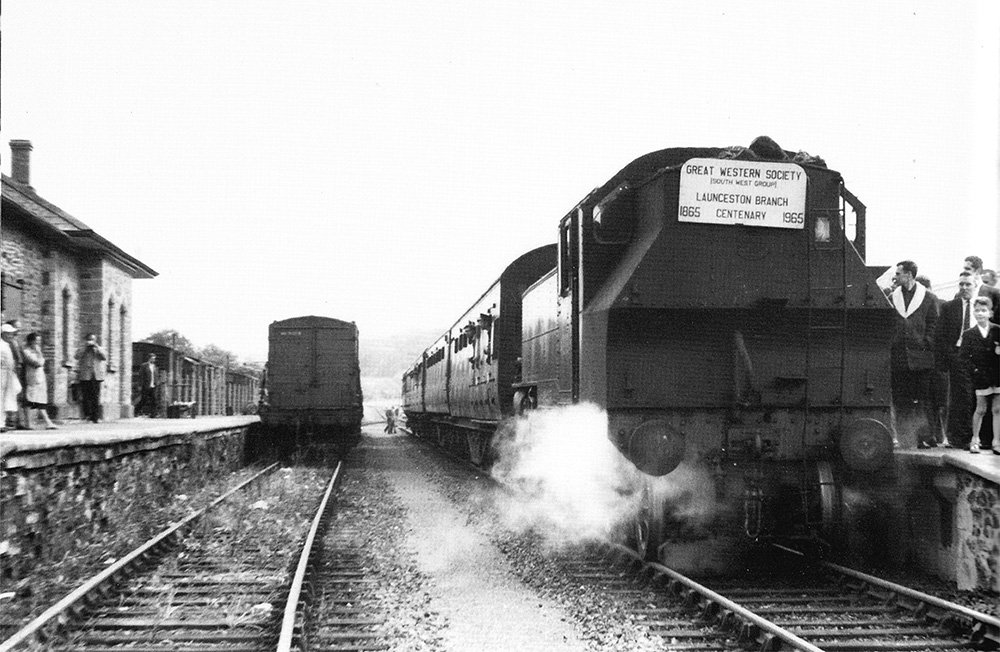
At Lifton, the signal box was used as a ground frame from September 1964 and most signals were removed. The head gives the reason for No. 41283 appearing with a rare passenger train on the 5th September 1965. While the March Mills – Launceston route was closed entirely the end of 1962 (except for Tavistock South Goods), the Lydford – Lifton section was retained for milk traffic and worked by a locomotive from Okehampton Shed. However, this part was closed on the 7th September 1964 and the Lifton – Launceston length was reopened to handle Ambrosia output. All traffic ceased on the 28th February 1966. Image by S. C. Nash.
Lifton Today
Looking at Google Maps today, it is again, very difficult to see where the line or station was.
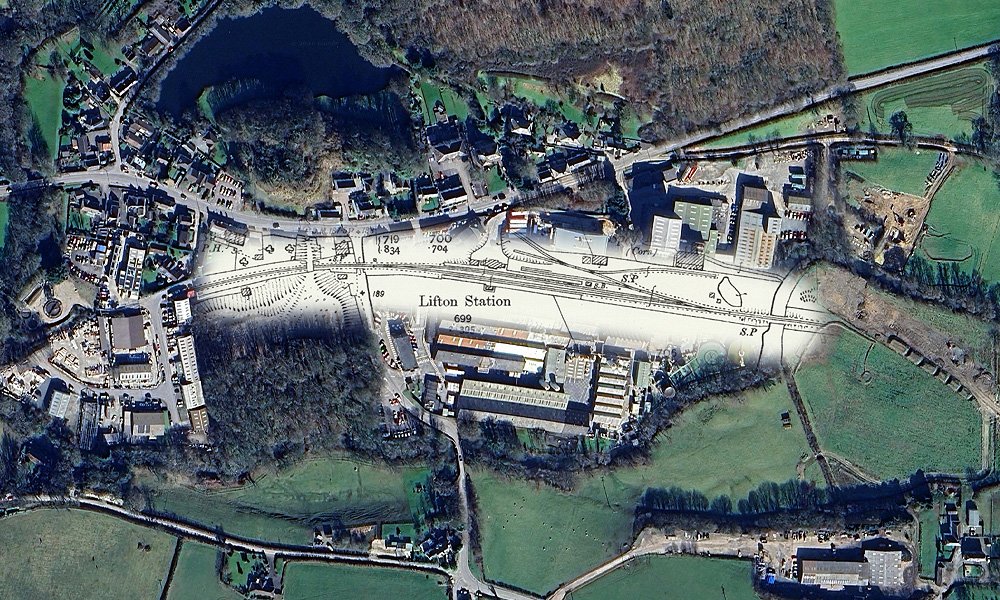
Here is a closer look of the map at the top. As you can see, the line from the west has nothing left, the station is now the larger factory for Ambrosia, and to the east, the old track is now Leat Road.
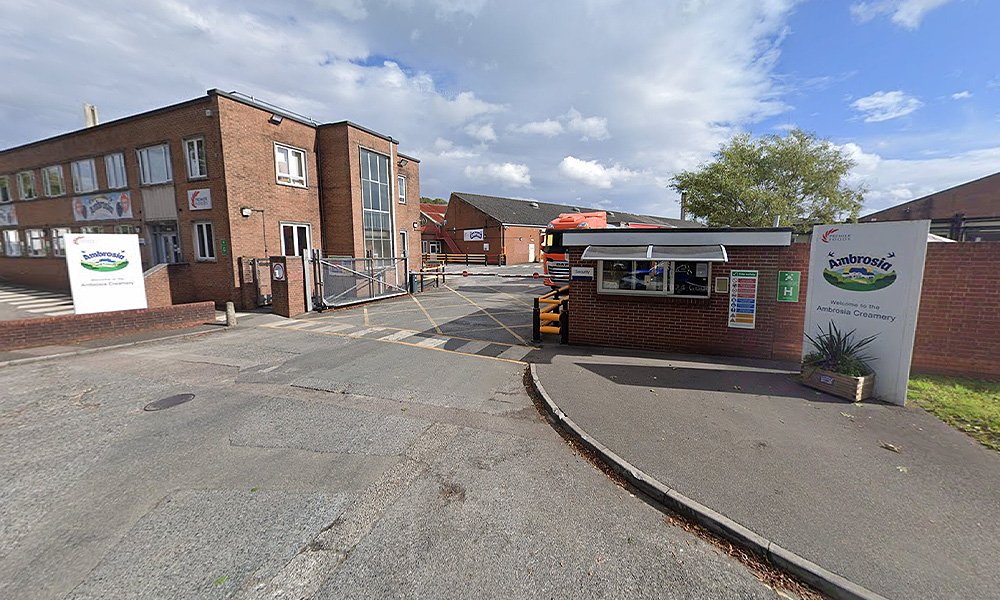
Sitting on Leat Road is the Ambrosia Factory, which is directly on top of the Lifton Station site. Sadly, this is as close as I could get.
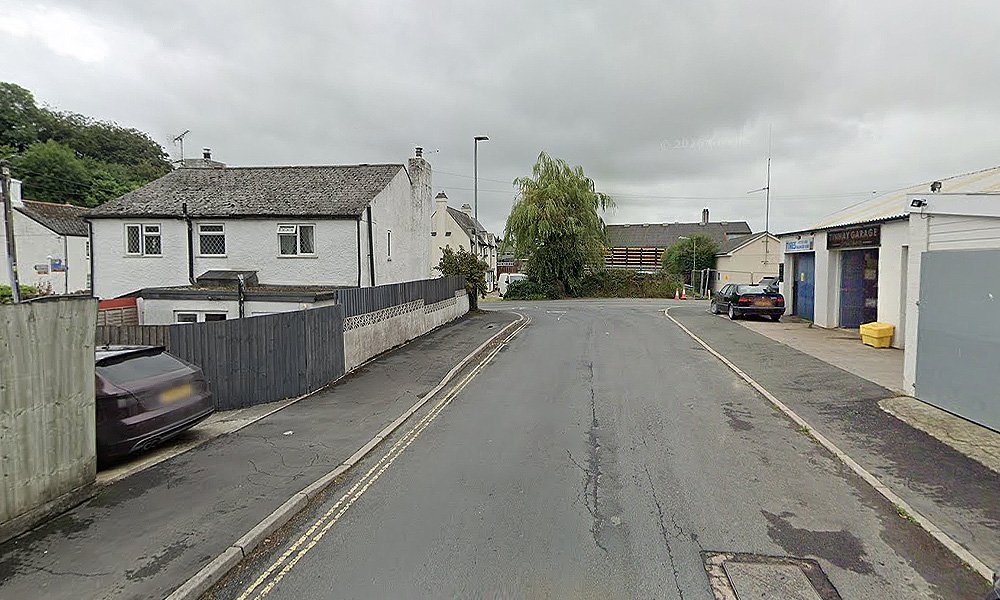
From this angle, standing on Leat Road, looking west, where the other part of Leat Road crosses, that was where the old level crossing used to be. As far as I can see, this road is where the old bridge used to be and where there track bed was.
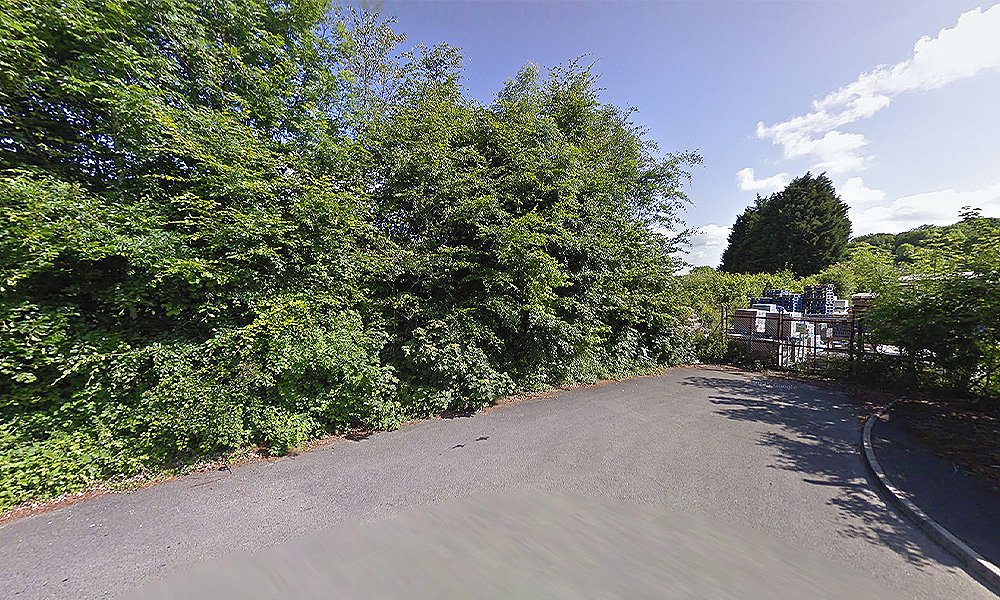
AS we head further down Lifton Road, just behind these trees, is where the track used to head west towards Launceston.
Then and Now
Again, this is sadly one of those stations where very little, to nothing, remains.
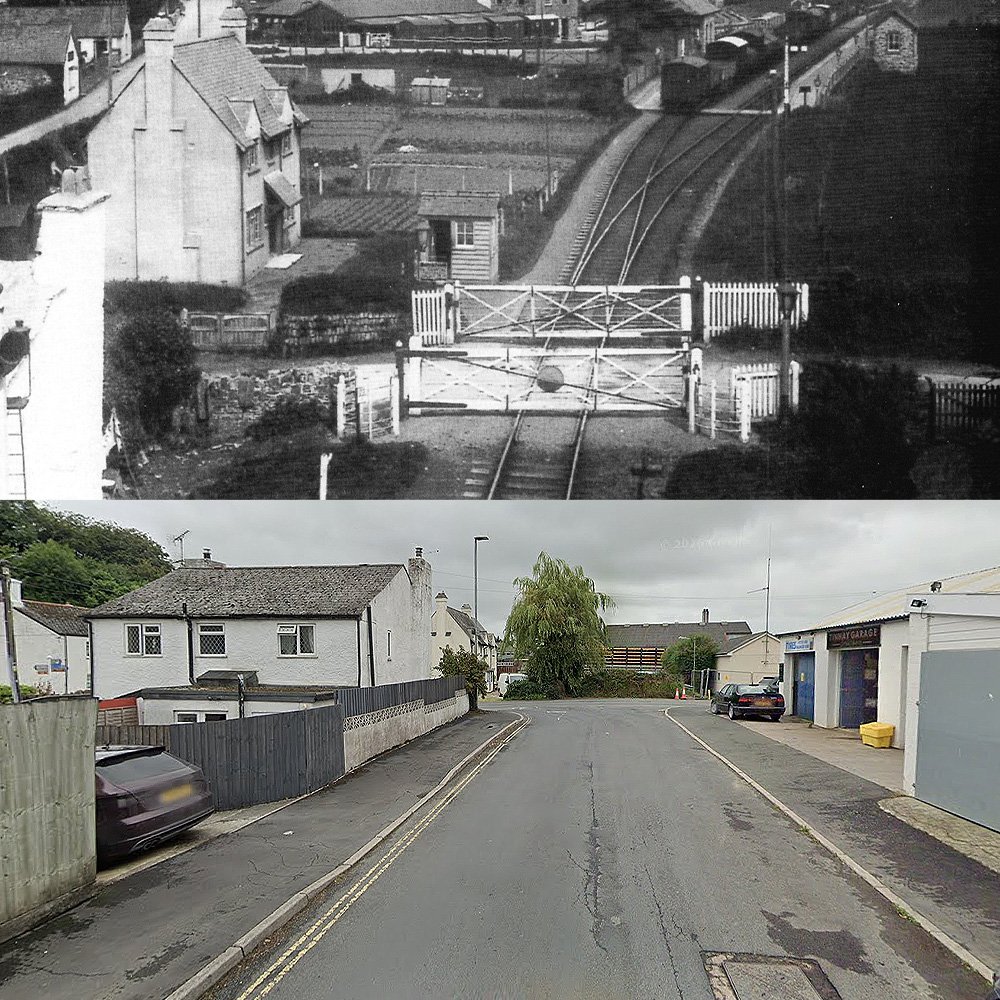
I think the then photo was taken from the bridge, which is no longer there, or possibly a hill just to the west of the station site. The now photo is where I think the track bed once was.
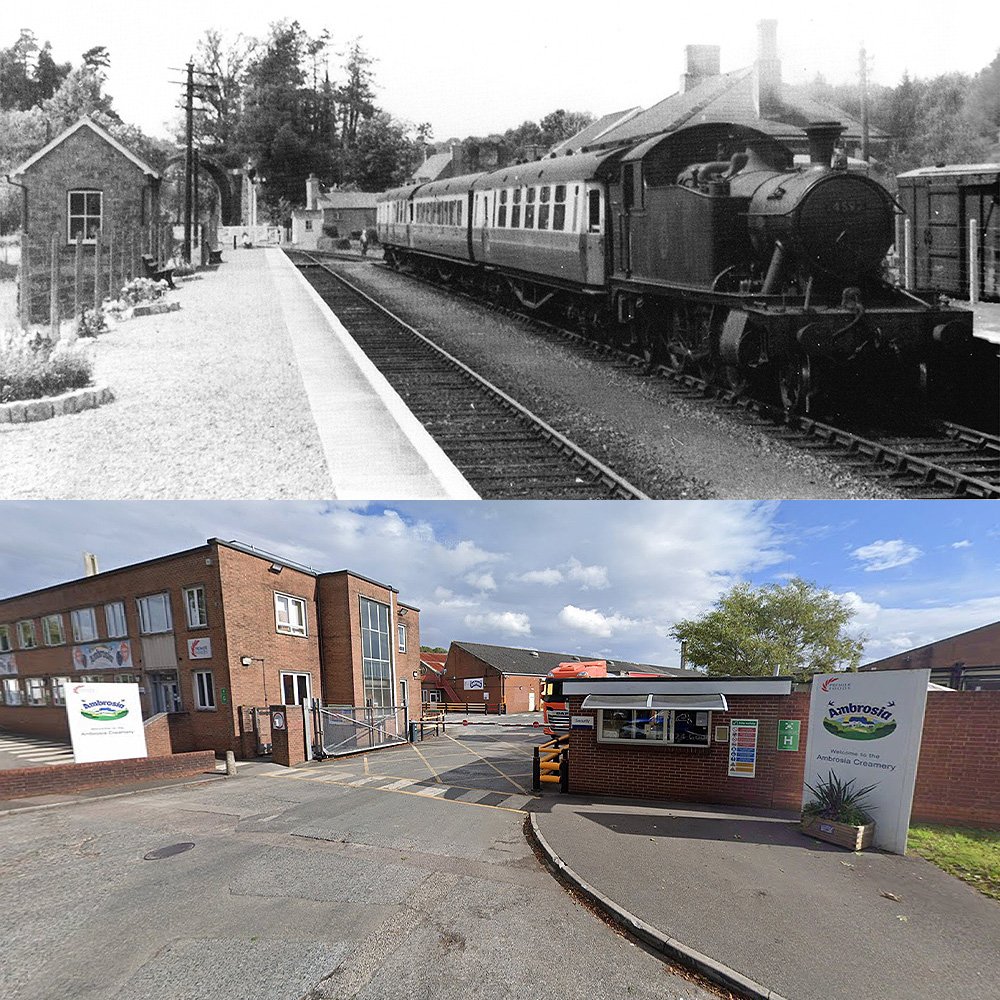
These two images are from different locations, as I cannot get an image from inside the factory area. Once, a station serving the local area, but today, completely built over.
Up Next
The next station on this old branch line was finally into Cornwall and stopped at Launceston. I have a lot of images of Launceston station and some wonderful movie footage to share as well. As I have said, if you can see the full video Plymouth to Launceston via Tavistock South on my YouTube channel.
As always, thank you to Anthony Kingdom and Middleton Press for the use of images from their books. You can find both online and they go into so much more detail about the history of the branch line.

This Post Has One Comment
Pingback: Launceston Railway Station, Cornwall - After the Closure - Aarchive Films