
Apologies for the lateness of this post about Martock. It is only about 5 minutes up the road from me, but I was waiting on permission to film there.
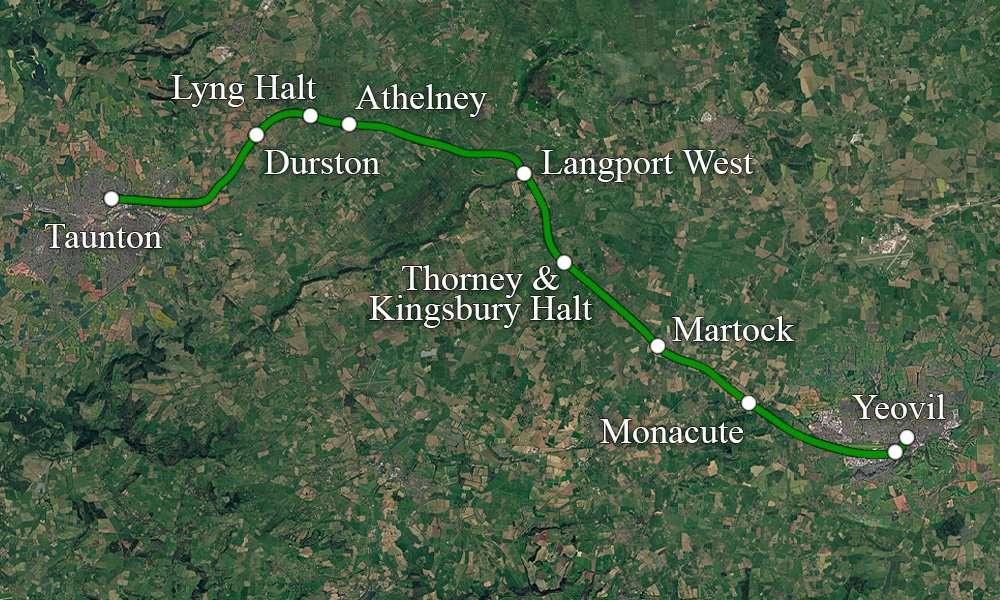
Opened on the 1st Oct 1953, Martock station was at the north end of the main street in the town.
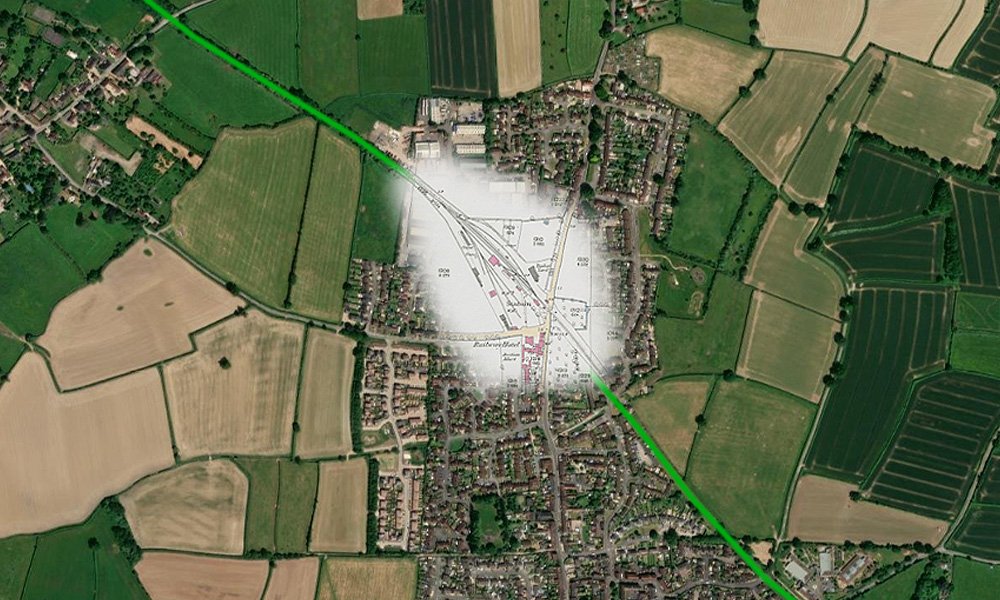
Photos of Martock
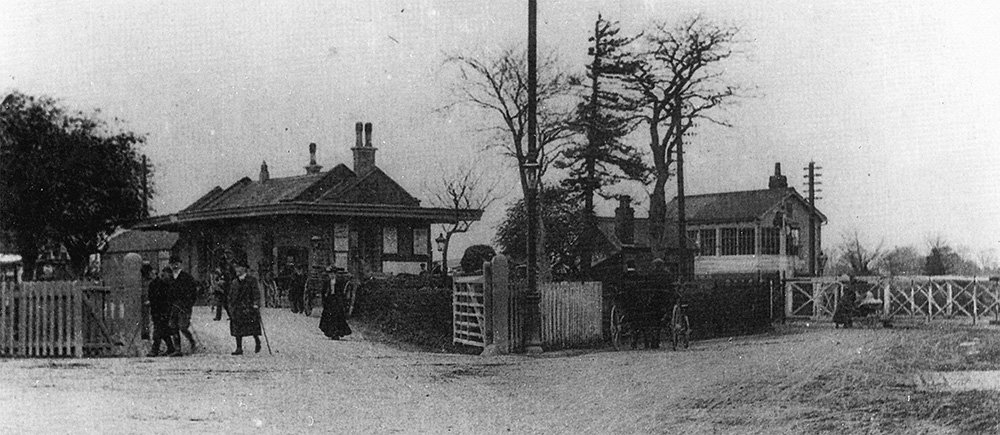
In 1903 there was a record of 15 staff members at Martock, raising to 19 just ten years later. A postcard manufacturer recorded this wonder image around the turn of the century. It includes a gas lamp mounted on a sewer vent pipe. The signal box is thought to be dated from about 1880. Image by Lens of Sutton.
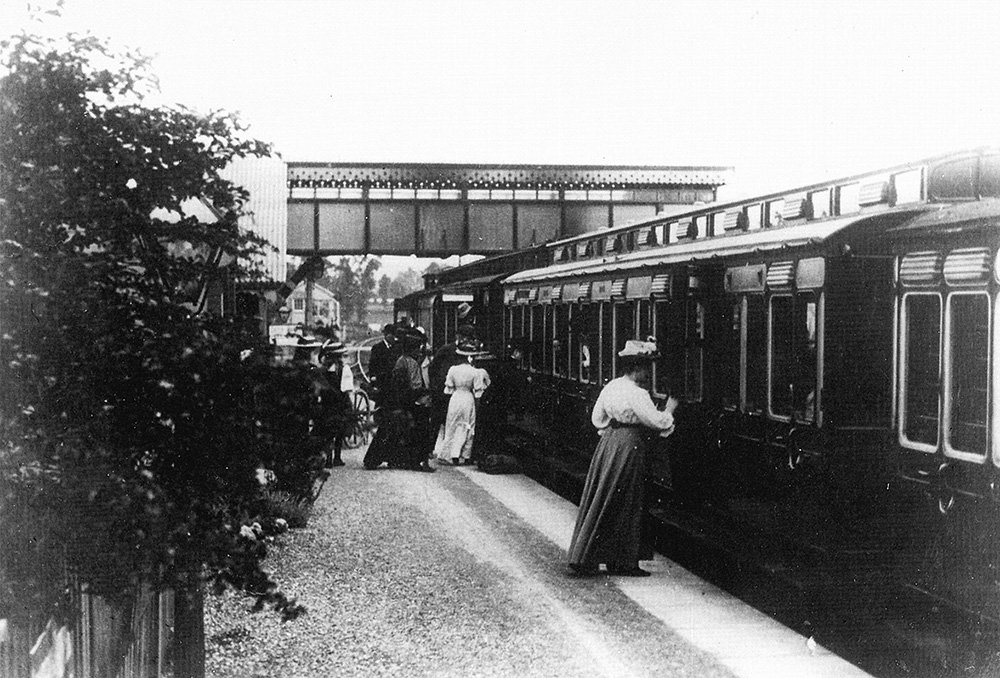
Remember a time when people would dress up for a day out? The gentlemen in a suits and hats, the ladies in dress and bigger hats. This study has Edwardian dress, footbridge valancing, and carriage roof design. The latter was know as ‘celerestory’, pronounced ‘clear-story’, the extra headroom sometimes being used to accommodate gas lights, with where an improvement to oil. Image by Lens of Sutton.
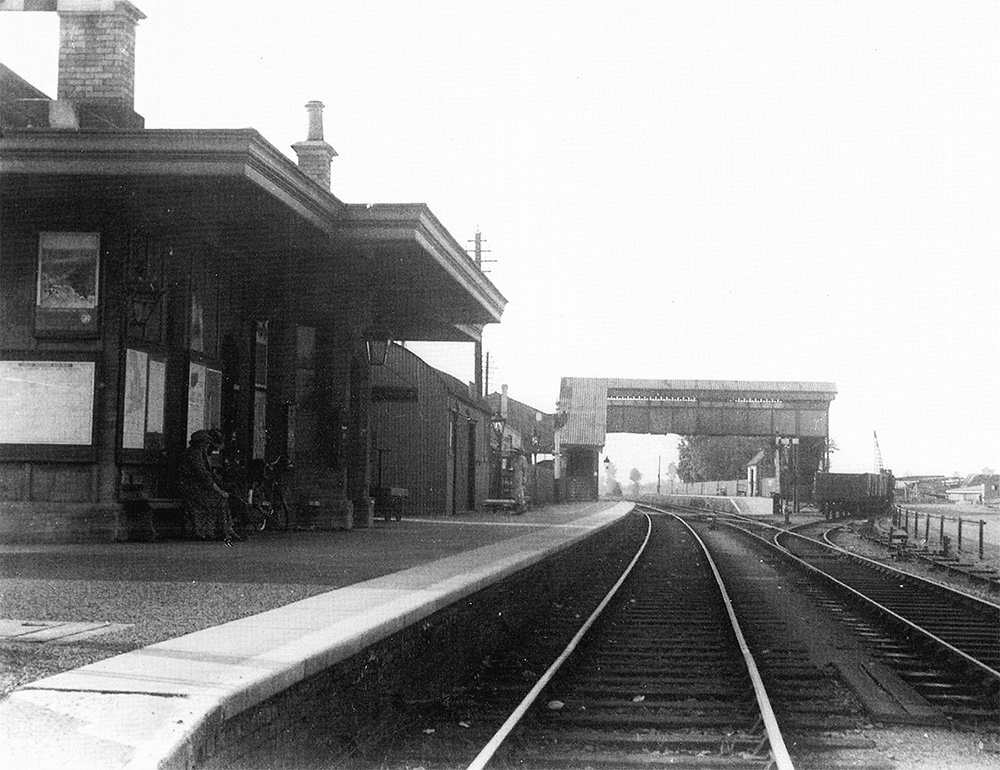
Experts think a photographer took this image sometime in the 1930s. It is on the tracks, looking north, towards Langport. As well as waiting passengers, there is the shed for the goods by passenger train, and the crane for the down siding. There was also another crane in the up yard. Image by Lens of Sutton.
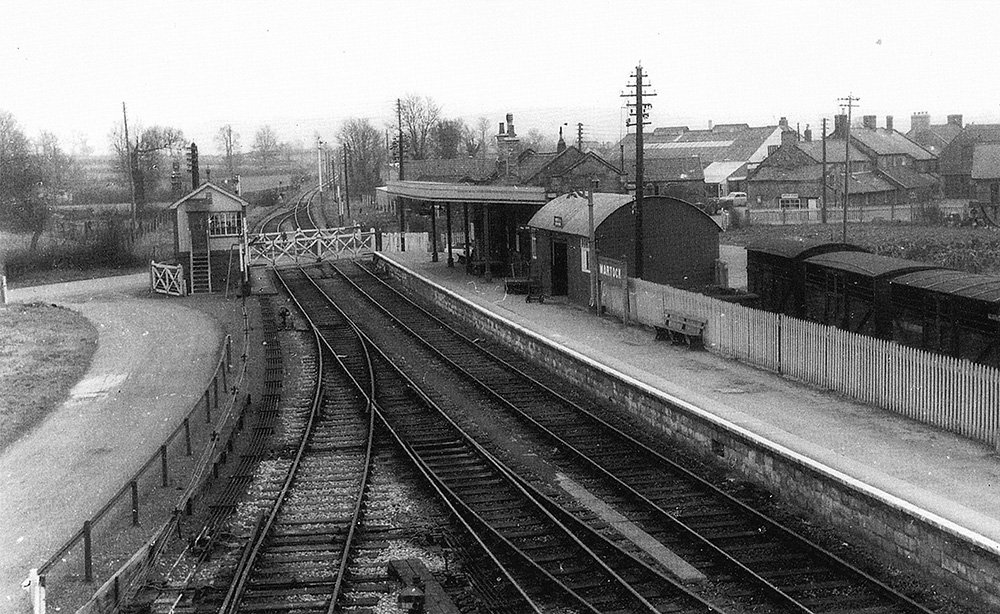
From the Footbridge
This was taken from the footbridge, taken in 1962/63. We can see the cattle wagons, which were soon to disappear from the railway scene altogether. The point rods and signals certainly make it a tortuous course. Image by C. L. Caddy.
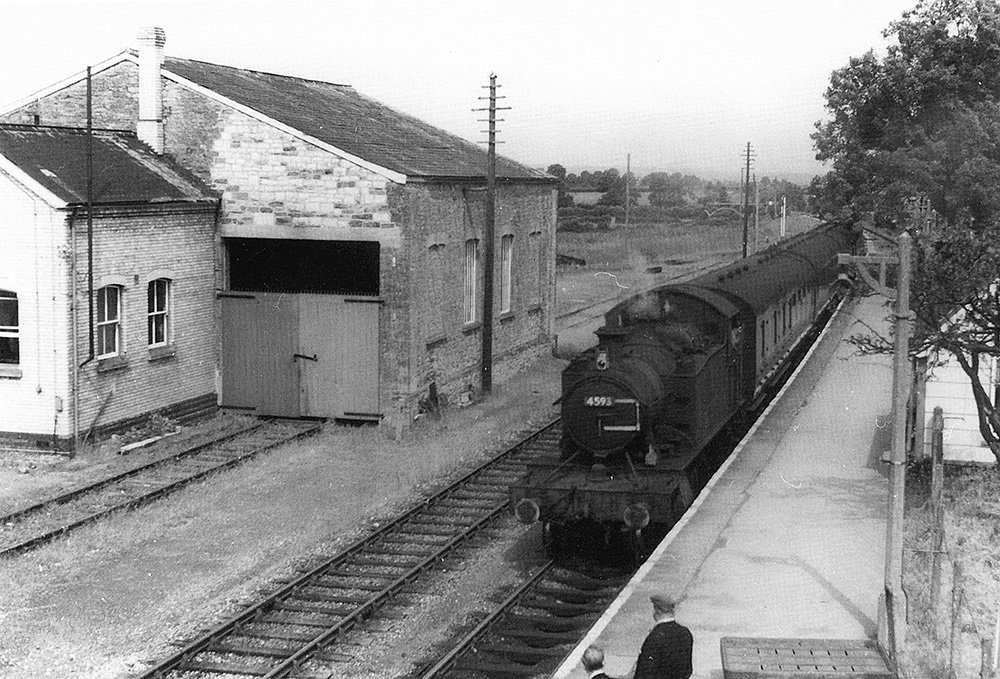
Turning around on the footbridge, we an arrival from Taunton behind 2-6-2T no 4593. Passengers trains often passed here but the staggered platforms made their photography difficult. You can see grass is starting to grow on the track to the goods shed, which remained open until 6th July 1964. Image by J.W. T. House/C. L. Caddy.
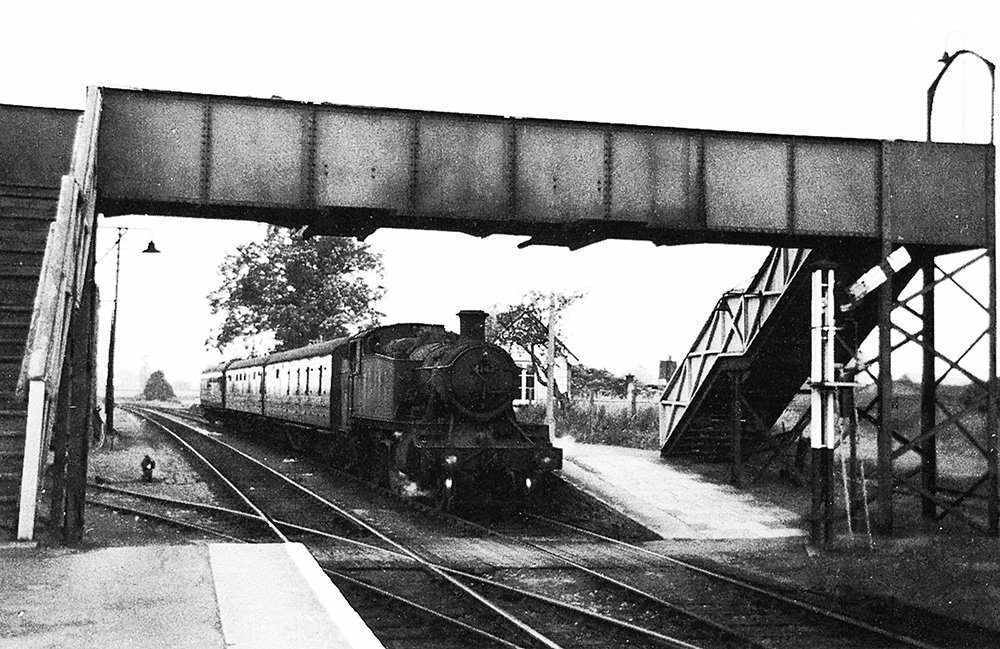
And here is the footbridge, from ground level. On the up platform at Martock stands 2-6-2 prairie tank 4143 on the 15th June 1963, with the 12:58pm Taunton to Pen Mill train. You can see the staggered platform layout, and the Southern Region upper quadrant signal seems out of place on this GWR branch. Image by S. P. J. A. Derek.
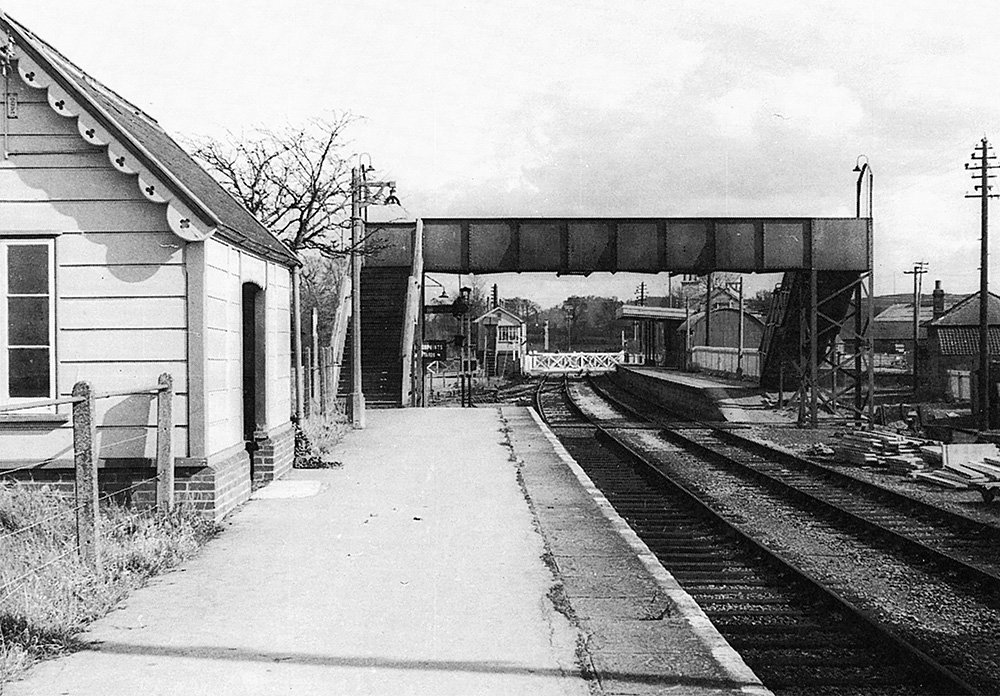
A view from the up platform, looking towards Yeovil, again showing the staggered platforms and the footbridge. Martock used to handle a considerable amount of goods traffic. The reverse cross over, from the image above this one, into the down goods yard, was taken out of use on 20th December 1963. Image by C. L. Caddy.
The Staff at Martock
Any of the stations on the line wouldn’t be the same without the staff that worked there.
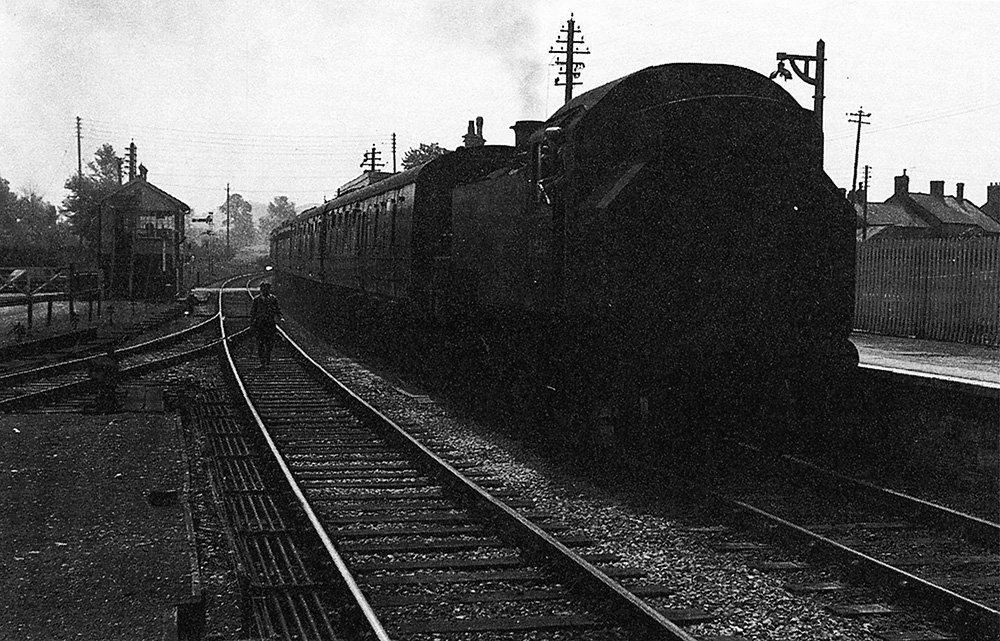
Not the best image, but we see Tom Howell walks along the track from this signalbox to exchange the single line staff with the fireman of class 3MT 2-6-2T 82044. The engine had just arrived with a Yeovil to Taunton train in May 1964. Image by J. Cornelius.
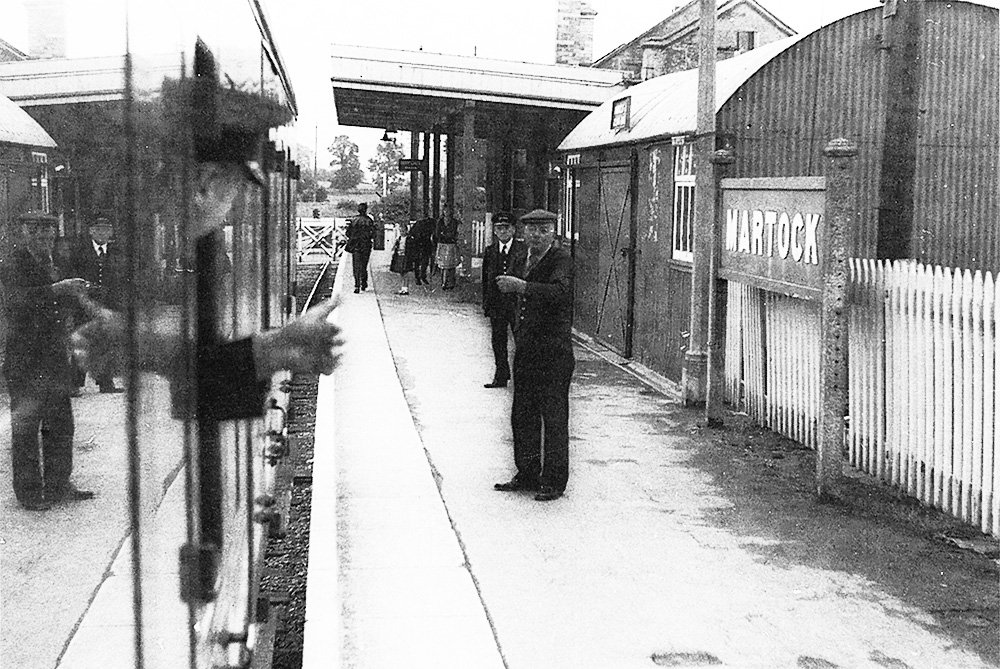
Thumbs up, but it was a sad day. The station staff have the last work with the guard on a Yeovil to Taunton train as it leaves Martock on 13th June 1964; the last day of passengers traffic on the branch. Image by C. L. Caddy.
The Signal Box
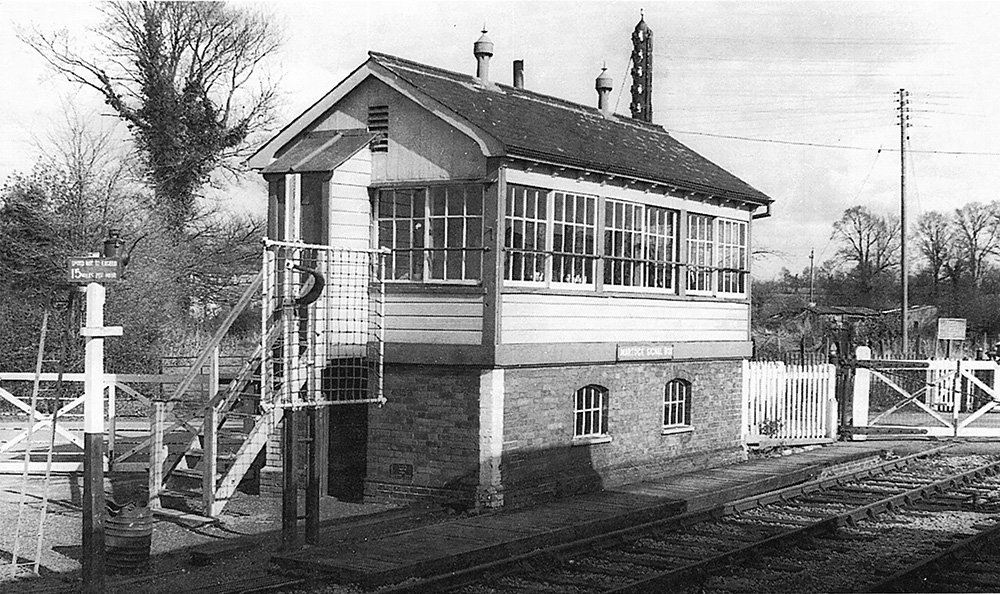
The signal box was situated near the level crossing, was opened circa 1880, originally with an 18 lever frame. The frame was renewed in 1904 to 27 levers, later to extended to 28 levers, stud locking. The original box size was 16ft 16ins by 11ft 6ins, and elevated 6ft 3ins. The 1904 extension increased the length to 24ft 3ins.
Martock Today
I was given permission to film at the site today, but sadly there is very little to see.
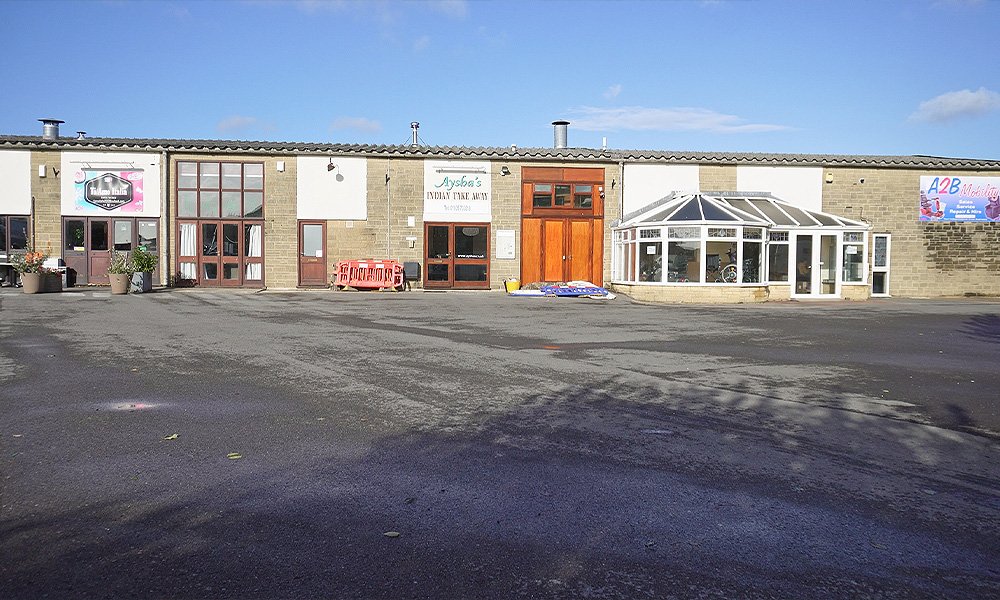
This is where the station was and looking at where the track ran. As you can see, there is nothing of the track or platform left today.
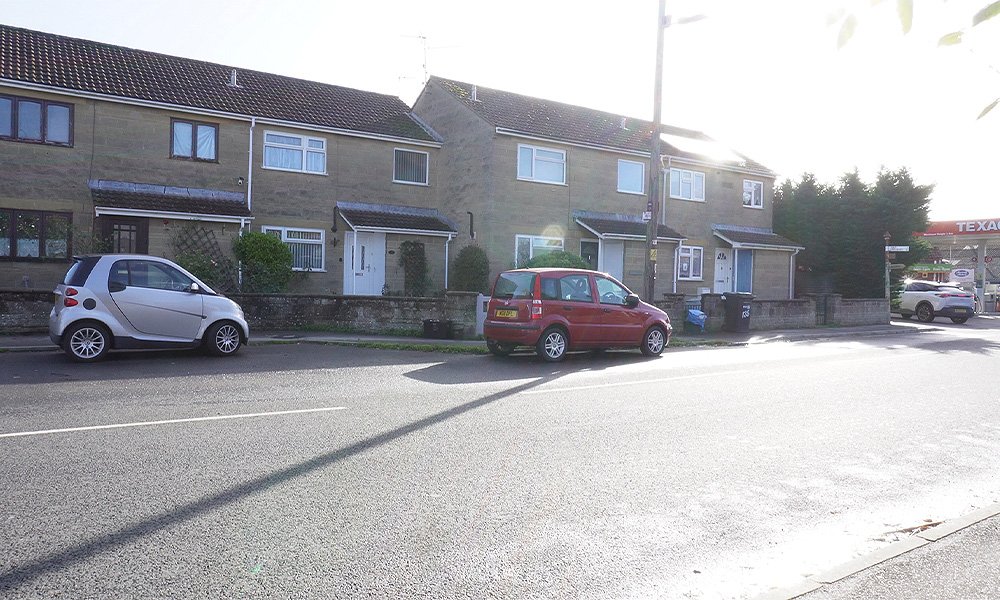
This is where the level crossing would have been, again, at a good guest. This is looking towards Montacute and on to Yeovil. As you can see, nothing of the track remains at all.
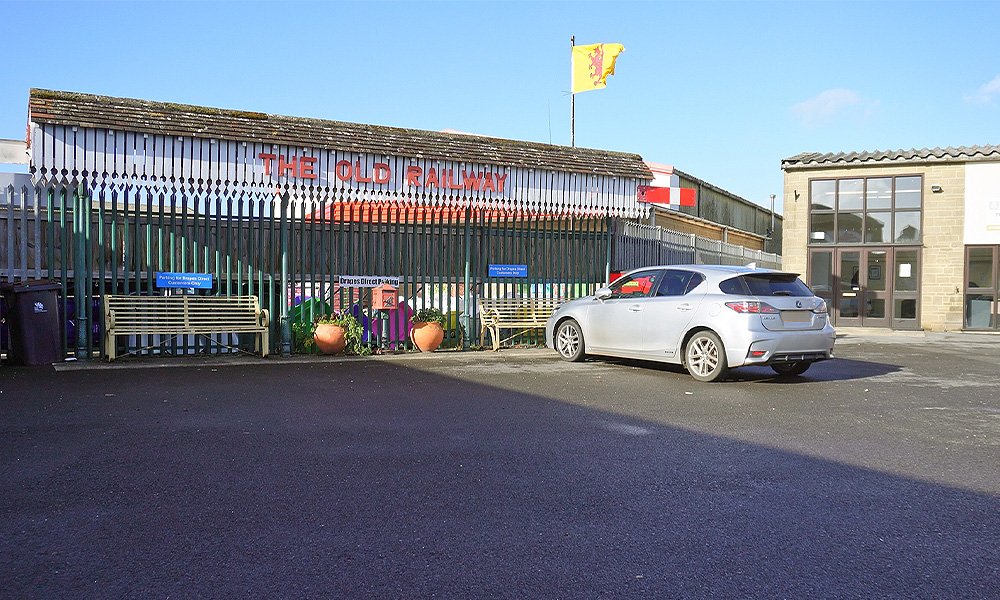
That’s not to say people have forgotten the railway, there are still signs left over that a branch line ran through here. As far as I can tell, this location wasn’t in place of any original buildings, though.
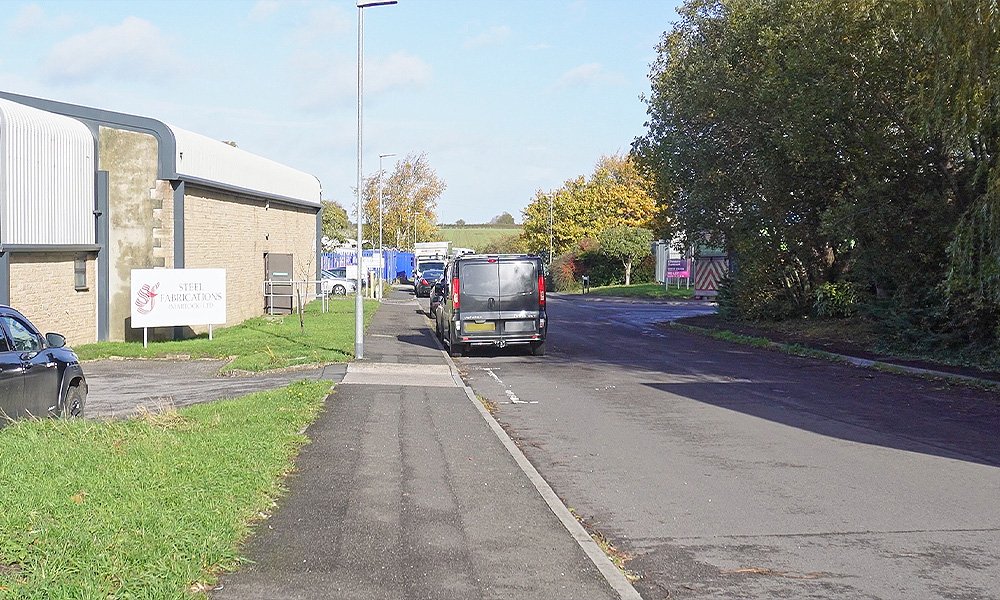
Off North Street, this is Great Western Road. It is roughly where the original tracks ran, but again, it’s hard to tell.
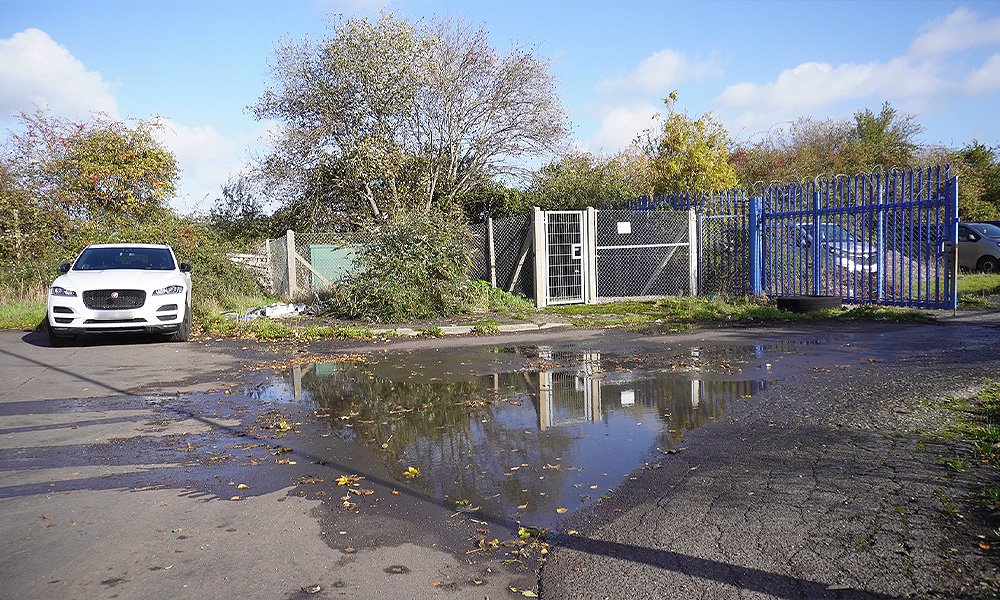
At the end of Great Western Road, this is where the trackbed would carry on towards Langport. It is not completely closed off and I couldn’t find a way through.
The Railway Hotel
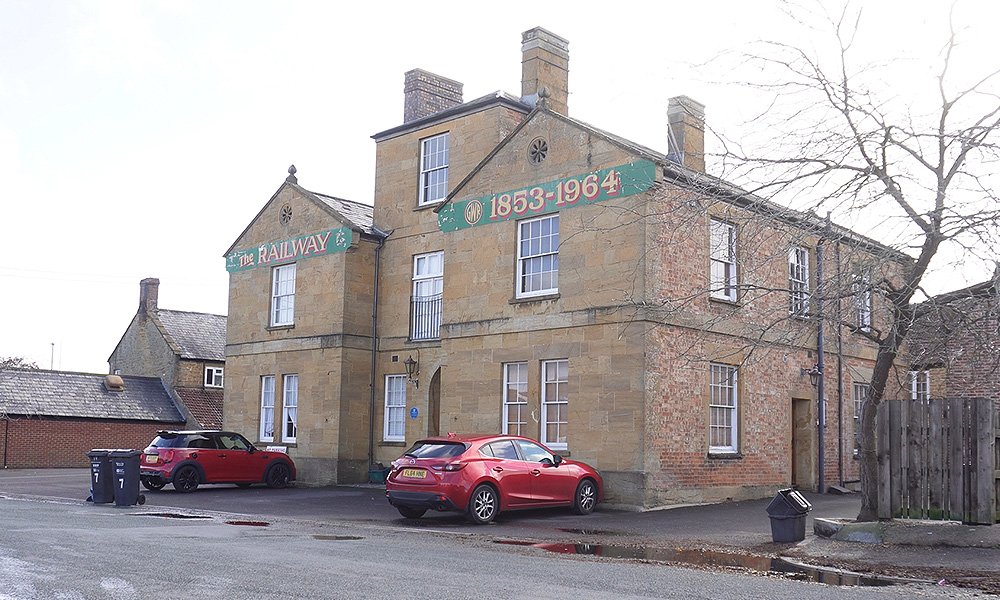
One thing that does remain is the Martock Railway Hotel building. It’s located on Coat Road, Martock and is grade II listed. It’s now been converted into flats for local residents.
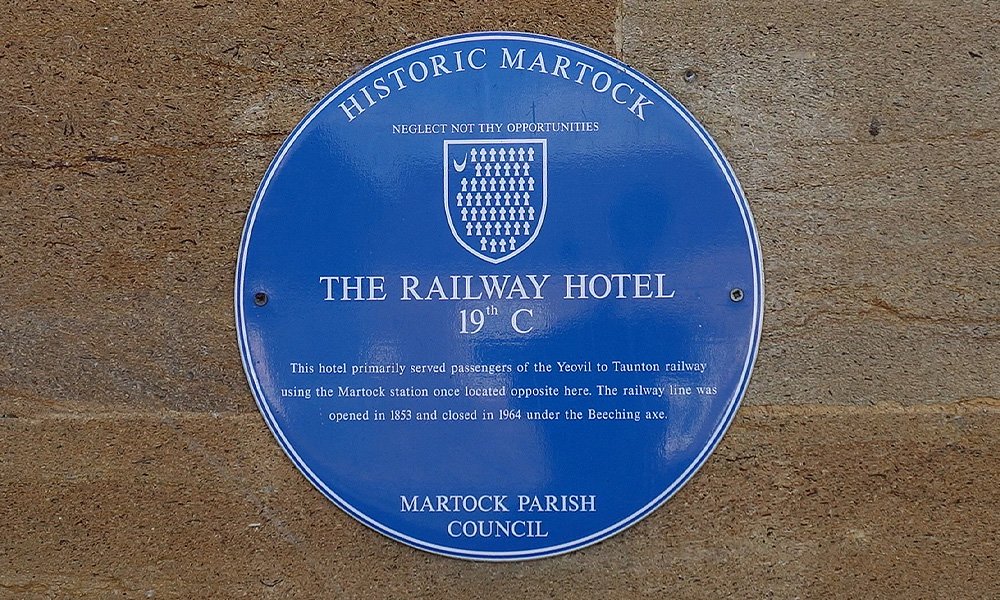
There is a plaque on the front of the building showing the history of the hotel and how it served the Yeovil to Taunton branch line.
Then and Now
Even going to the location today, it’s been almost impossible to line up any of the photos, as there is very little to go by, but I tried.
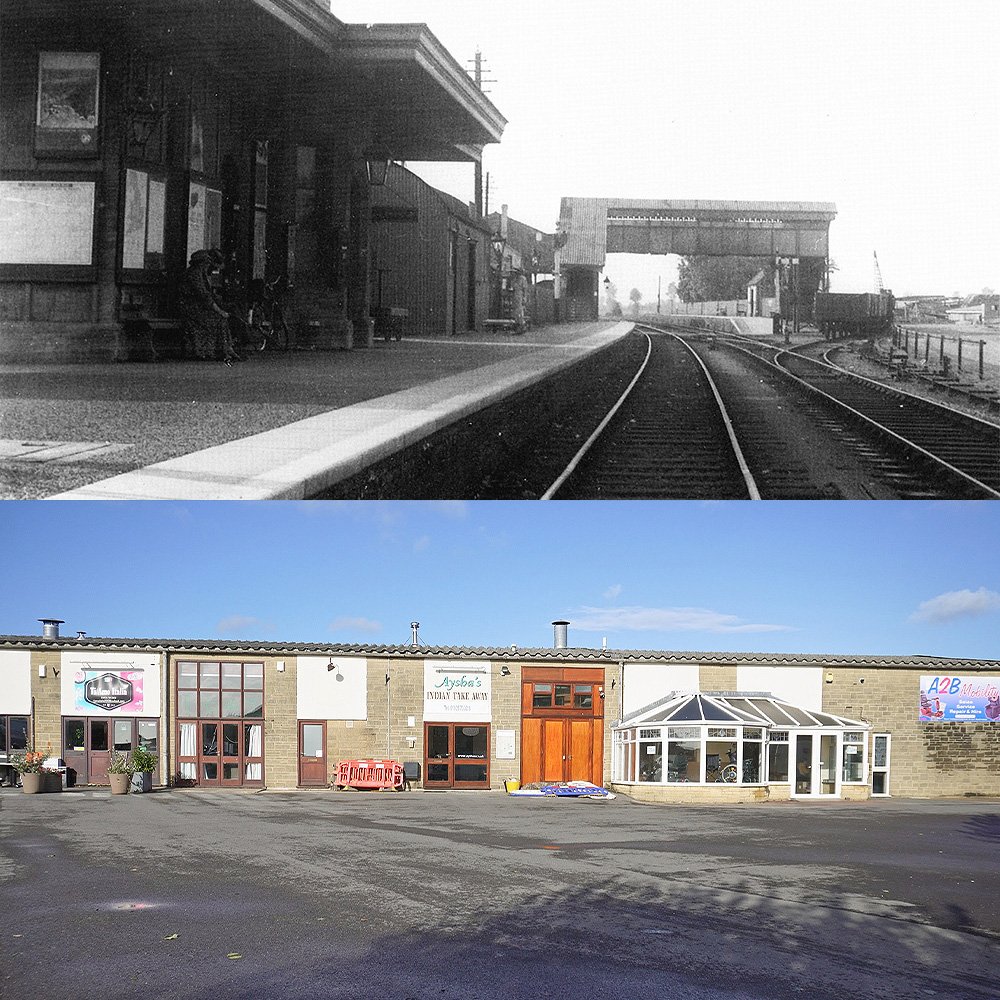
Looking north westerly, the then shot looks down the trackbed, standing on the tracks. The now image is the best guess I could make; it’s looking in the same direction, but I’m not 100% sure.
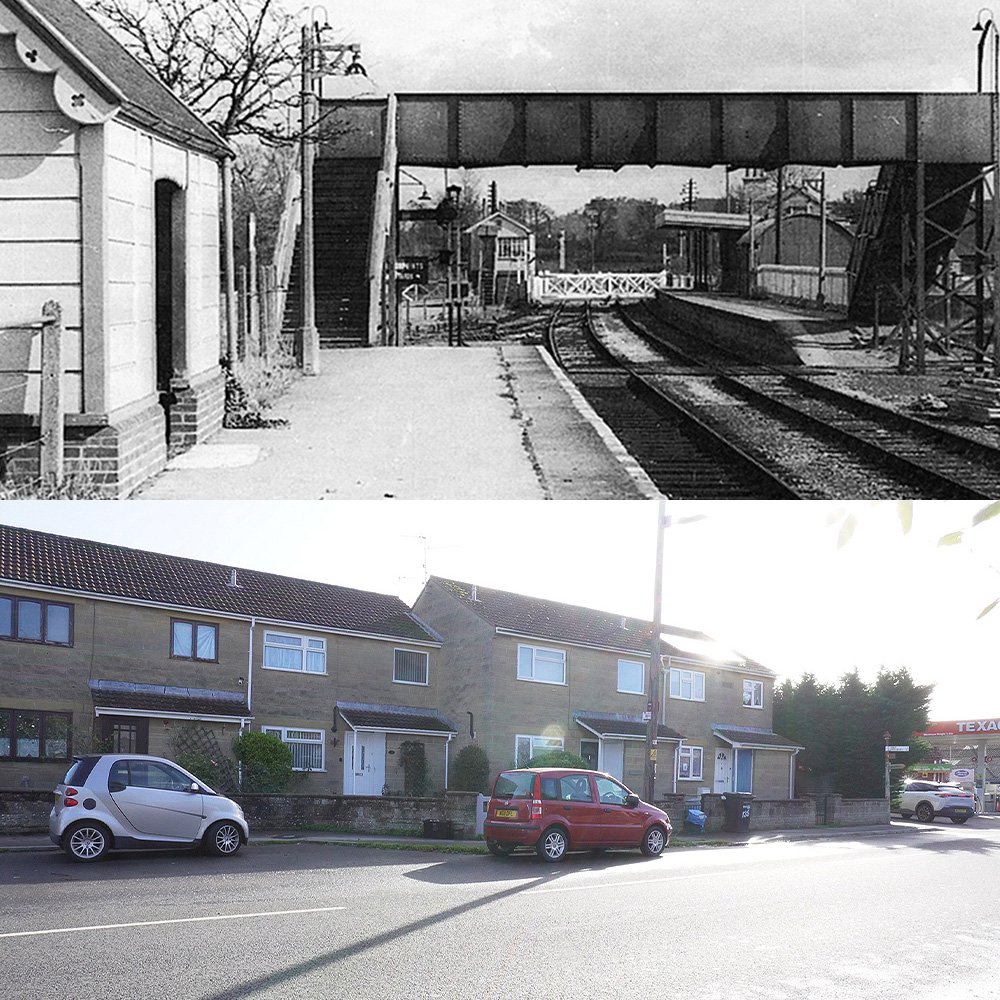
I had to zoom in a little on the then photo, but it shows the footbridge, the platform and the signal box. The now photo is where the level crossing should be.
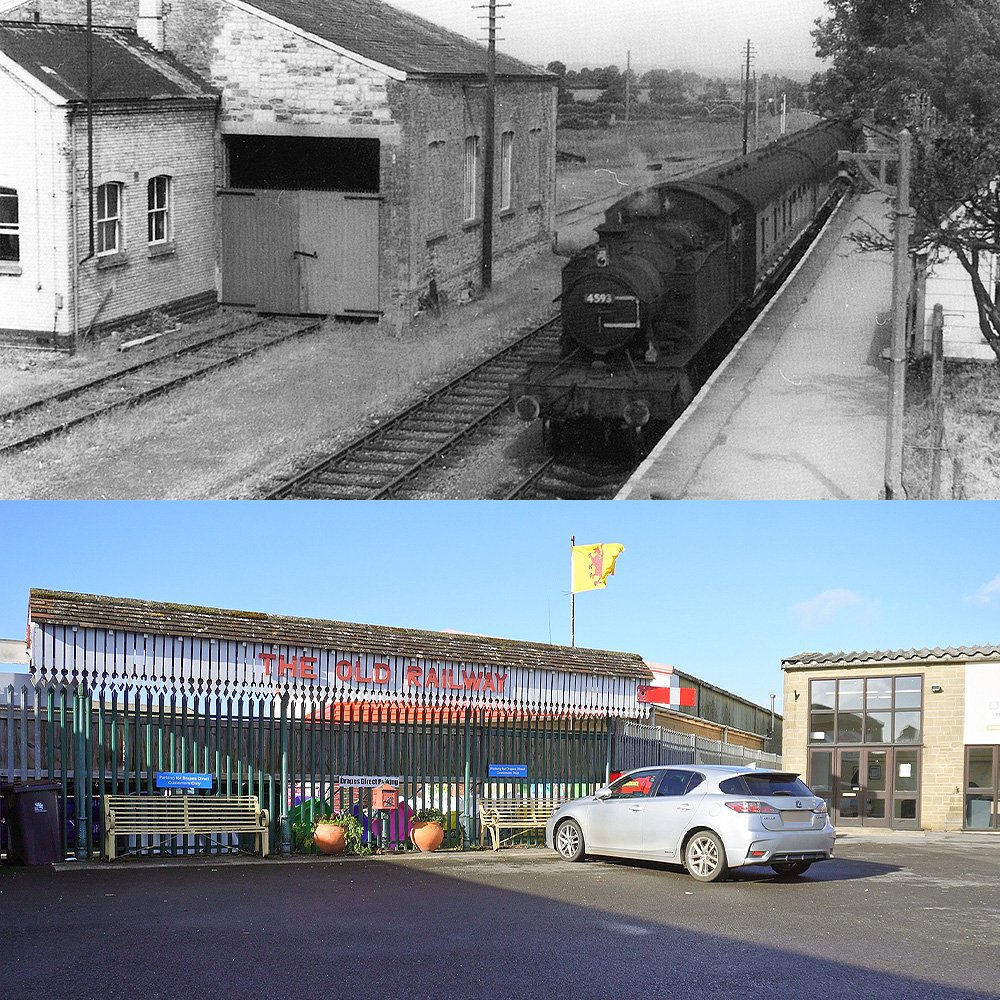
I’m not sure if this is correct at all, if I’m honest. I think it’s looking in the same direction, but I cannot be sure. Martock was such a busy station, but sadly so little is left.
Up Next
I’ve covered Durston, the original end of the Yeovil branch, but I still need to cover Taunton. I’m planning a days filming, when the weather lets me.
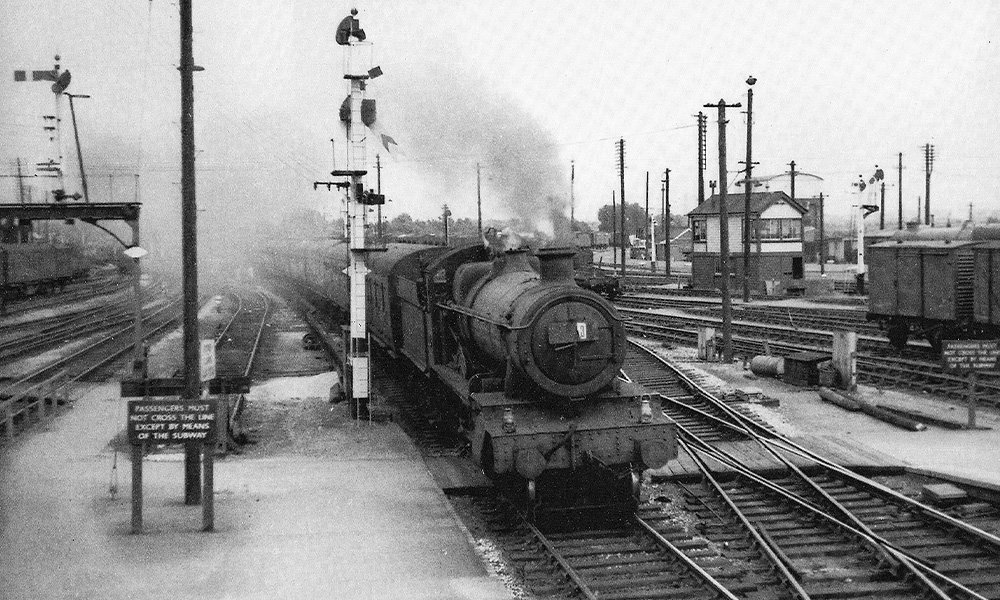
Thank you again to Derek Philips for the use of the images from his book, Working Yeovil to Taunton Steam. Also thank you to Middleton Press for the use of the images from their books, be sure to check their website.
I don’t want to name him, but also thank you to the person who gave me permission to film at the site.