
We’re nearly at the end of the line, we’ve left Yeovil and headed across the Somerset Levels, almost to the point of Taunton. I recently found a wonderful program that creates little animations of a route you need to follow, which heads through Lyng and Druston.
As we approach the end of the line, there are still two stations/halts to cover. Lyng Halt and Durston; which was the terminus, before the line extended to Taunton.
A More Direct Route to Taunton
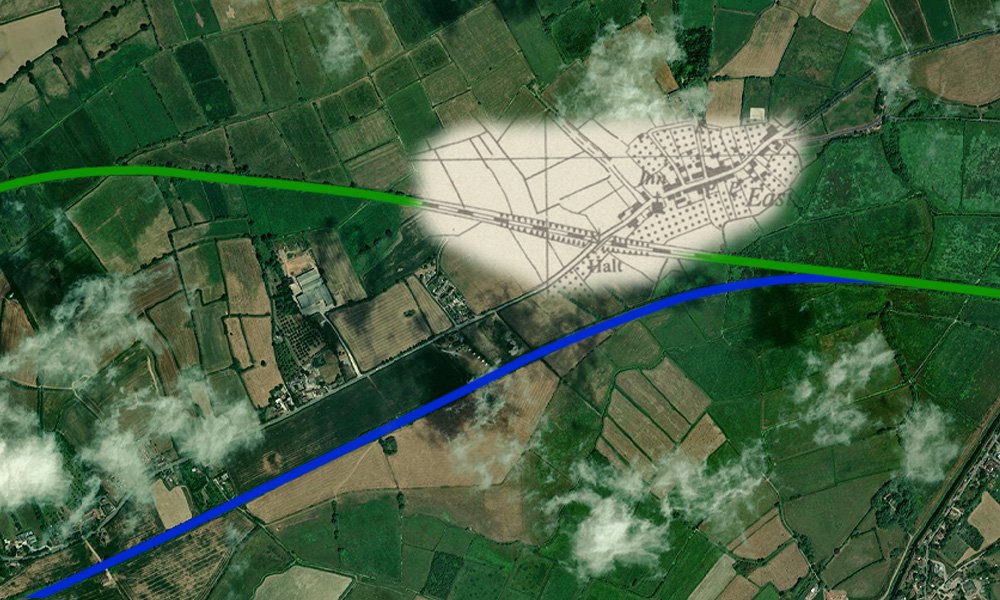
The halt was just to the south west of the village of Lyng. Originally, the line ran through Lyng, then Durston, before joining the line into Taunton (the green line). Later, planners decided to shorten lines around the UK and bypassed Lyng and Durston for a more direct route to Taunton (the blue line). They opened the new route to goods traffic on 11 June 1906 and to passengers on 2 July 1906.
Lyng Halt
A humble little halt, and sadly, very little in the way of images. The halt was opened later, on the 24th September 1928.
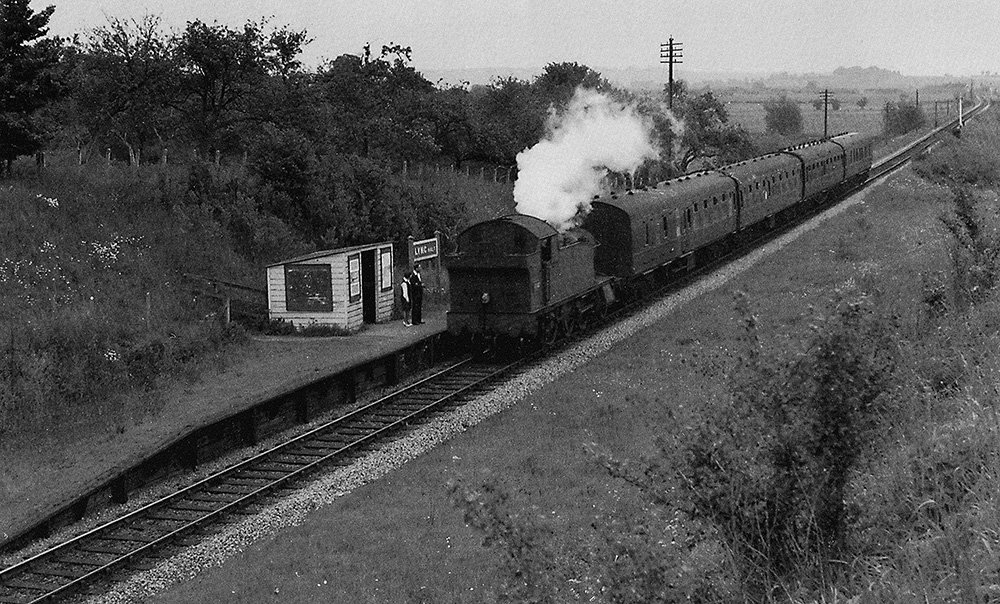
A 2-6-2 prairie tank, no 4593 stops to pick up passengers on the 30th May 1964. It was the 11:21am from Yeovil Pen Mill to Taunton. Image by R. Lumber.
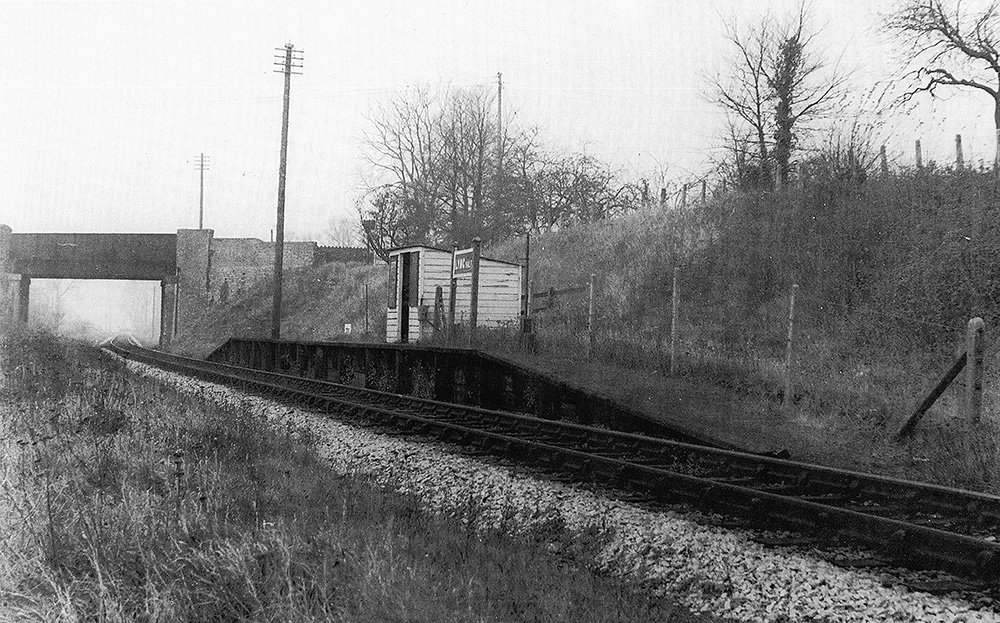
There was nothing complex about Lyng Halt, with a simple platform and shelter. This view is looking to the west, towards Durston, on the 8th December 1963. The road bridge is still there, but sadly, nothing remains of the halt, platform or track. Image by C. L. Caddy.
Lyng Today
I haven’t had the chance to get to the site and take any photos or video, but I have an image from Google Maps.
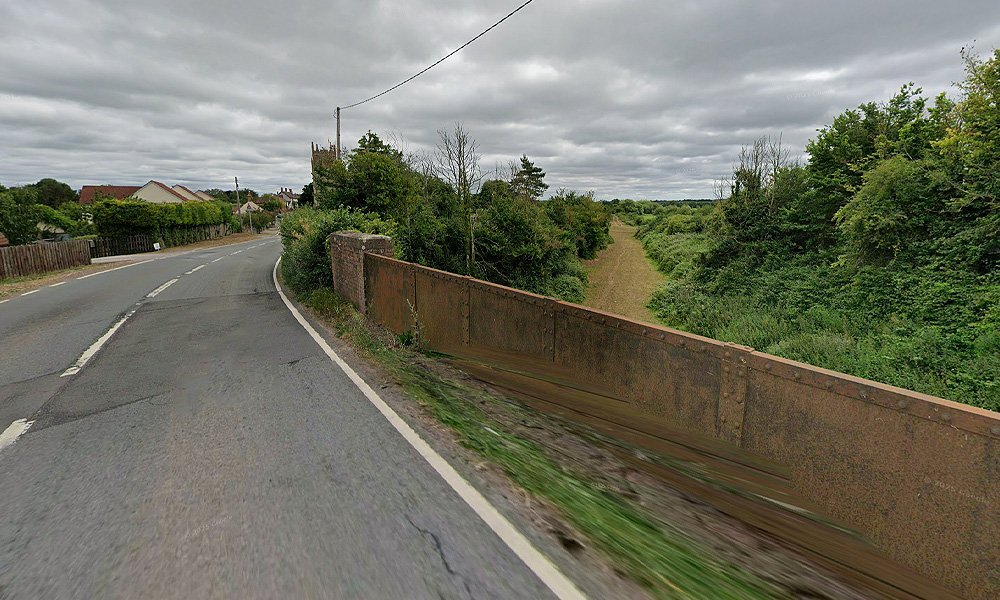
This photo is looking east, towards Athelney. As you can see, you can still make out the trackbed, but nothing remains where the halt once stood.
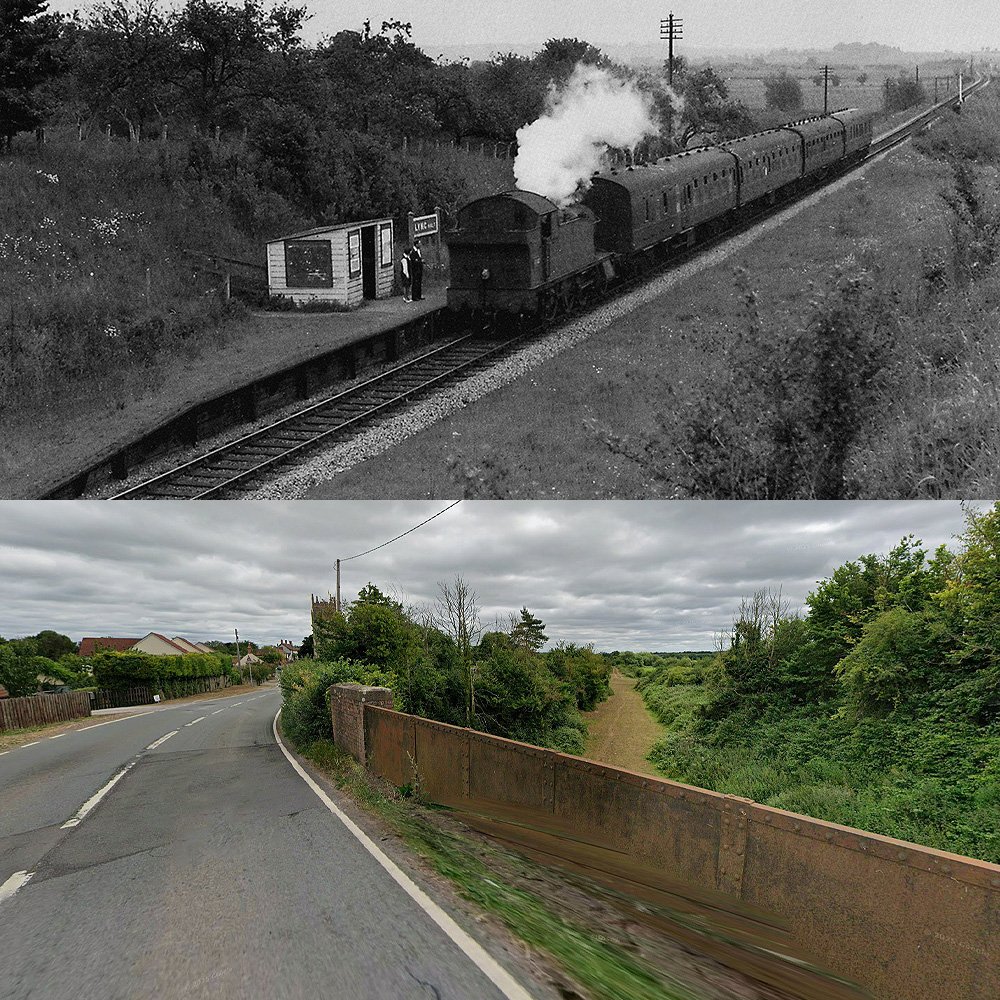
Here is a Then and Now of Lyng that shows the difference and how, sadly, nothing remains today.
Durston
When the line was originally built, it ran from Yeovil Henford to Durston. The Bristol and Exeter opened its Yeovil branch line on 1st October 1853 from a new station situated at the north end of the cutting at Durston.
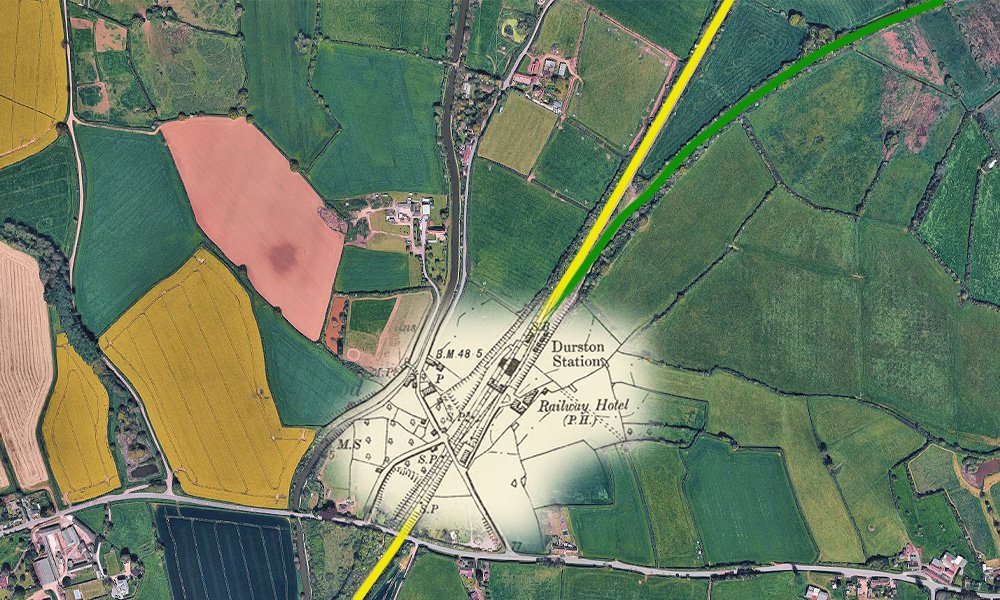
This overlay is from an Ordinance Survey map dated from the 1900s. The yellow line is the main GWR line from Taunton, with the green line showing the old track from Yeovil.
Photos of Durston
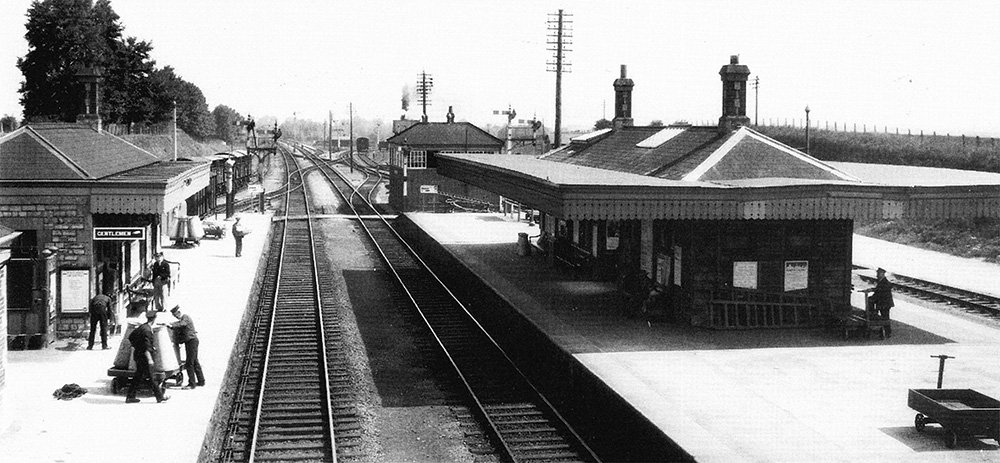
Standing on the footbridge and looking north, here is a wonderful overview of Durston in 1934. It shows the single line, on which we continue our journey, curving right beyond the 71-lever signal box, which opened in 1895. The staff, on the left, seem very busy, as cattle wagons stand in the up siding. The shed, in the distandce, was for the Permanent Way Dept. Image by LGRP/NRM.
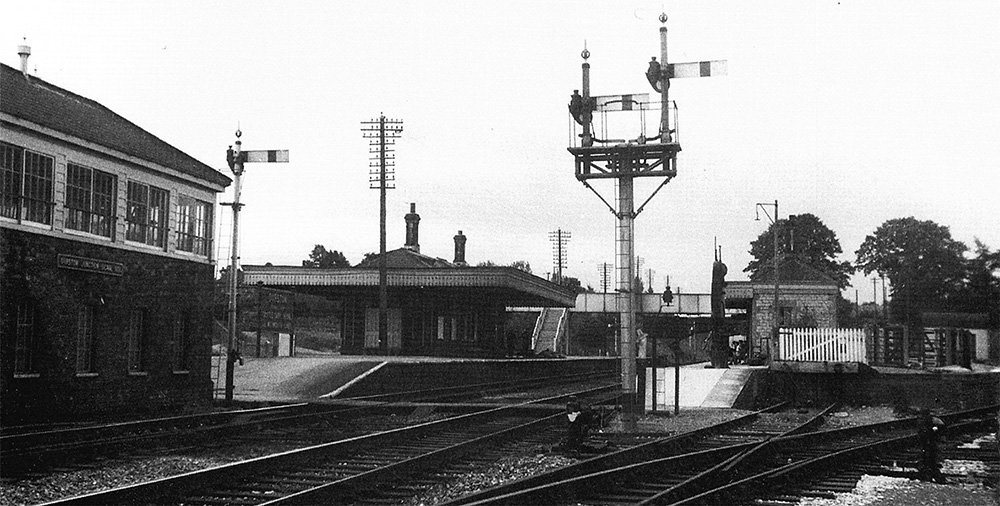
This time, looking south, we can spot the small goods shed beyond the cattle pens. The lamp silhouetted against the the footbridge was illuminated the single line tablet pick up arm. Image by H. C. Casserley.
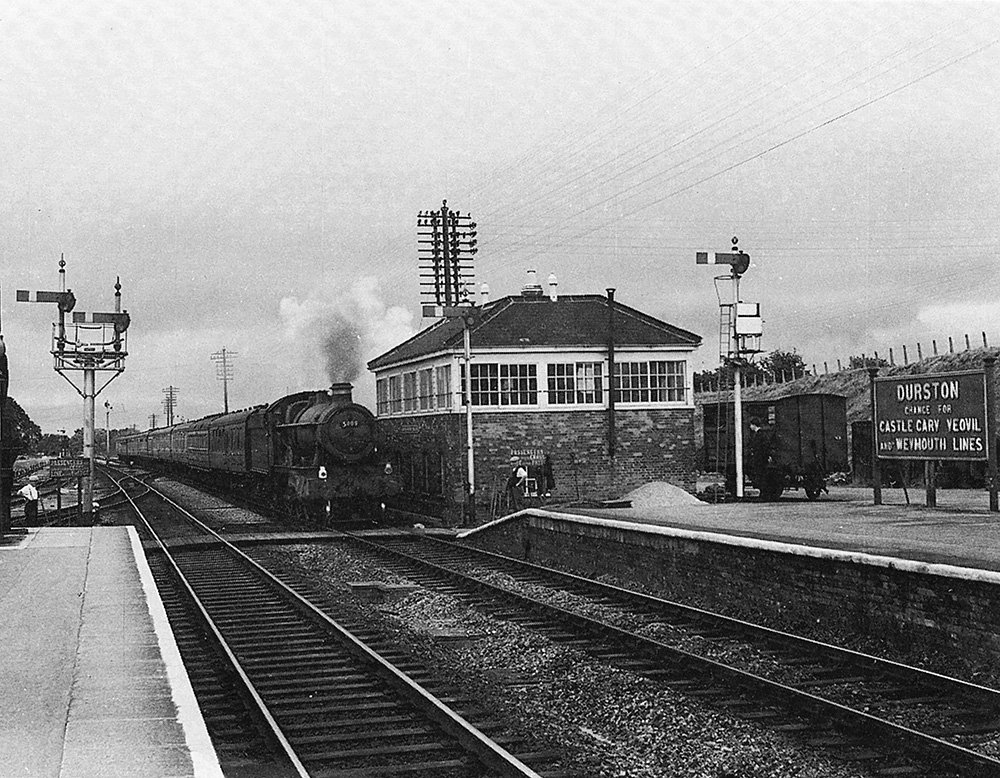
Today it is the 20th August 1957, 59xx Hall class 4-6-0 No 5999 ‘Wollaton Hall’ on the Bristol to Taunton down main line and hustles through Durston was an express. It’s thought that many of the passengers thought that it was just another large stop that seemed to be in the middle of nowhere. It did have an impressive looking nameboard, though: “Durston – Change for Castle Carry, Yeovil and Weymouth lines”. Image by H. B. Priestley/Derek Philips.
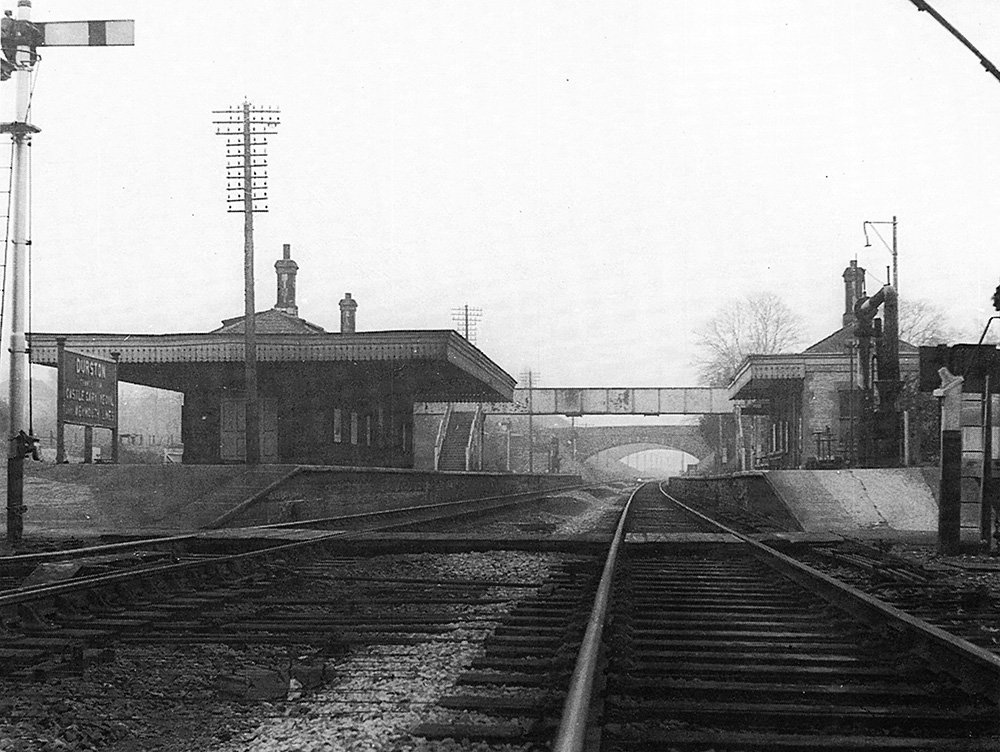
We sit on the down tracks at Durston, looking towards Taunton, on 8th December 1963. Branch trains from Yeovil and the main line trains from Bristol served the island platform on the left. The token pick up arm on the right at the end of the up platform was for the use of the Yeovil branch trains arriving from Taunton for the single line to Athelney. Image by C. L. Caddy.
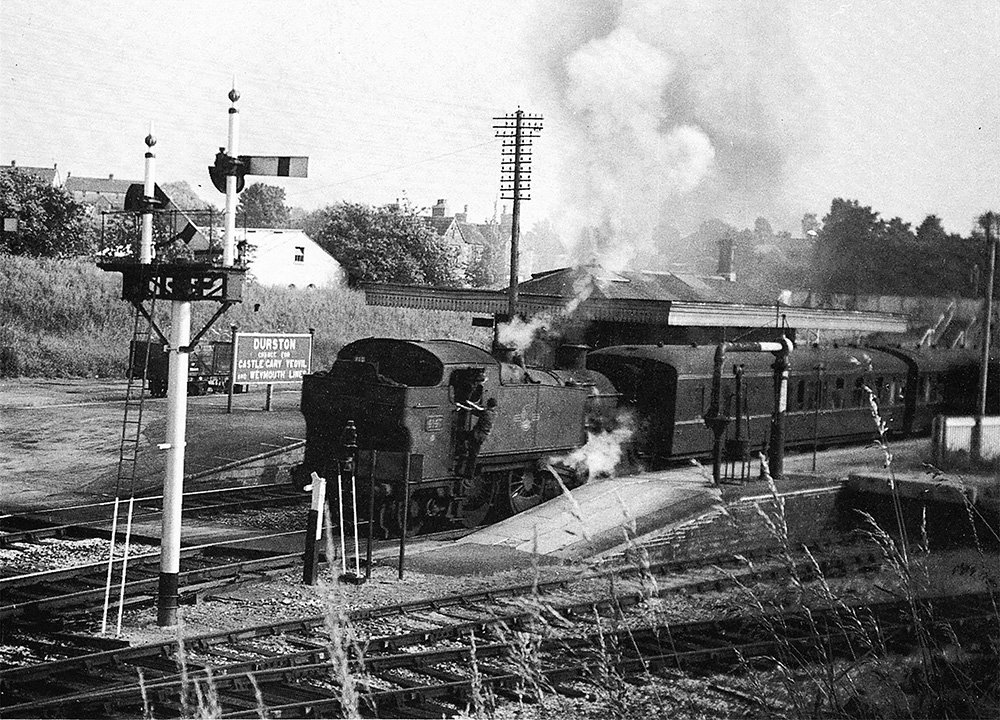
With the signal arm lowered for the branch to Athenley, 2-6-2T departs from the up platforms at Durston on the 8th June 1963. Image by S. P. J. A. Derek.
Duston Signal Box
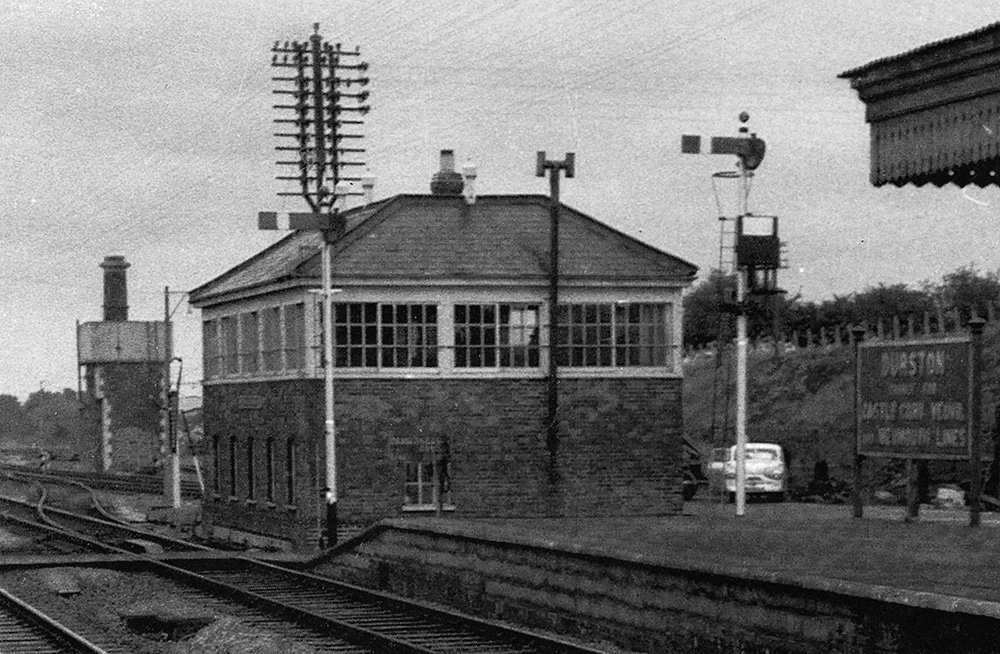
The first box at Durston was opened in 1974, then replaced with a new box circa 1895, this being the one that latest until 1964. It seems to have been rebuilt soon after opening. It housed a 71 level frame from the turn of the century.
Durston Today
Annoyingly, I was near the location yesterday, but I didn’t have the time to stop. I had filmed at Martock, Langport and Athelney and time just escaped me. I will be getting back to the old site location soon, though, as I want to get the entire video of the Yeovil to Taunton branch finished soon. The following images are the best I can do from Google Maps.
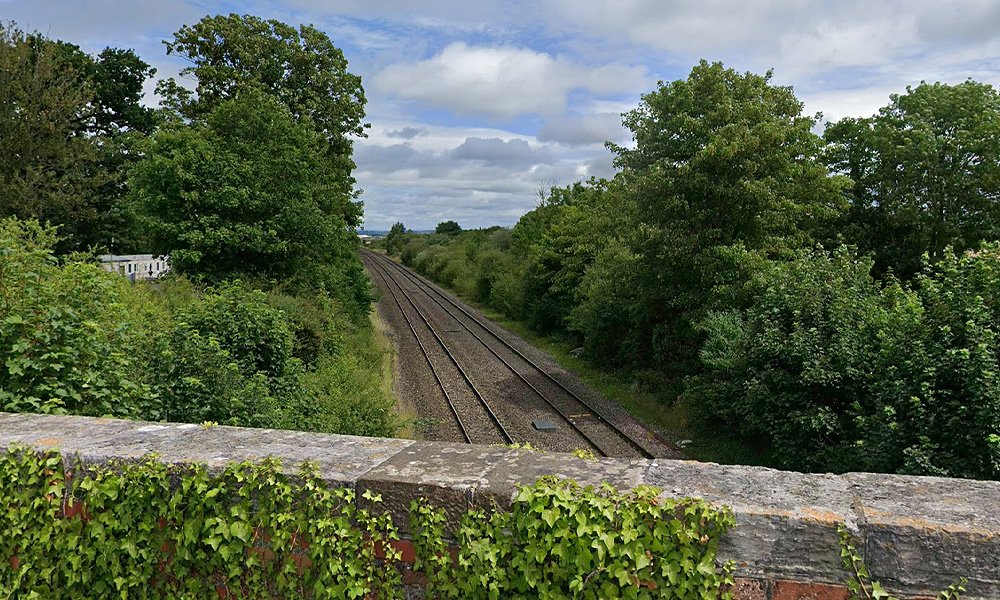
This is sadly the best I can do. The site is now completely gone, and it seems there is no way to get anywhere near the old station was. I will still try, but like so many other old stations, everything was removed and now, nothing remains. I can’t even do a then and now with any kind of accuracy.
Up Next
We’re nearly there, we’re nearly at Taunton. There are a couple of places I want to touch on before we reach the end of the line; like Creech St Michael. Then, it’s all on board for the full video about the entire branch line. I also plan to include some images and history of Yeovil Junction. Even though it wasn’t on the same route, it seems rude to leave it out; it’s still part of Yeovil’s history.
Thank you to Derek Philips for the use of the images from his book: Working Yeovil to Taunton Steam. Derek goes into so much more detail about the line, the stations, and the fine people that worked on it. Also thank you to Middleton Press for the use of the images from their books, they have an incredible library of books about the railways from all over the UK.
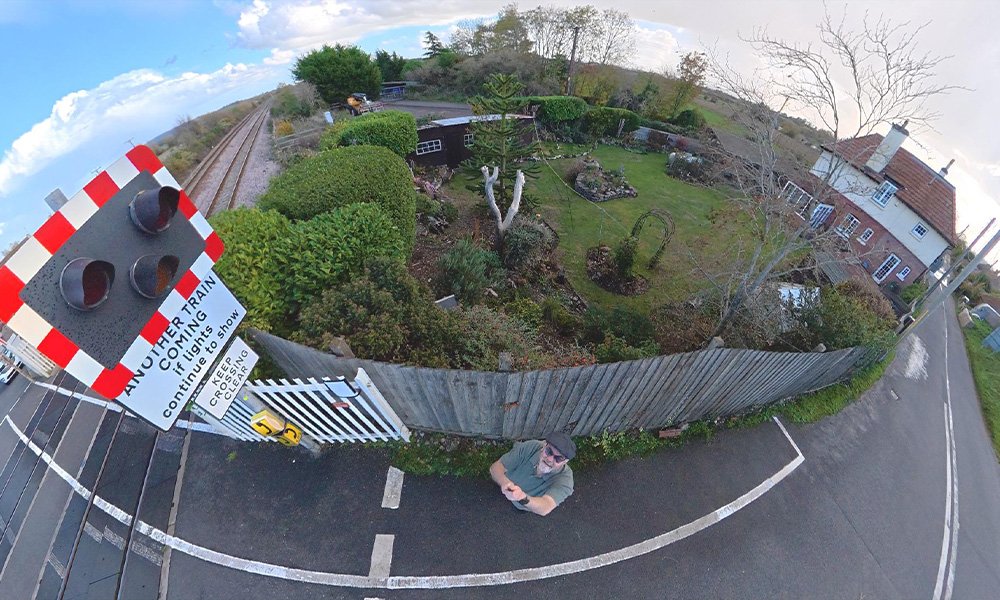
Here is me at Athelney, taking a shot with my 360 camera. Just behind me is Old Station House, where I met the owner and had a nice chat. She told me the signal box used to be directly behind where I was. When it was demolished, she had to pay for the new fence.
Just a few minutes after this photo, I got rained off.