
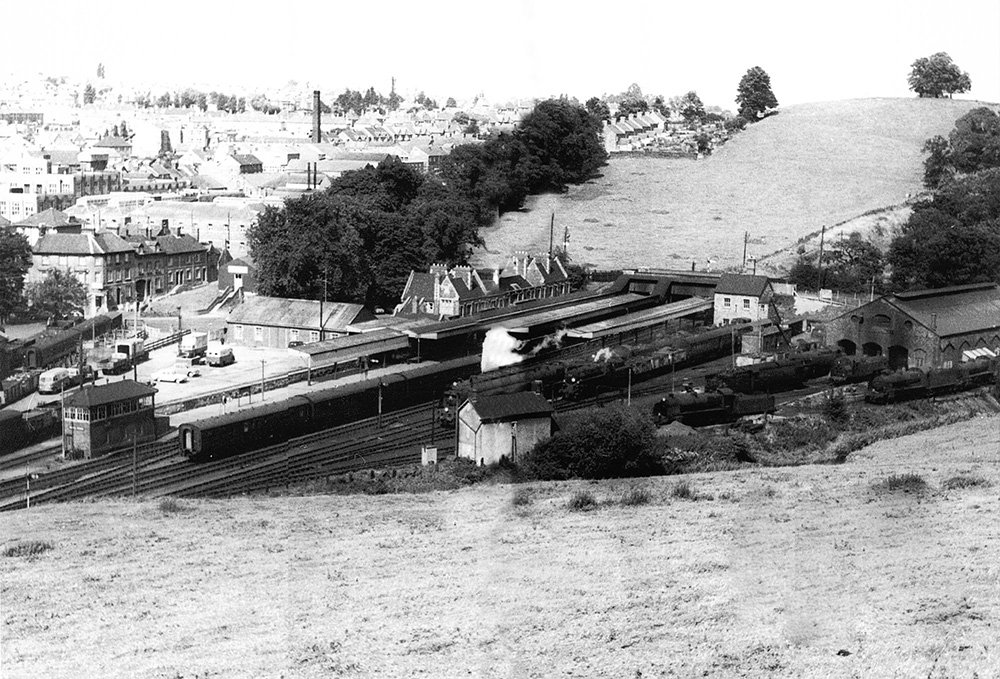
While doing research on the Yeovil to Town railway, while ‘stopping’ at Yeovil Town; I found a lot of interesting photos. I didn’t have the time to post them before, but I wanted to share them with you.
In my post about Town, I covered the station, the location, and the ‘then and now’. However, a lot of engines passed through the station. There’s no particular order, but here we go.
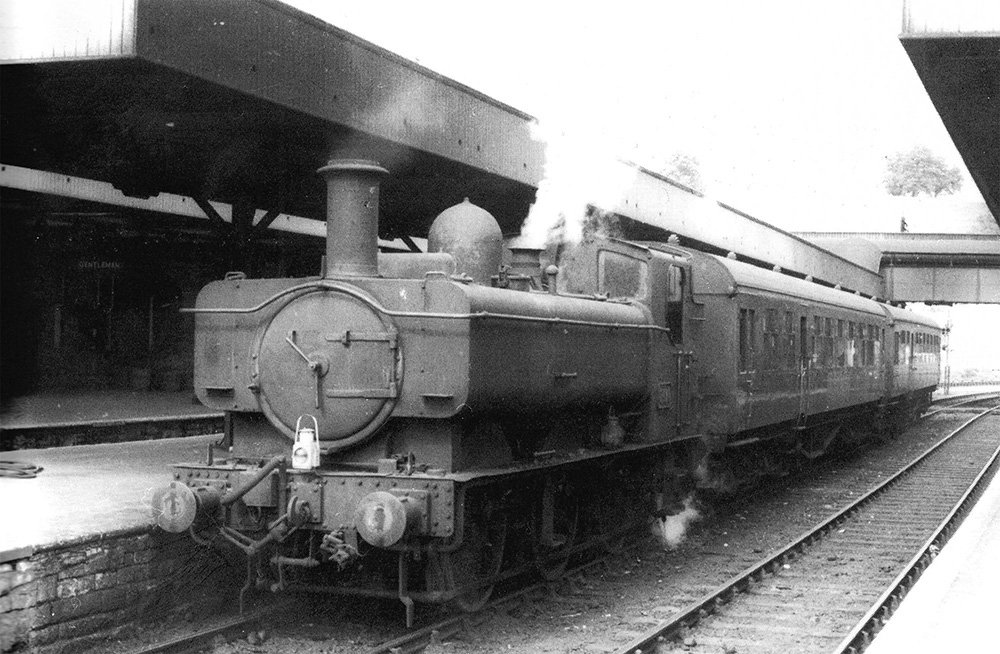
No 5410 had been subject to the attention of a numberplate thief when this photograph was taken in Aug 1963, while at Yeovil Town Station, Somerset. Changing morals combines with despair, disinterest and disillusionment by many shed staff were to blame for such losses and an air of neglect. Image by C. L. Caddy.
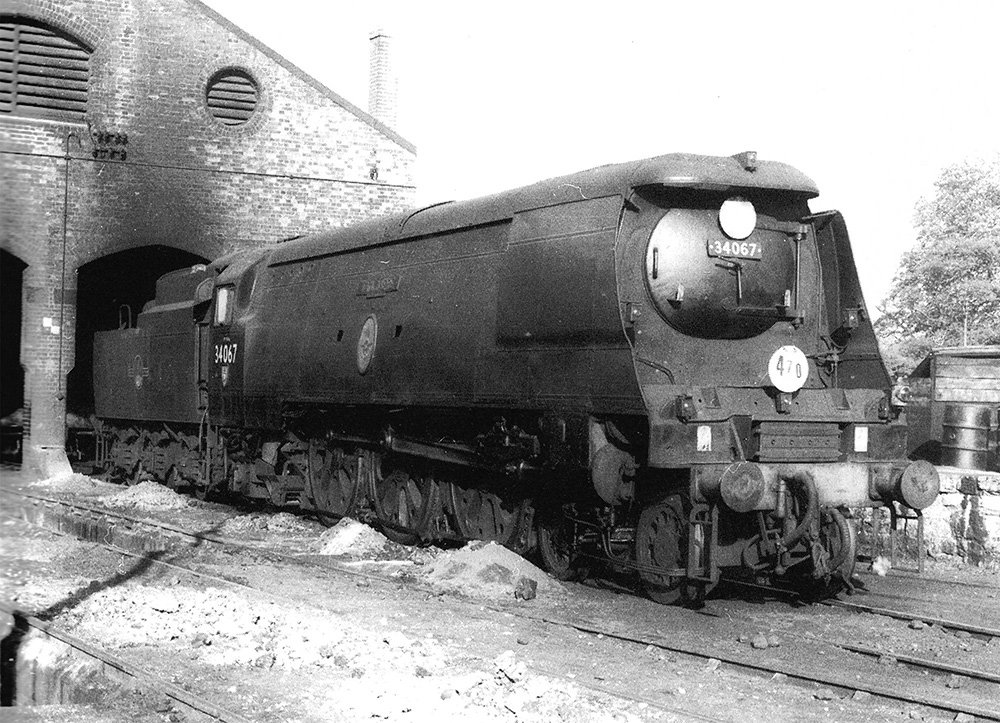
No 34067 Tangmere stands amid the ash heaps in May 1963, at Yeovil Town, Somerset. The SR introduced the ‘Battle of Britain’ class in 1946 and several examples regularly visited the shed at Yeovil Town. Image by C. L. Caddy.
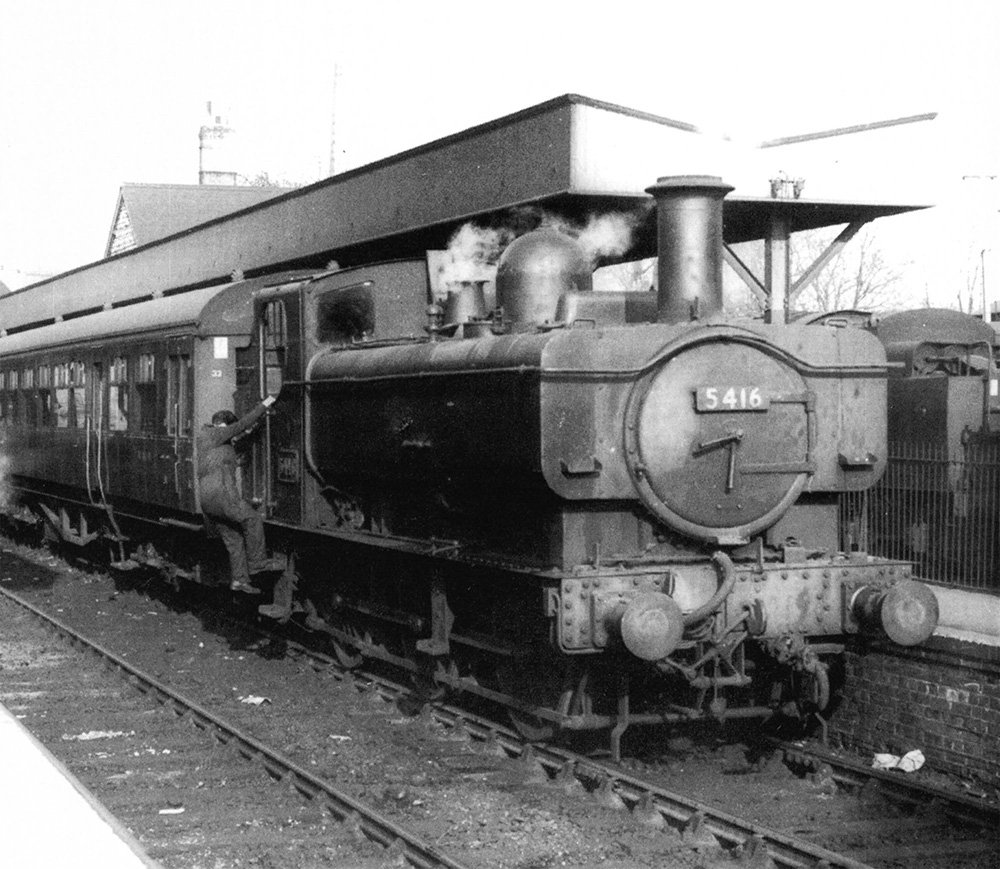
All change! Ex-GWR 0-6-0PT no 5416 and ex-GWR autocoaches were working from Yeovil Town to Junction, Somerset, on the 23rd March 1963. Steam from the coaches indicates that the heating was in use – this system would soon go into decline. Image by C. L. Caddy.
BR Designs
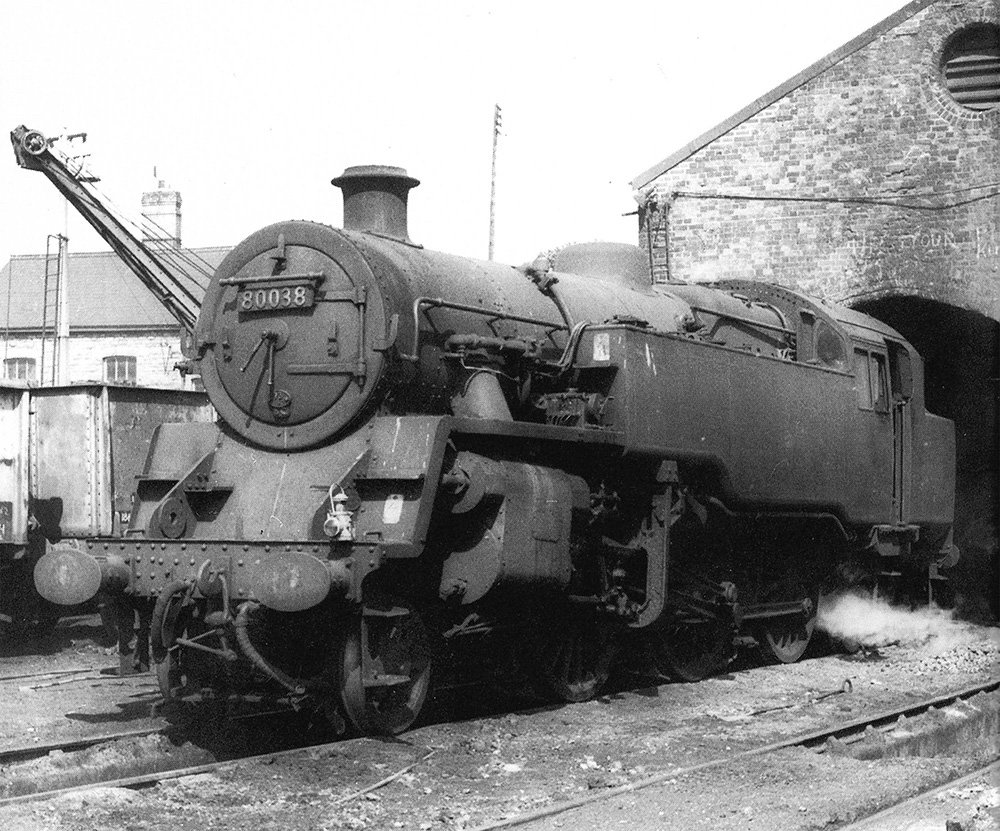
One of the successful BR designs to be allocated to Yeovil Town in Somerset, it was a class 4 2-6-2T. Sadly there was a shortage of cleaners to attend to no 80038. Taken Aug 1963. Image by C. L. Caddy.
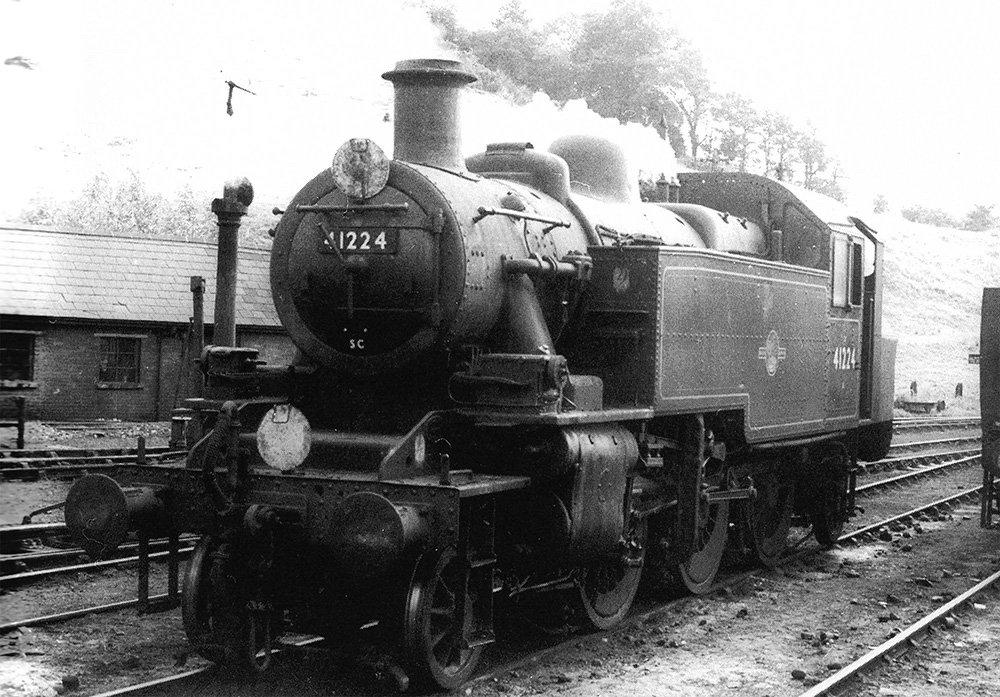
No 41224 was one of a batch of 2-6-2Ts introduced by the LMS in 1946 and certainly brough change to the locomotive fleet at Yeovil Town, Somerset. The design was largely perpetuated by BR. The shed at Yeovil Town was numbered 72C and the Western one was 82E until 1959; SC indicated a Self Cleaning smokebox. Image by C. L. Caddy.
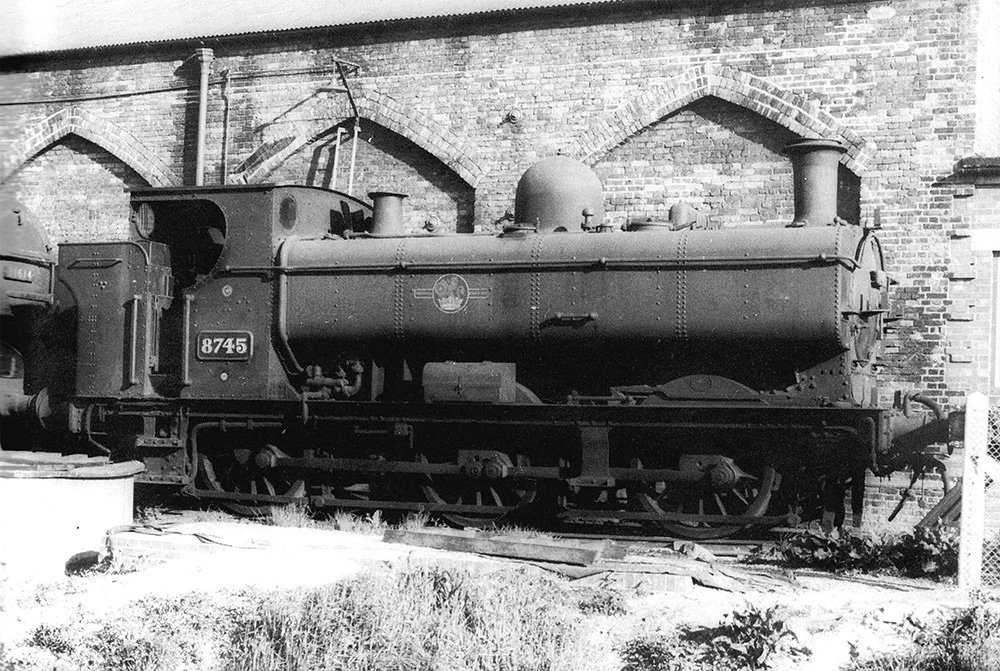
Many out of use LSWR creations had earlier been shunted alongside the shed at Yeovil Town, Somerset, largely out of sight. From 1963 onwards, it was the turn of the GWR machines. No 8745 was one of the 863 members of 5700 class and is seen here on 18th May 1963. Image by C. L. Caddy.
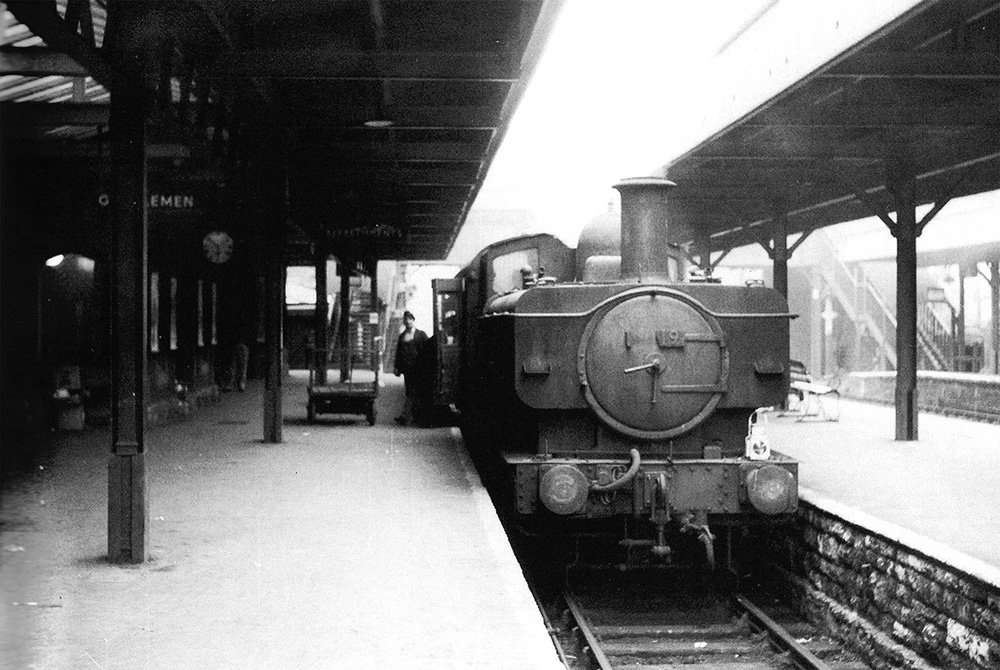
Yeovil Town changed little after the demolition of the overall roof and the erection of these canopies by the SR in the early 1930s. The footbridge steps are visible in this photograph of 0-6-0PT no 6419, which retains only half of its number plate on the 15th Aug 1964. Here is it working the Pen Mill shuttle. Image by M. J. Messenger.
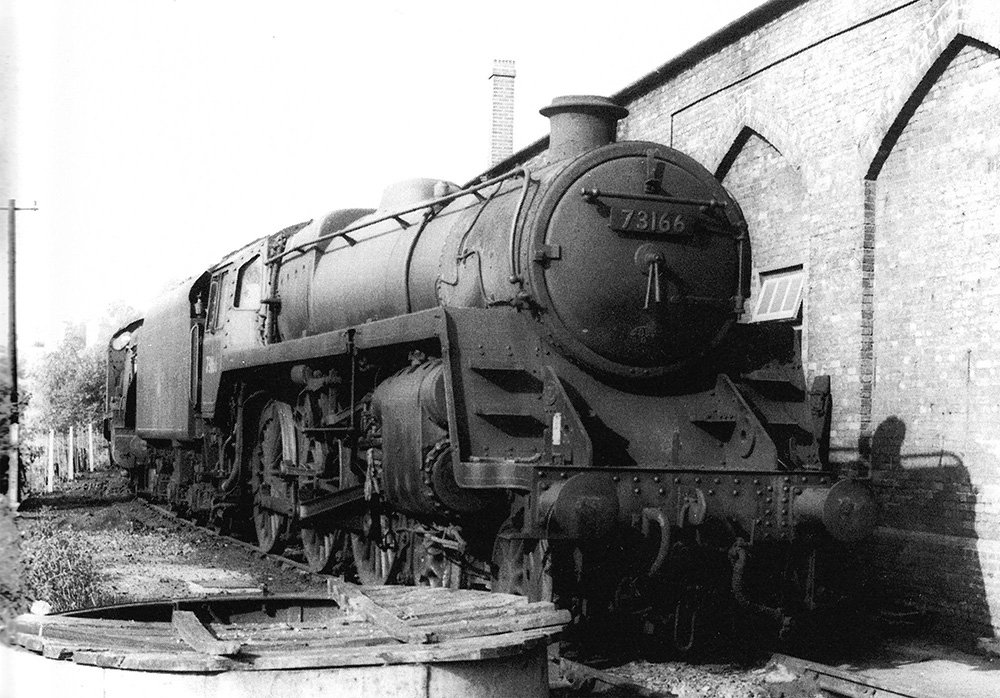
More BR class, this time no. 73166 is photographed at by the shed at Yeovil Town, Somerset, on 13th Sept 1964, carrying the Plymouth Laira shedplate, 83D. At the front of the image the well cover isn’t doing so well. Image by C. L. Caddy.
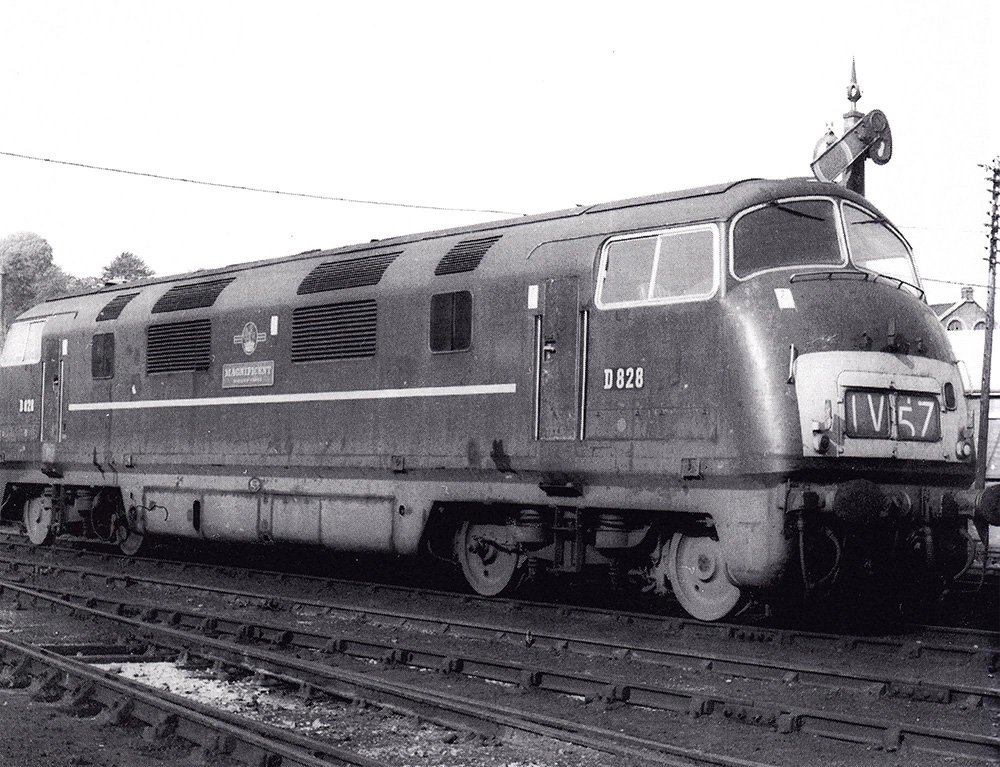
The “Warship” class began to appear in 1964 and heralded the greatest change yet. On 13 Sept 1964, collectors recorded this specimen and named it Magnificent in contrast to its cleanliness. Image by C. L. Caddy.
A Crane
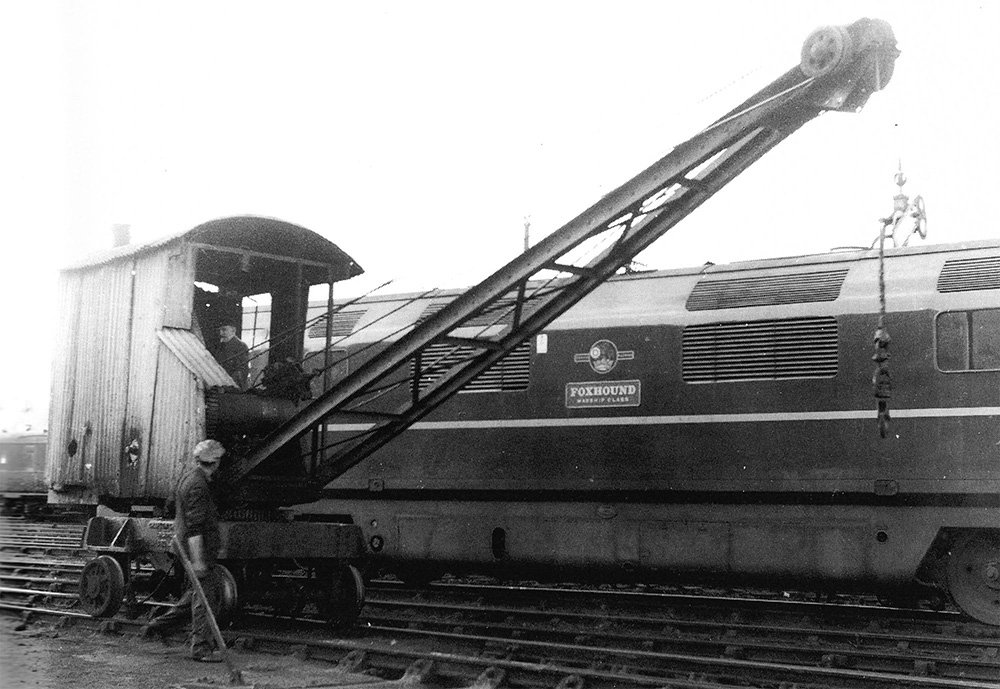
Railway managers sent an antiquated self-propelled steam crane to Yeovil Town shed in the 1950s to relieve the labour shortage. Staff could use it with a grab to load ash or with buckets to coal engines. The new order stands in the background of another “Warship”, no D817 Foxhound. Image by Wessex coll.
Yeovil Town Video
I’ve made an entire video about the history of Yeovil Town. The site is now a ‘leisure park’, with a cinema, a gym, and two now closed restaurants.
Up Next
Thank you to Middleton Press for the use of their images. They have an amazing collection of books from steam all over the UK.
I have more images to share of Yeovil Town, but I’m going to on holiday this week, so I just haven’t had the chance just yet. When I get back, I’m on the final push to finish the Yeovil to Taunton railway line. I still have a little modern day filming to do, which I’m really enjoying at the moment. When the weather is good,
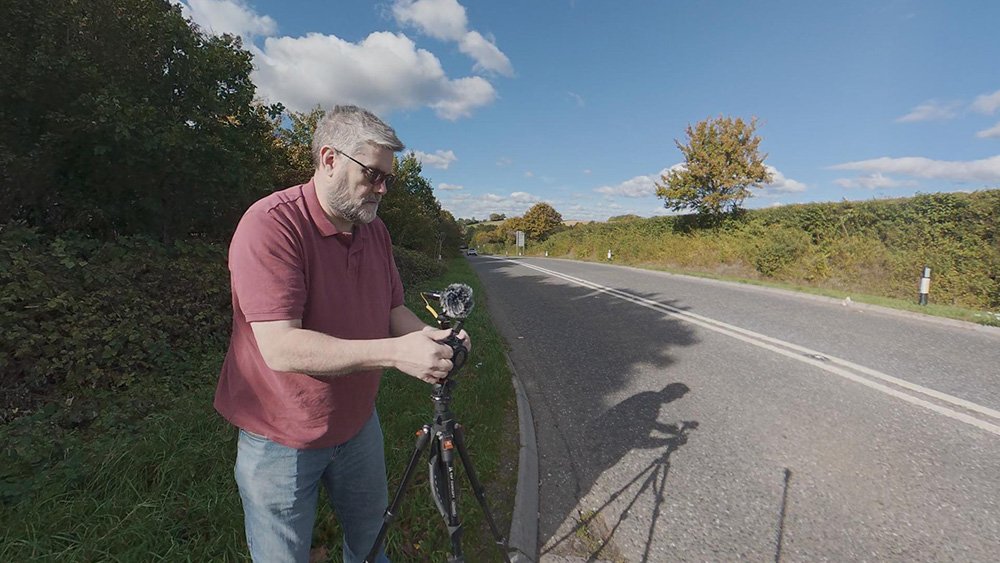
Here I am near the A303, filming the Holy Tree, just outside of Yeovil. I was filming about the history of the A3088, which was a twisty route through the smaller villages of Stoke-Sub-Hamdon and Montacute. The ‘new’ A3088 link road out of the town was built on the remains of the old railway line.

Here I am with the drone up. Just behind me is where the old A3088 would meet up with the A303, one of the main routes from London to the South West.