
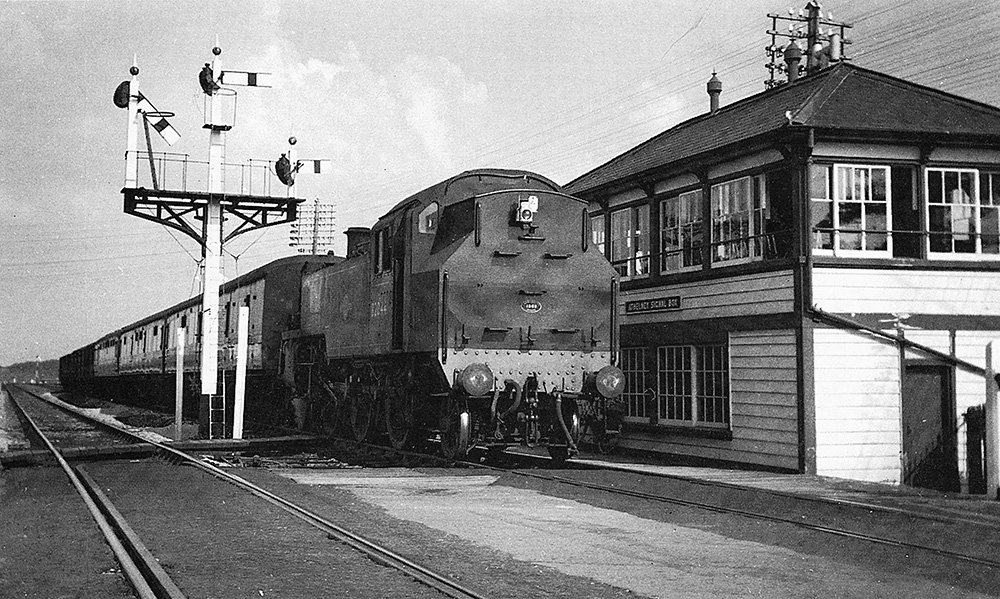
We leave Langport West, and dry off a little, and then head to Athelney Station.
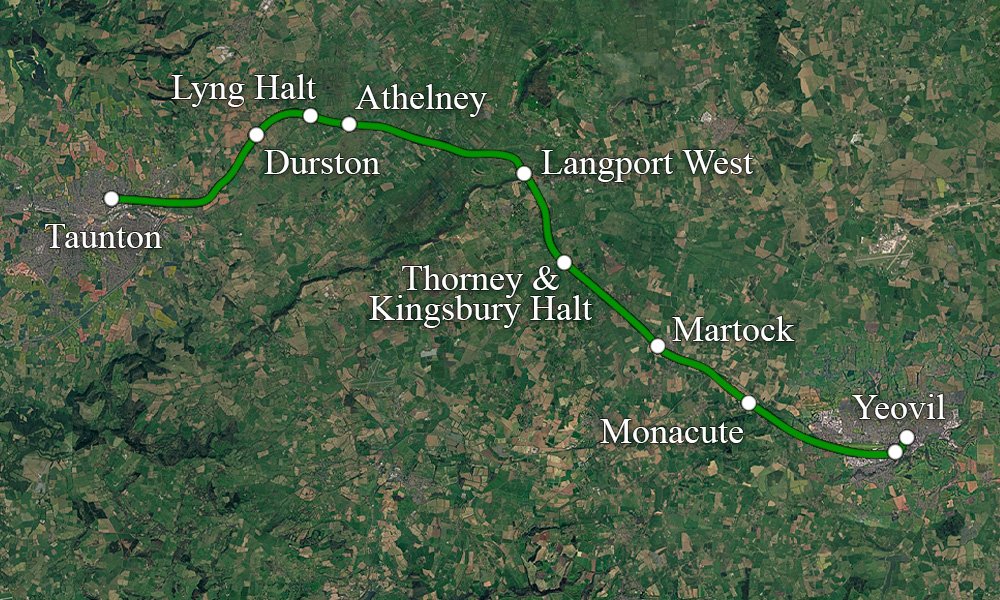
However, before we get there, the Yeovil to Taunton branch line would meet up with the GWR line from Taunton to Castle Carry, at Curry Rivel Junction.
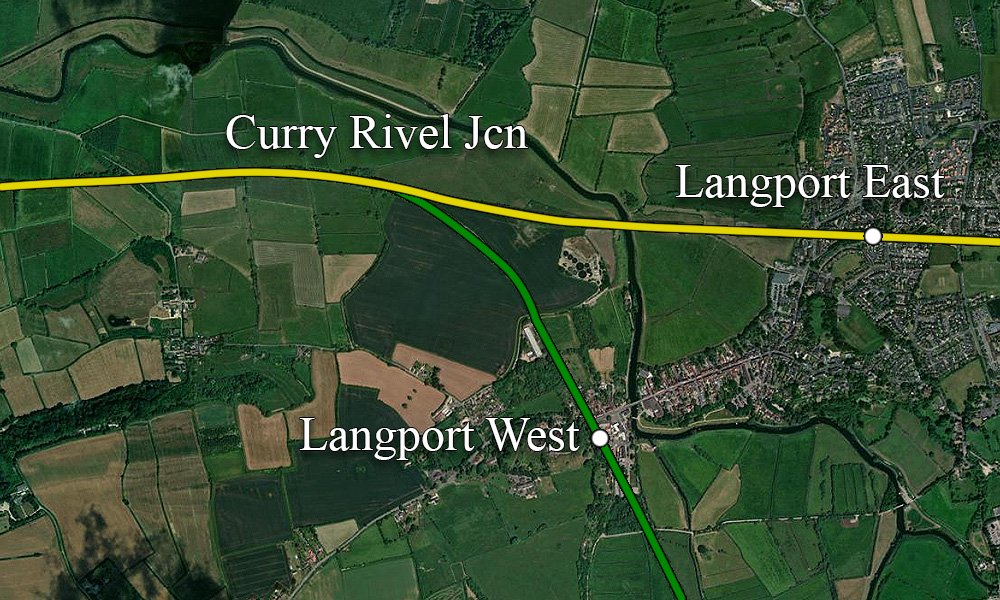
As the Yeovil branch headed north from Langport West, you can see it would reach the junction at Curry Rivel.
Photos of Curry Rivel Junction
Sadly, only a few images from this junction exist, but I still greatly appreciate them.
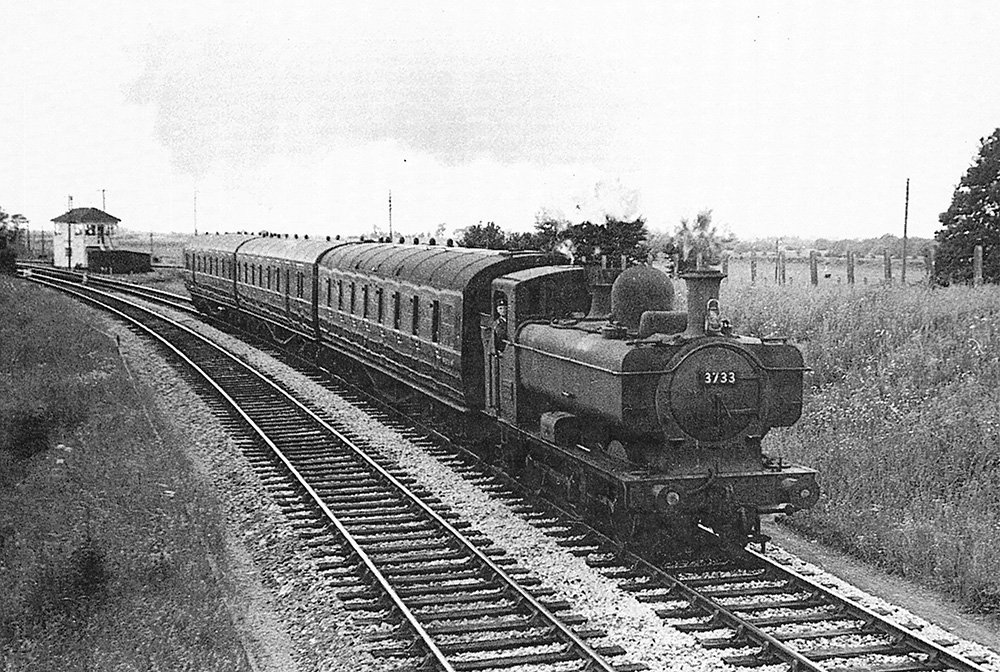
For instance, one of Yeovil’s 0-6-0 pannier tanks, no 3733, heads down the branch with the 16:20 from Taunton. Notably, the track was doubled here to Langport West on 2nd July 1906. Taken 6th June 1960. Image by J. Cornelius.
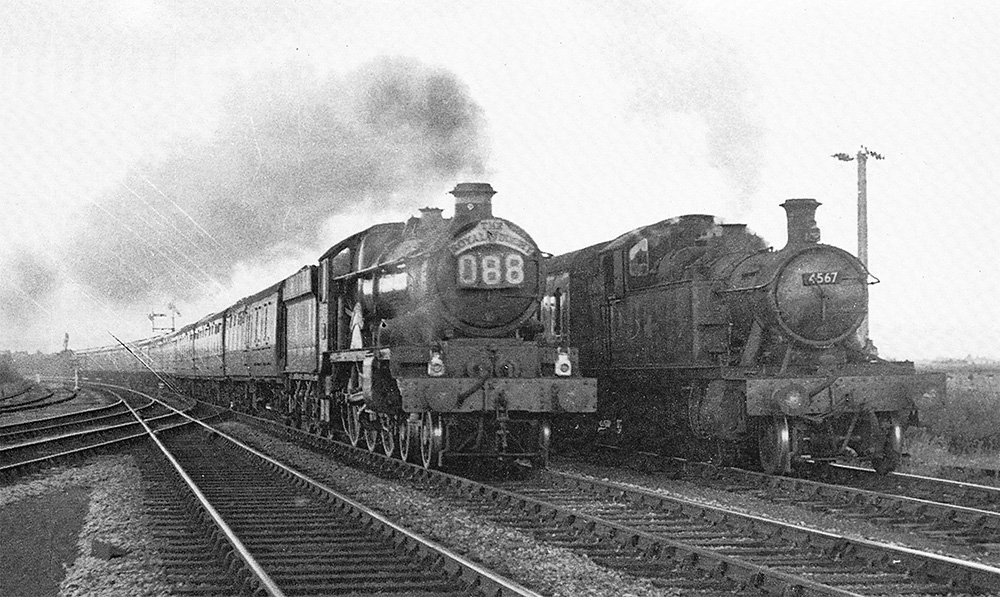
What a picture! Displaying the twin headlamps of an express passenger train and heading up the ‘Royal Duchy’, Castle 4-6-0 No 5058 ‘Earl of Clancarty’ storms past on the West of England main line. Meanwhile, prairie 2-6-2T 4567 has pulled into the up loop to let the express pass, before continuing with a Taunton to Castle Cary local train (the ‘tram’). Nearby, off to the left, lies the double track of the Yeovil to Taunton branch line. Taken 6th June 1960. Image by J. Cornelius.
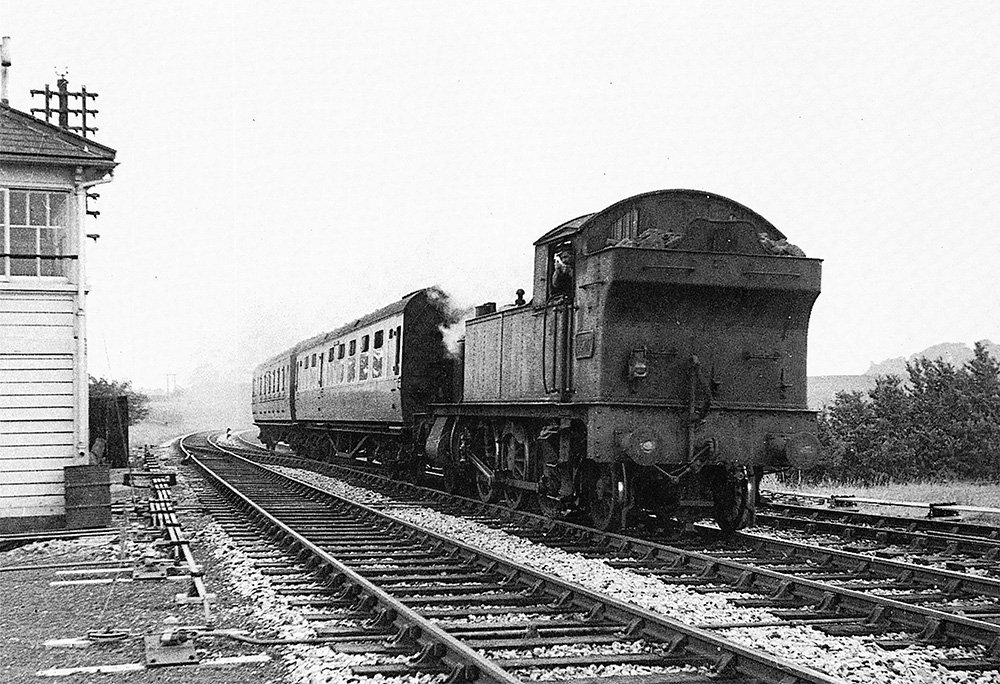
Next, here we see 45xx 2-6-2 prairie tank 4507 rumble past the signal box to join the West of England main line with a Yeovil to Taunton train. Importantly, this engine and 4567 in the previous image were fitted with small water tanks, which proved a headache for firemen, who would never be quite sure they had enough water to finish the journey. Taken 6th June 1960. Image by J. Cornelius.
Curry Rivel Signal Box
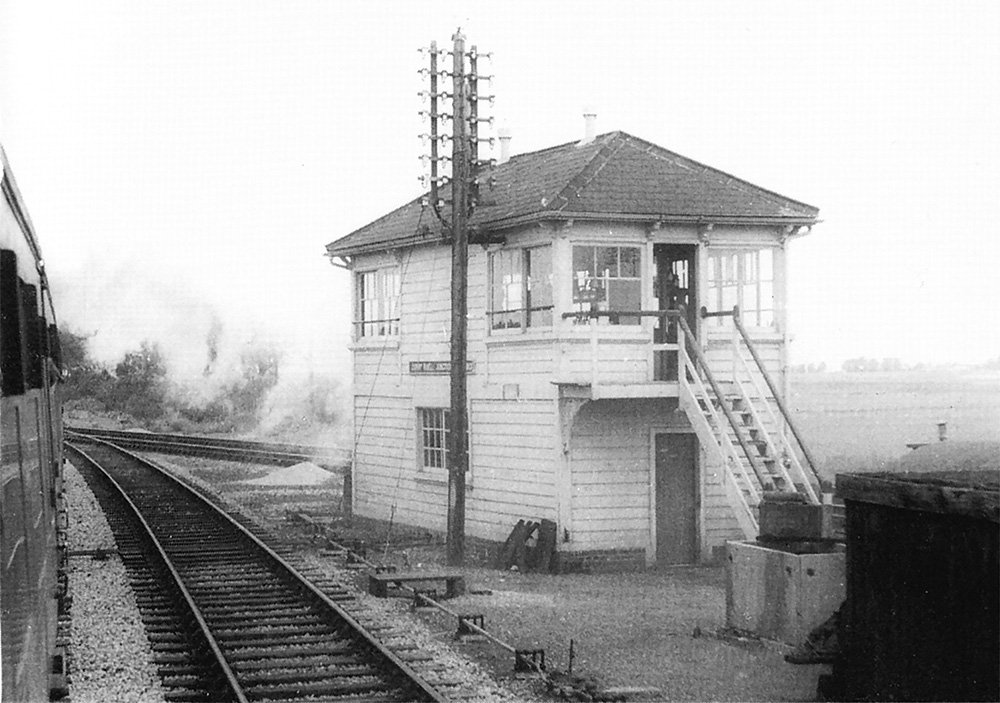
Further on, about three miles from Athenley, mainly across West Sedge Moor, the train reaches Curry Rivel junction and passes behind the signal box, heading towards Langport West. The signal box was built in 1906 with a 41-lever frame, when the line to Langport was doubled and the new line from Langport East to Castle Cary opened. Additionally, a goods loop stood on the other side of the train, which was heading towards Athenley. Image by C. L. Caddy.
Sadly, I you cannot get to where the junction was today. Well, not without sitting on the front of a train heading towards Taunton, and they won’t let me. I do plan on getting to the site soon though and safely taking the drone up at least.
Photos of Athenley
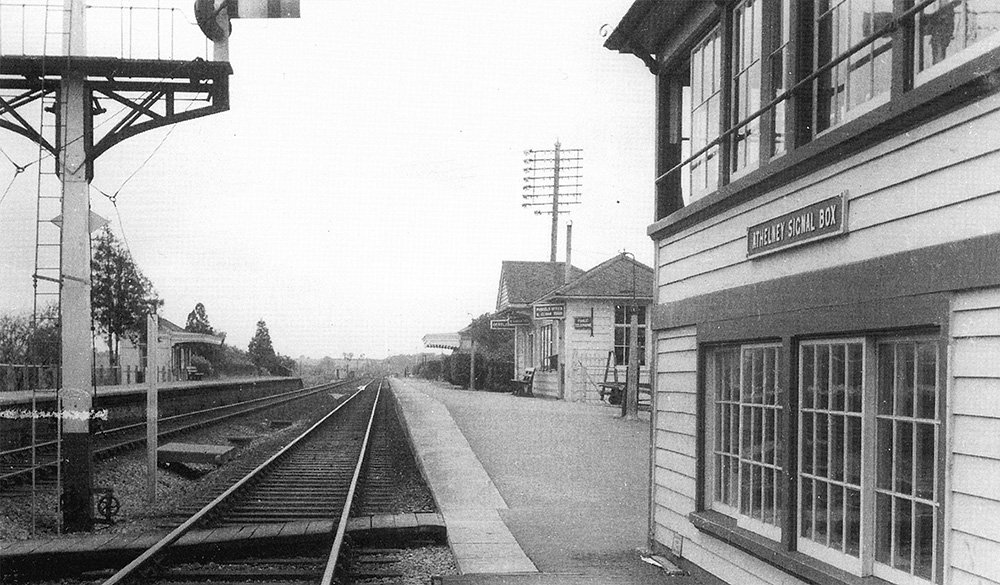
Standing at the end of a lonely platform, we stand right next to the new signal box with 37 levers that the railway company built on the opposite side of the track in 1908. They erected the buildings at the same time. Staff stopped using them when the branch closed, but goods traffic continued for another month and finally stopped on 6th July 1964. Image by Lens of Sutton.
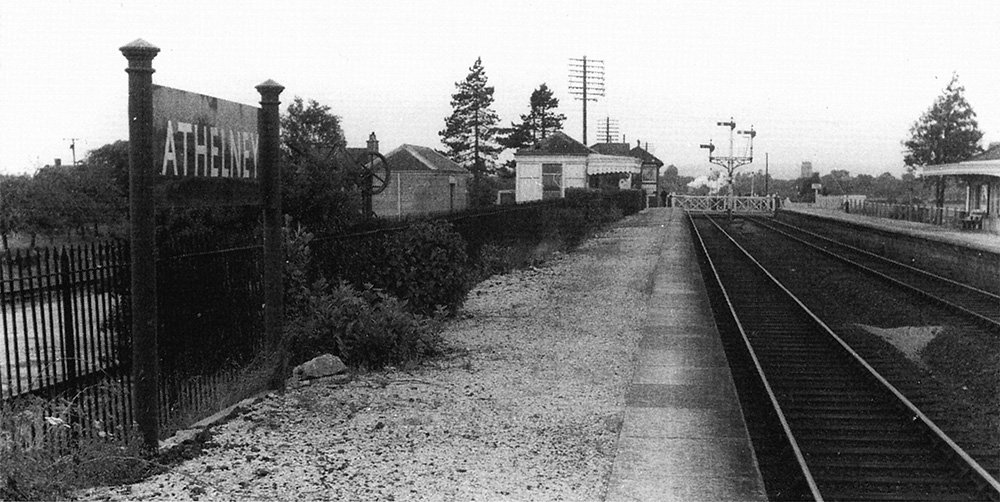
A westward view includes two goods siding and the 30cwt capacity crane. The centre signal was for the main line, the one on the right was for the single line to Durston, and the one of the left was for the sown goods loop, with was in place from 1943 to 1979. Sadly, the box finally closed on the 4th April 1986. Image by Lens of Sutton.
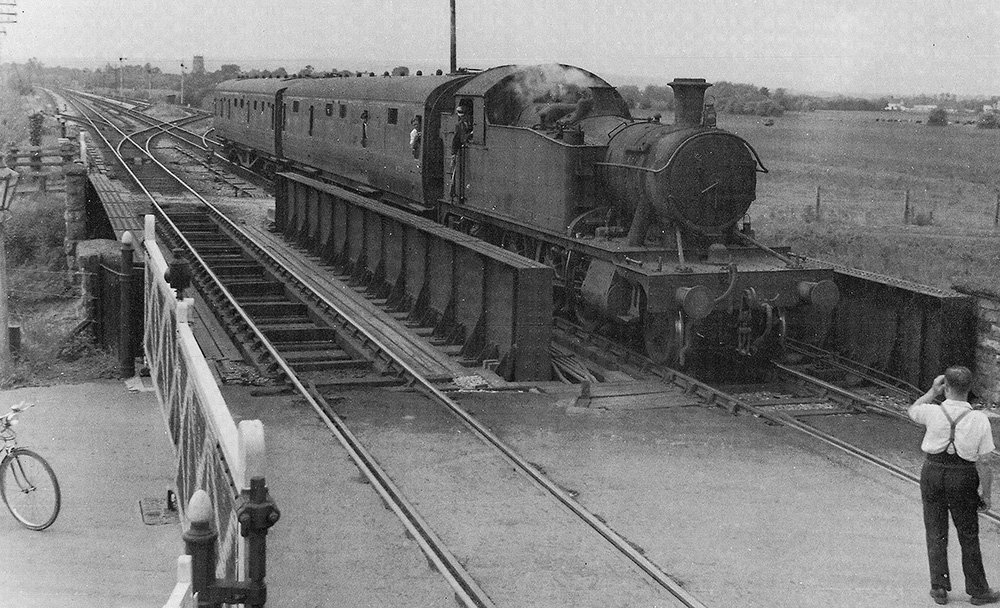
Another amazing shot. A prairie tank 2-6-2T 4591 crosses the River Tone at Athelney and approaches the level crossing on the 30th May 1964 with the 2:10pm Saturday only from Taunton to Yeovil. This train had just arrived off the Durston branch. You can see it curving right to the rear of the train, with East Lyng church tower in the distance.
Hanging out of the side of the engine, the fireman is ready to pass the single line token to the signalman standing on the track. Image by R. Lumber.
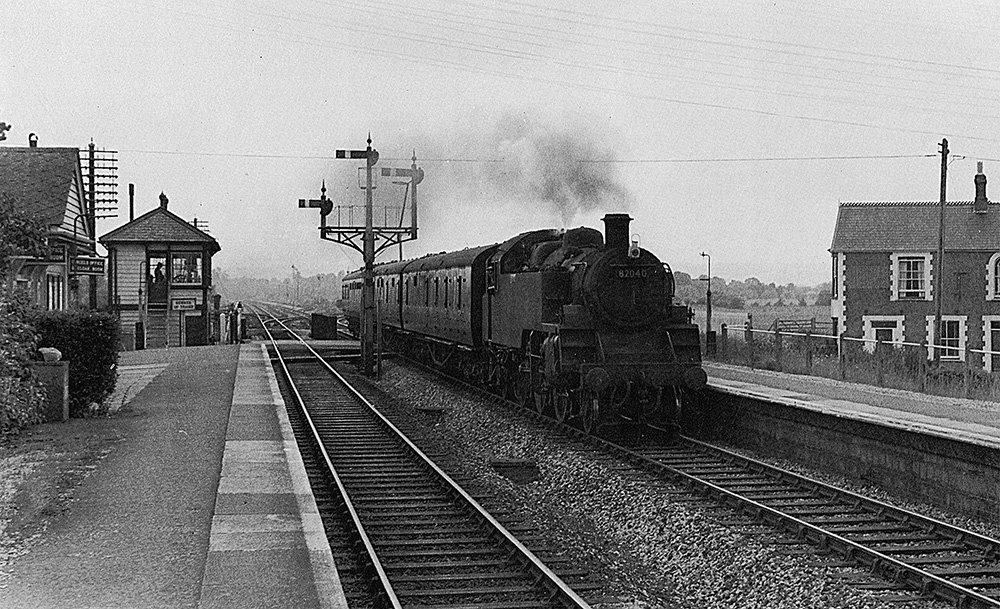
A wonderful overview of Athelney, as class 3MT 2-6-2T arrives on the 30th may 1954. It was another of the Saturday only trains from Taunton to Yeovil Pen Mill. This particular train had run direct to Athelney via Cogload Junction and the West of England main line instead of using the Durston to Athelney line. This was occasionally done because of the busy timetable on the main line on a Saturday. Image by R. Lumber.
The Staff and Signal Box
Any station wouldn’t be the same without the staff members who ran it.
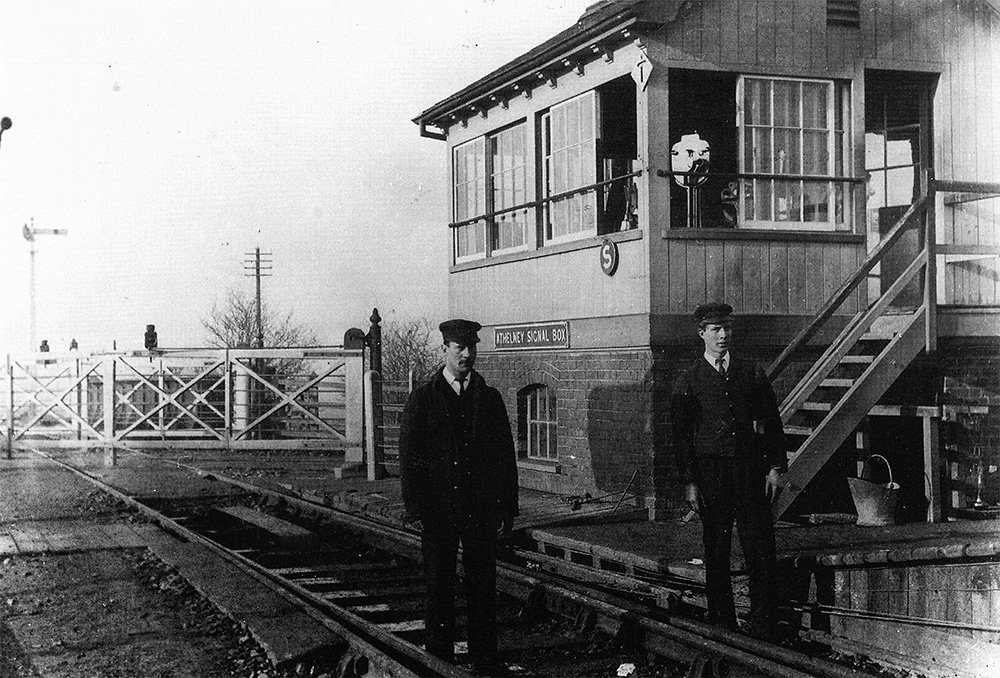
Sadly, I don’t know the names of these two fine gentlemen, but here they are standing proud in front of the signal box and crossing gates. The box was in use from 1881 until 1906, and it had a 14 level frame. The ‘S’ plate indicated that the signal lineman was required; a ‘T’ on a diamond referred to the telegraph engineer. Image by Lens of Sutton.
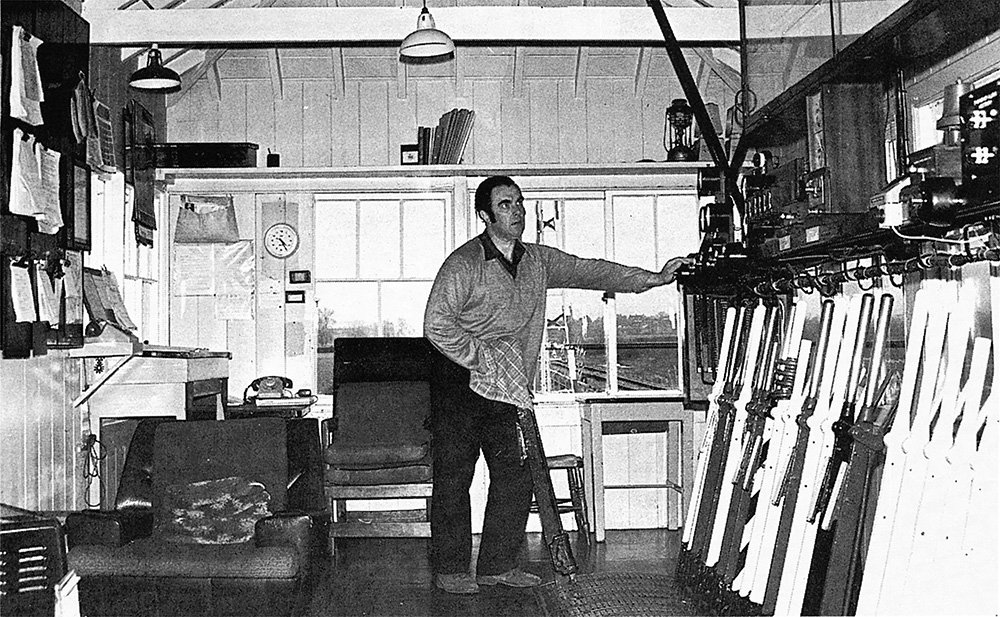
This is John Cornelius, the man behind a number of wonderful images from Derek Philip’s book; Working Yeovil to Taunton Steam. This was Athelney signal box, but about 20 years after the line had shut, in 1985. Old habits die hard, has John is still holding a duster to keep the handles bright and shiny. All signal men kept their boxes neat and tidy, in fact you can see the shine on the floor and the gleaming instruments on the shelf above the signal levers.
The life of a signal man was a comfy one, though. There’s a lovely big arm chair, right by the fire, for use between trains.
Derek Philips, recalls in his book:
“No signal men liked engineer men tramping into the box with coal dush on their boots, and I remember a certain signal man laying newspaper on the floor when I came into sign the train register under rule 55, when we were delayed by a signal at danger.”
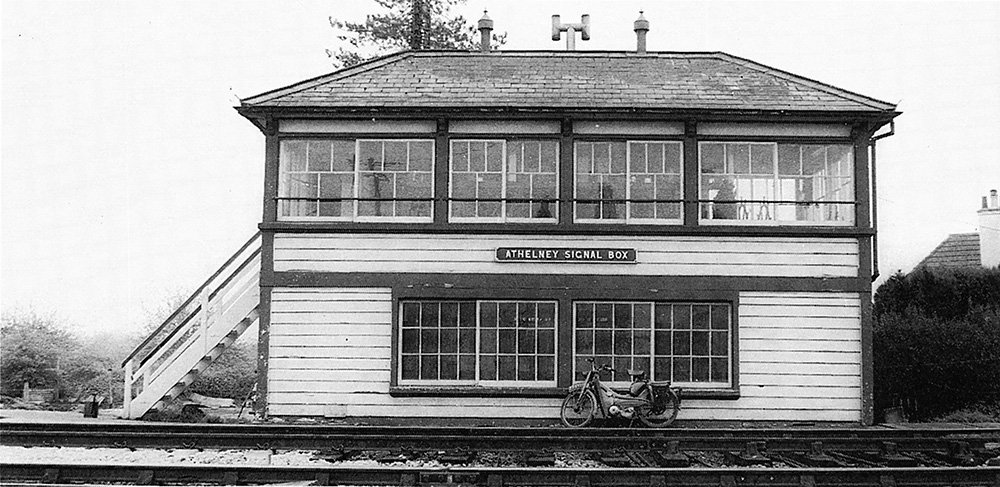
And here is the signal box, in all it’s glory. It was originally open in 1881 and had a 14 lever frame. This was a GWR Type 3 box, which was the same as the one at Martock. It was later replaced by a second box, with a 37 lever frame, in 1906.
Athelney Today
The timing of this post is annoying. I was hoping to get to Athenley site location recently, but was waiting on the weather. I am planning on filming at several of the last station sites at the same time, but in the meantime, here are some images via Google Maps.
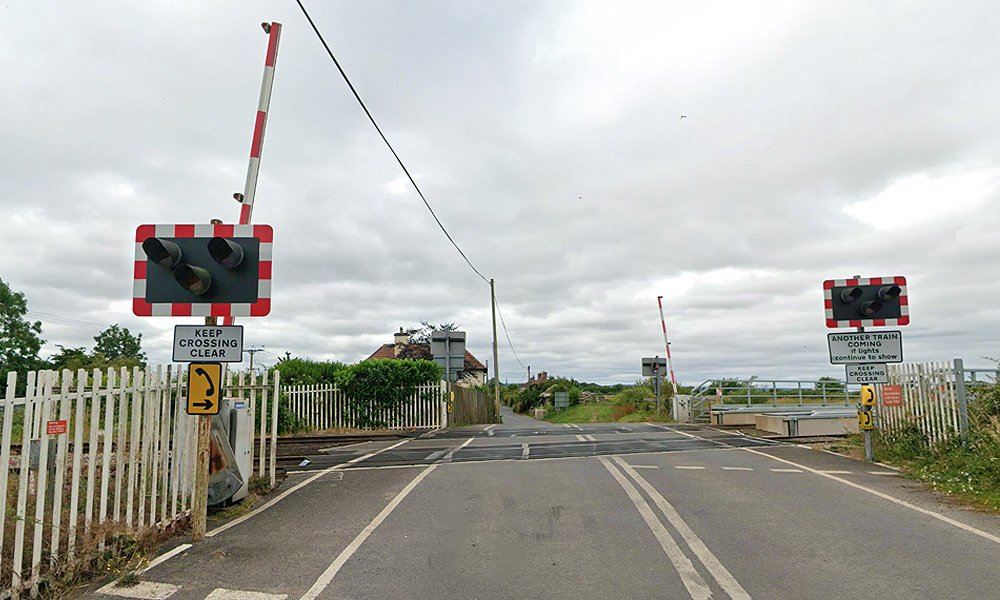
At the site today, the main line is still in use, so all that remains is the crossroad. This image is looking south, with the bridge over the River Tone, just to the right of the picture.
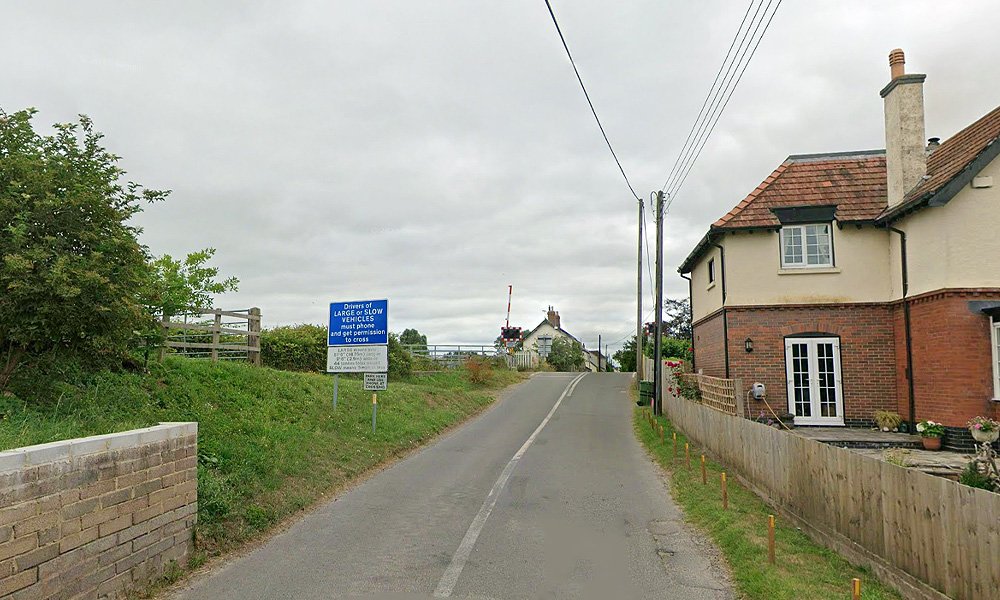
On the other side of the road, looking north, the signal box, the station, all gone.
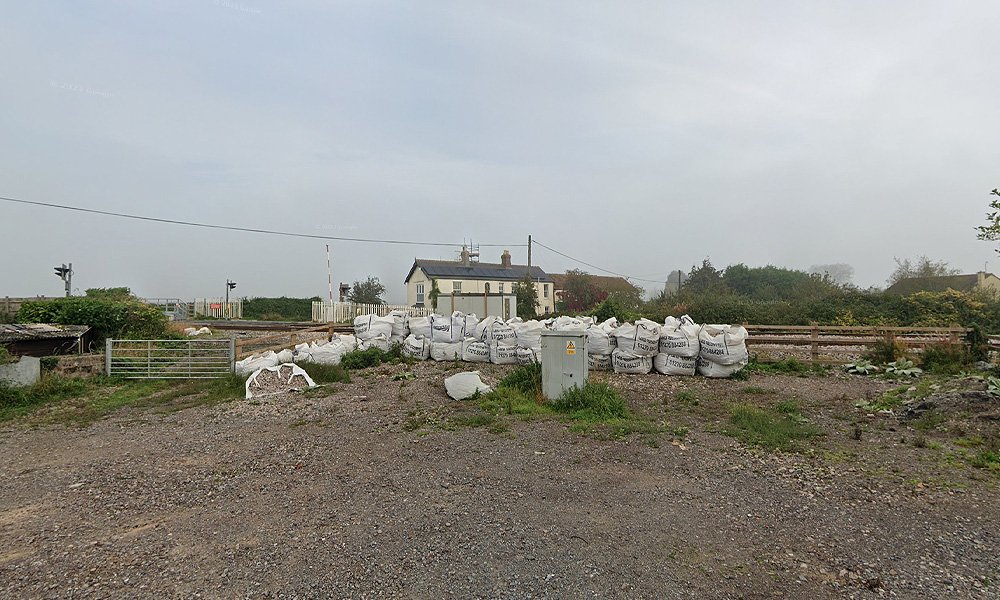
This image, I believe, is stood on the platform side, standing roughly where the signal box once stood. Again, this is looking north, with the River Tone to the left hand side of the image. The tracks are still here, but there is no place to stop anymore.
Up Next
I’m sorry I haven’t had the chance to get to Athelney personally just yet. The reason being is that I plan on getting a good couple of days of filming in, as I am hoping to finish the video on the Yeovil to Taunton railway before the end of this month.
I still have Lyng Halt, Durston, and Taunton to cover, and that’s the end of the line. Sadly, I don’t have many images for Lyng, but I do for the last two stations. I also still need to get back to Martock for the modern day footage. However, I’m still waiting on permission for that; which I will be chasing up soon.
Thank you to Derek Philips for use of the images from his book; Working Yeovil to Taunton Steam. Also to Middleton Press for the use of a number of their books covering the branch line.