
As we carry on our journey on the Yeovil to Taunton branch line, we leave Thorney & Kingsbury Halt, and head to Langport West.
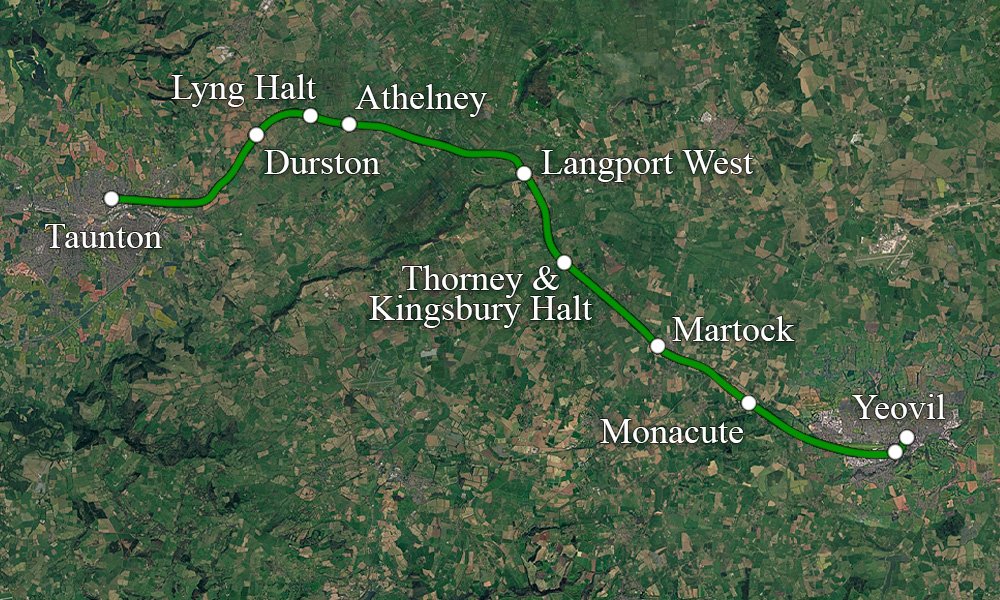
There were two stations at Langport, East and West. East was on the Castle Cary to Taunton section of the GWR line to London.
Langport West, the one we’re going to focus on, was on the branch line from Yeovil to Taunton. The suffix West was added on the 2nd July 1906, which was when East opened. Langport once had a port for sea going vessel. There were many wharves on the River Parrett.
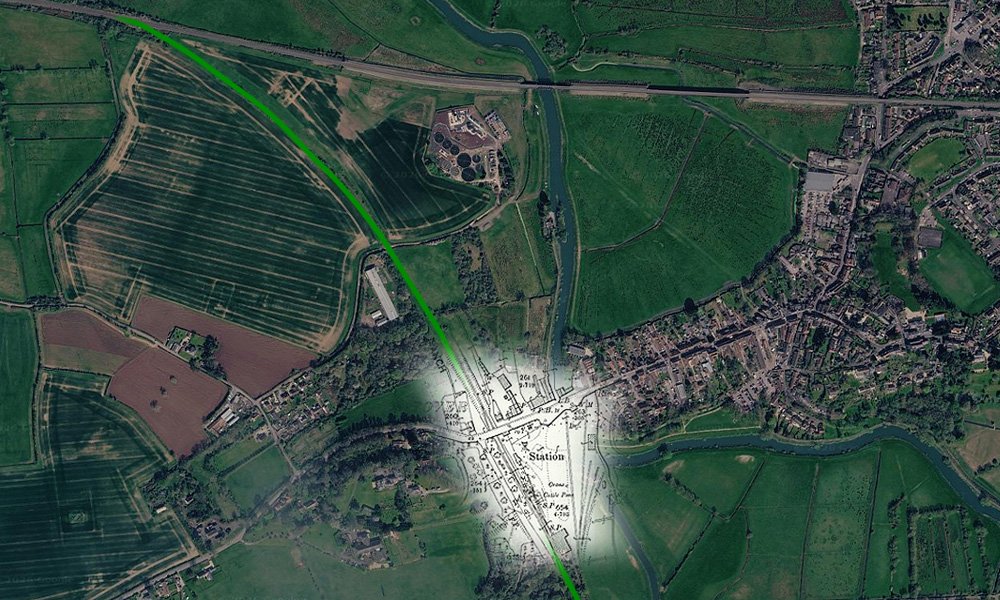
West was to the, well, west of Langport and the town’s first station, originally opened in Oct 1853. The green here shows the line would head north and to join the doubled towards Curry Rival junction.
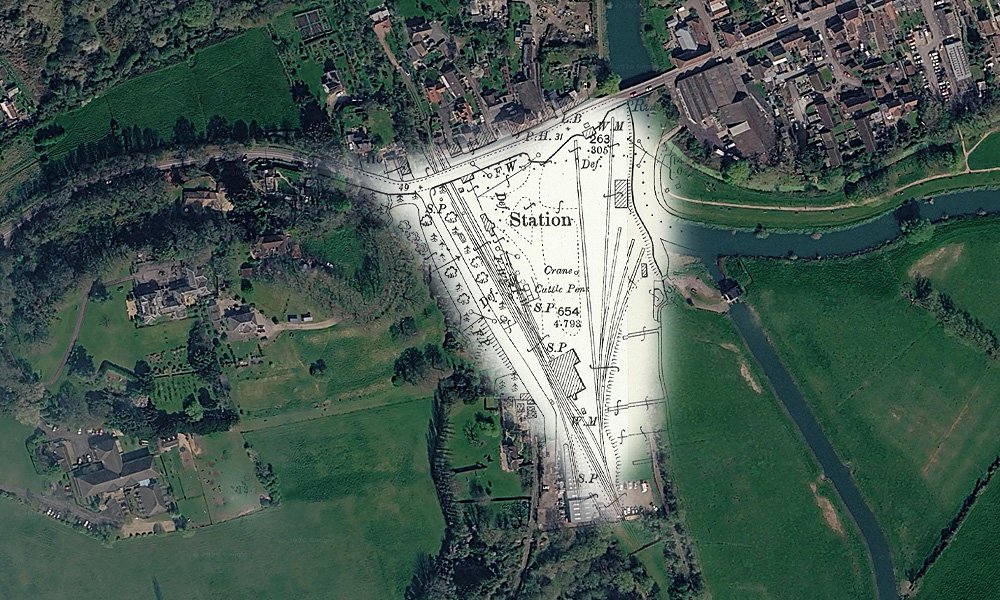
Langport West was a busy stop, for both passengers and freight. The station had many buildings, a goods yard and a large goods shed on the ‘up’ side of the station. The station would handle a lot of agricultural goods, including large machinery at times.
Photos of Langport West
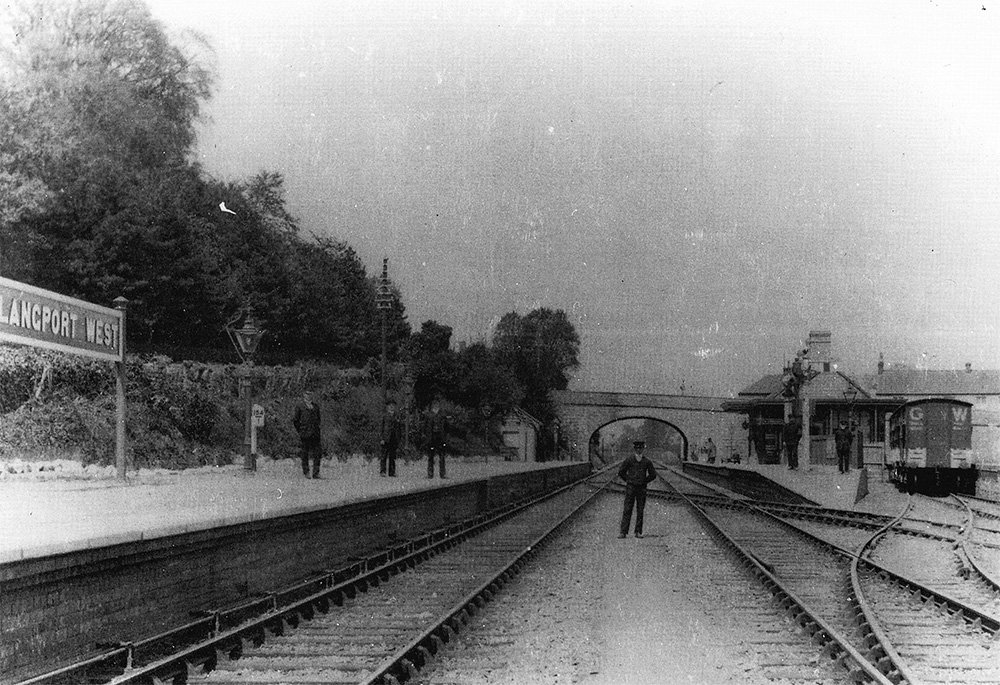
There was plenty of room in between the tracks at Langport West, this was thanks to the broad gauge era, as is the space to the left of the cattle wagons. The trailing connections to the goods yard were in the interest of safety. Image by Lens of Sutton.
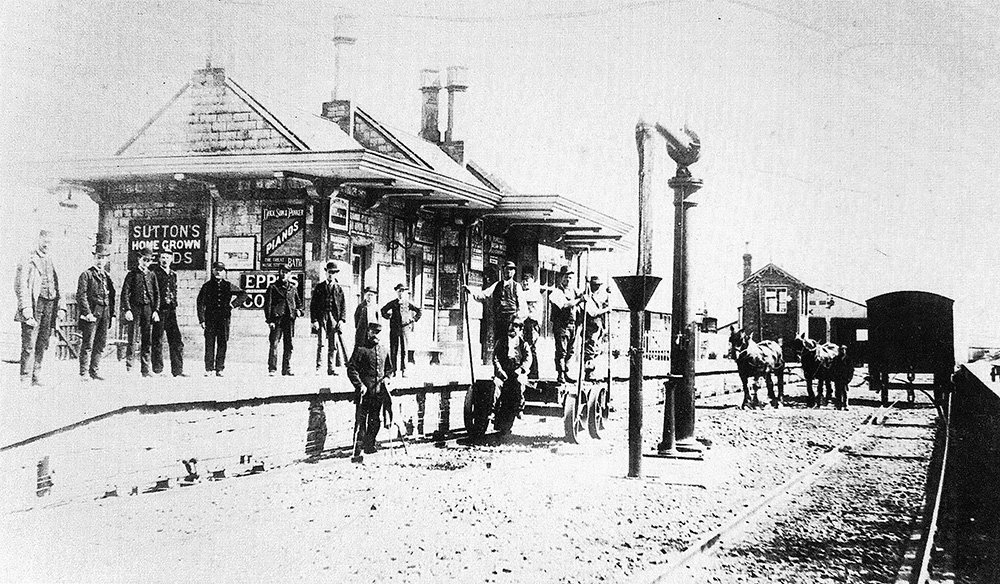
Not sure of the exact date, but here is a very early view of the staff at Langport posing for a photo. The person on the far left is Mr Tom Pomeroy; the Station Master from 1889 to 1894. He lived near the station at ‘Sunnyside’, Bow Street, Langport. The horses, used at the same for shunting, are waiting to move a wagon standing at the down platform.
At the far end of the up platform, you can still see the B&ER style signal box, that was opened in 1874. The box closed in April 1906 and replaced on the same day by the GWR standard design brick built box. It was situated at the Yeovil end of the down platform.
The rails, although standard gauge, are still laid on longitudinal sleepers, and the large good shed in the distance shows its broad gauge origins in the extreme width of the entrance portals. Image by B. Denman.
The Layout
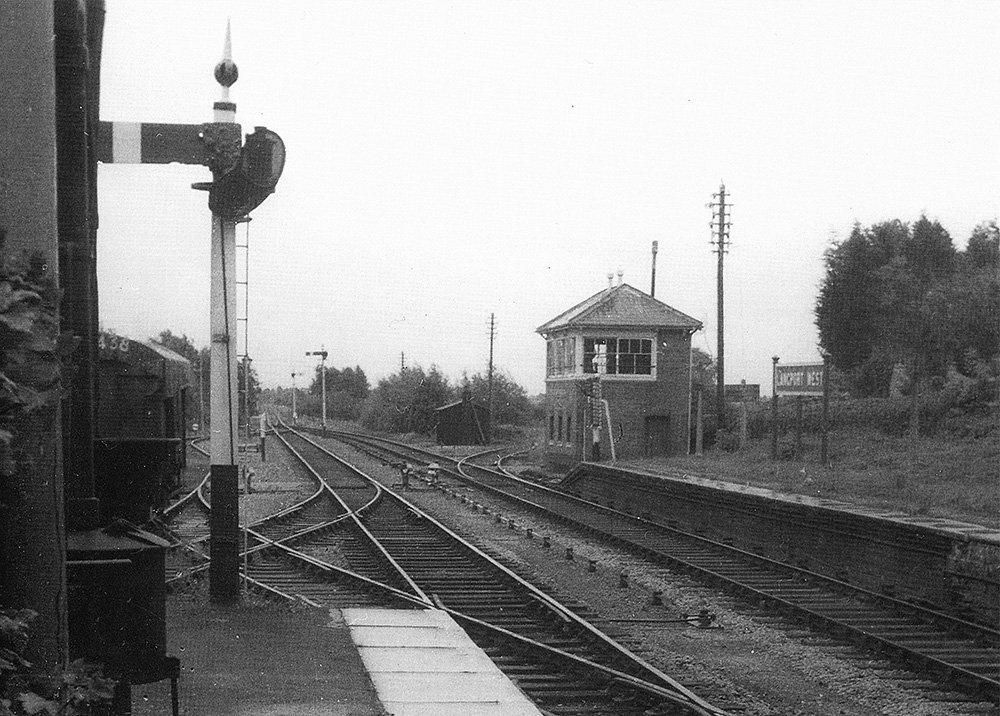
Here we are looking south and we see the 1906 signal box, with the tablet catcher at the end of the platform and the lime siding, which was provided ton the 22nd Aug 1885 for Mead & Son. Finally, goods traffic finally ceased on the 6th July 1964. Image by Lens of Sutton.
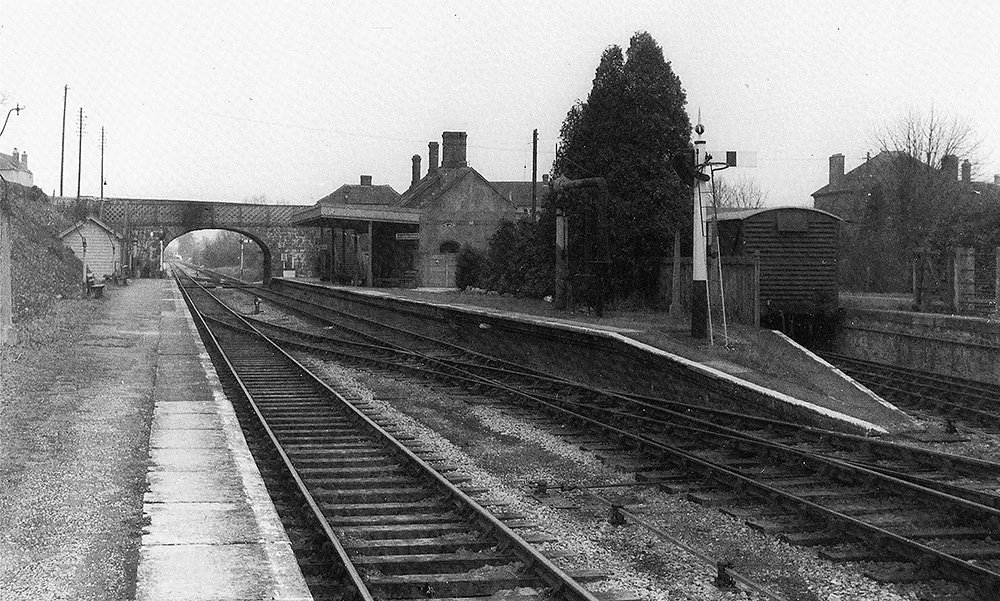
It’s the 17th March 1962, looking towards Curry Rival Junction. The section of line was doubled in July 1906. Past the bridge in the distance, a War Department siding off the up line. It was operated by a ground frame and was added in Dec 1940 and removed by 1947. You can see the up platform starting signal is a typical GWR lower quadrant, mounted on a square wooden post.
On the right, alongside the cattle pens, is a box van awaiting it’s next duty. Image by C. L. Caddy.
On the approach
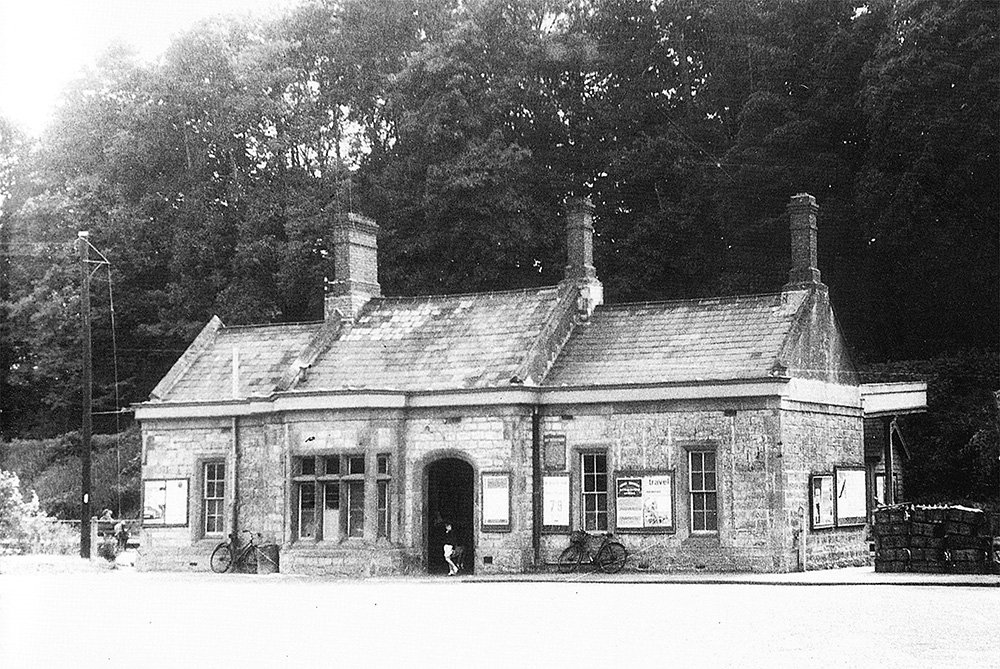
What a lovely site on the approach to the station. A study from July 1962, reveals the solid styling employed on the branch, there are even some mullions. The was a staff of 16 to 19 men throughout the 1930s, although traffic was on a decline. Image by H. C. Casserly.
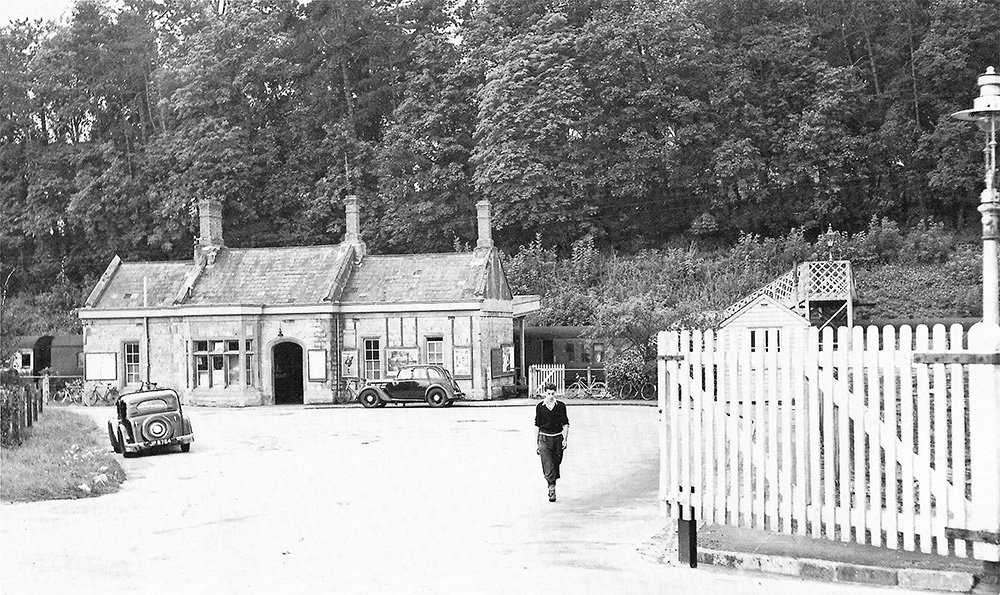
This photo is taken from the same angle, but stood a little further back. The Bristol & Exeter timetable for Jan 1877 announces:
“An Omnibus meets every train. Post horses, carriages etc., may be at the Langport Arms and Dolphin Hotels”
As well as regular train services, market trains would turn to various destinations during the week: Highbridge, Bridgewater, Barnstaple, Taunton and Friday to Yeovil. The fair in 1877 was 2/6d first class and 1/6d for third class. Image by unknown.
Engines Cannot Swim
One of the downsides of Langport West was how easily it would flood. A lot of the Somerset Levels still has the same issue today.
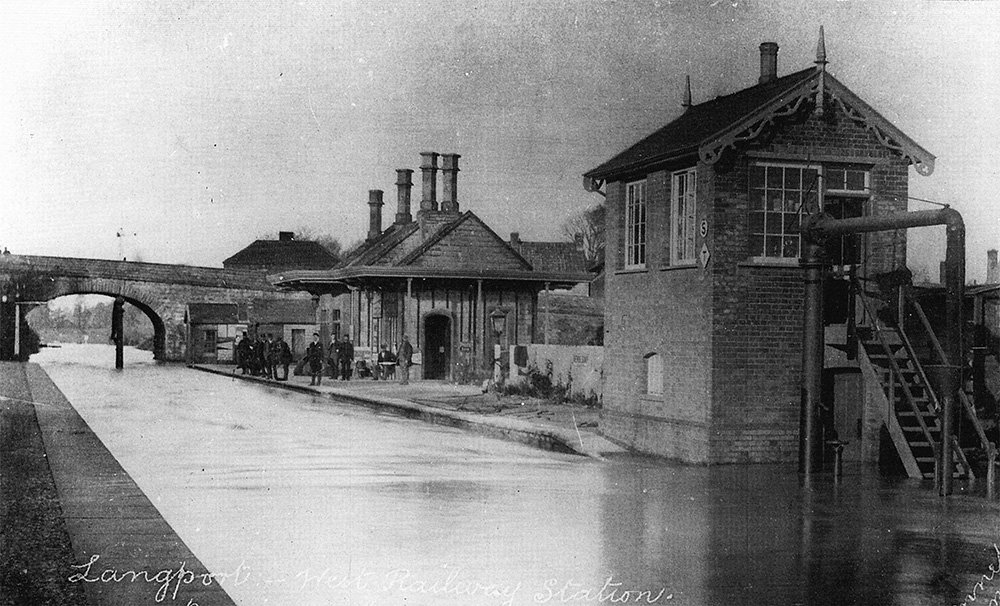
When the rain came in heavy and the River Parrett flooded, it completely covered the track. Someone took this photo in Nov 1894; it shows the position of the signal box until 1906. You can see a plea for help as the signalman displays both letters. He displays both ‘S’ and ‘T’ with a red letter and a white background, indicating that Signalling and Telegraph equipment had issues. Image by Lens of Sutton.
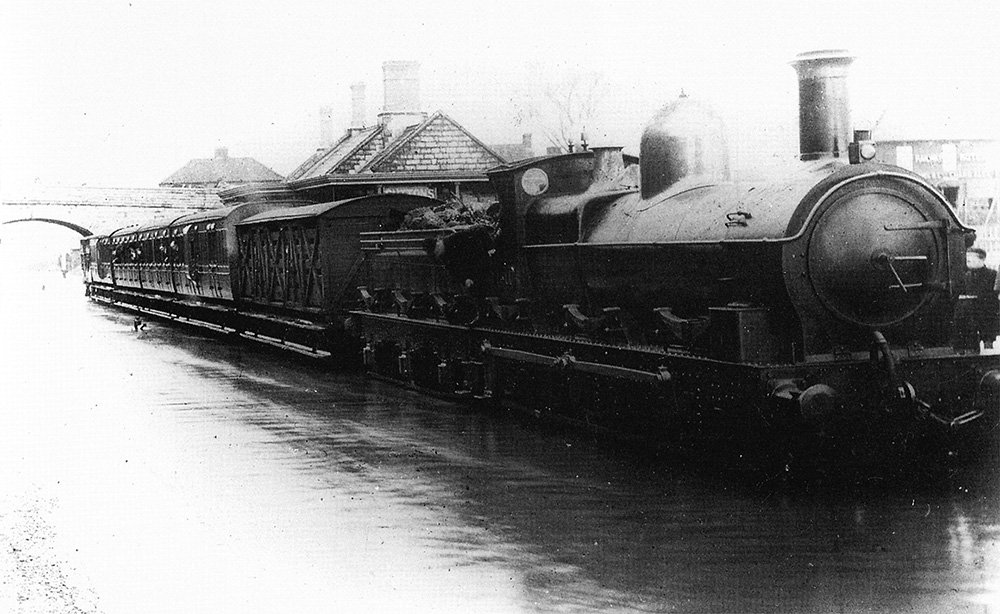
A little later, in Dec 1910, and further flooding again at the station. No 11, an Armstrong 388 class in charge of a milk van and four four wheelers. Image by Lens of Sutton.
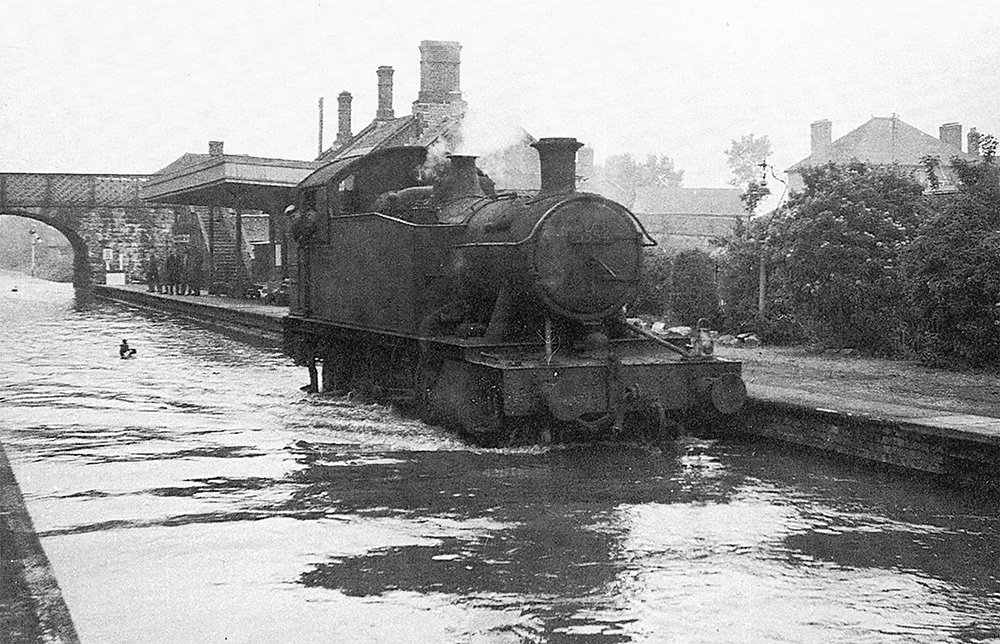
On 29th Oct 1960, with the driver and fireman looking down from their cab, class 45xx 2-6-2T 5554 from Westbury shed is on a suicide mission to test the depth of the water and state of the track. On the same day, a goods train was waiting at Curry Rivel Junction, and after this probe was successful it ventures out and made it through to Martock.
Derek Philips, in his book Working Yeovil to Taunton Steam, recalls that when the Langport West was like this, as a fireman, the first thing he would have to do is close the dampers to stop the water putting out the fire. Image by J. Cornelius.
From the Langport & District History Society
While doing some research on the history of Langport, I found a wonderful website: Langport Heritage – Langport & District History Society. They have a very detailed history of the town, including some images of both the East and West station. They were kind enough to let me post some of the photos; the details are a little limited, but the they are fantastic.
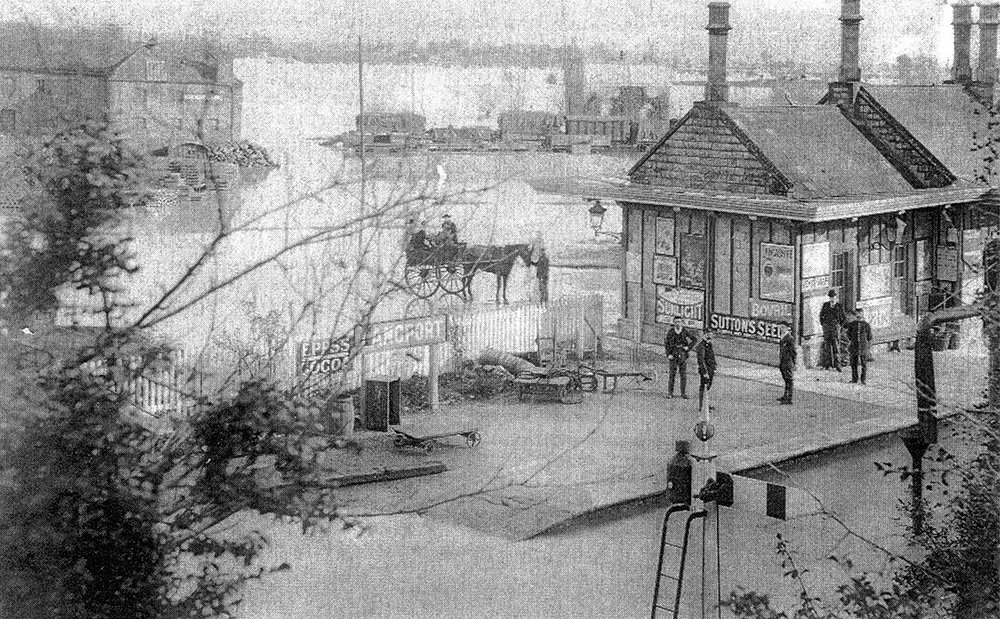
A stunning overview of the station, taken pre-1906. You can see Bradford’s Warehouse in the background. Image by unknown.
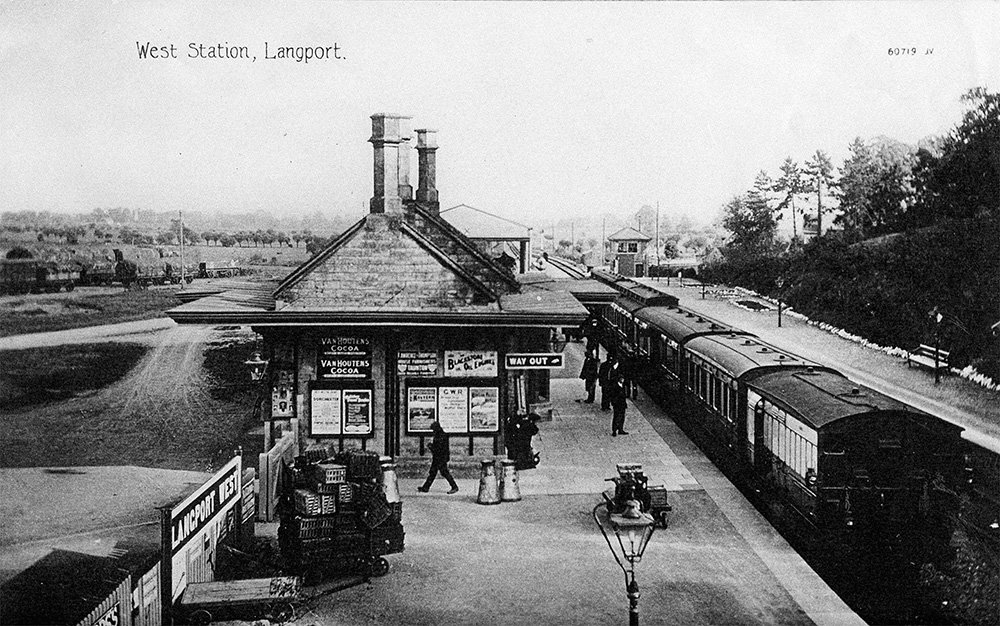
Another view, taken from the road bridge? Looking south towards Martock and Yeovil. Image by unknown.
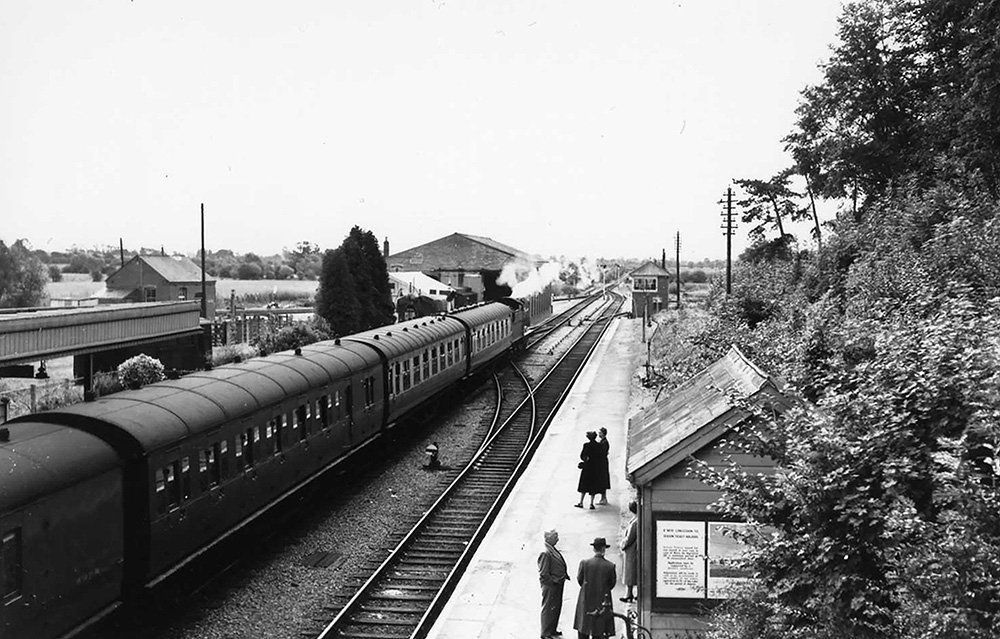
Again, most likely taken from the road bridge, looking south, with the signal box at the end of the platform. Image by unknown.
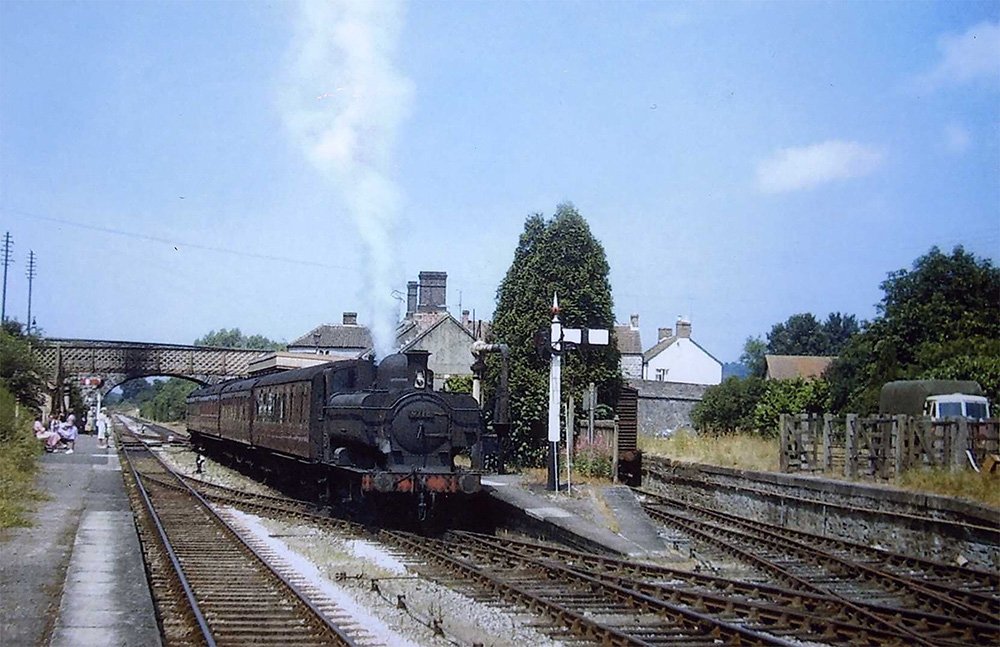
A stunning shot in colour (not colourised by A.I., as far as I can tell), of a train at Langport West. Image by unknown.
Some of the Staff at the Station
Again, from the Langport Heritage website, here are some of the staff at the station.
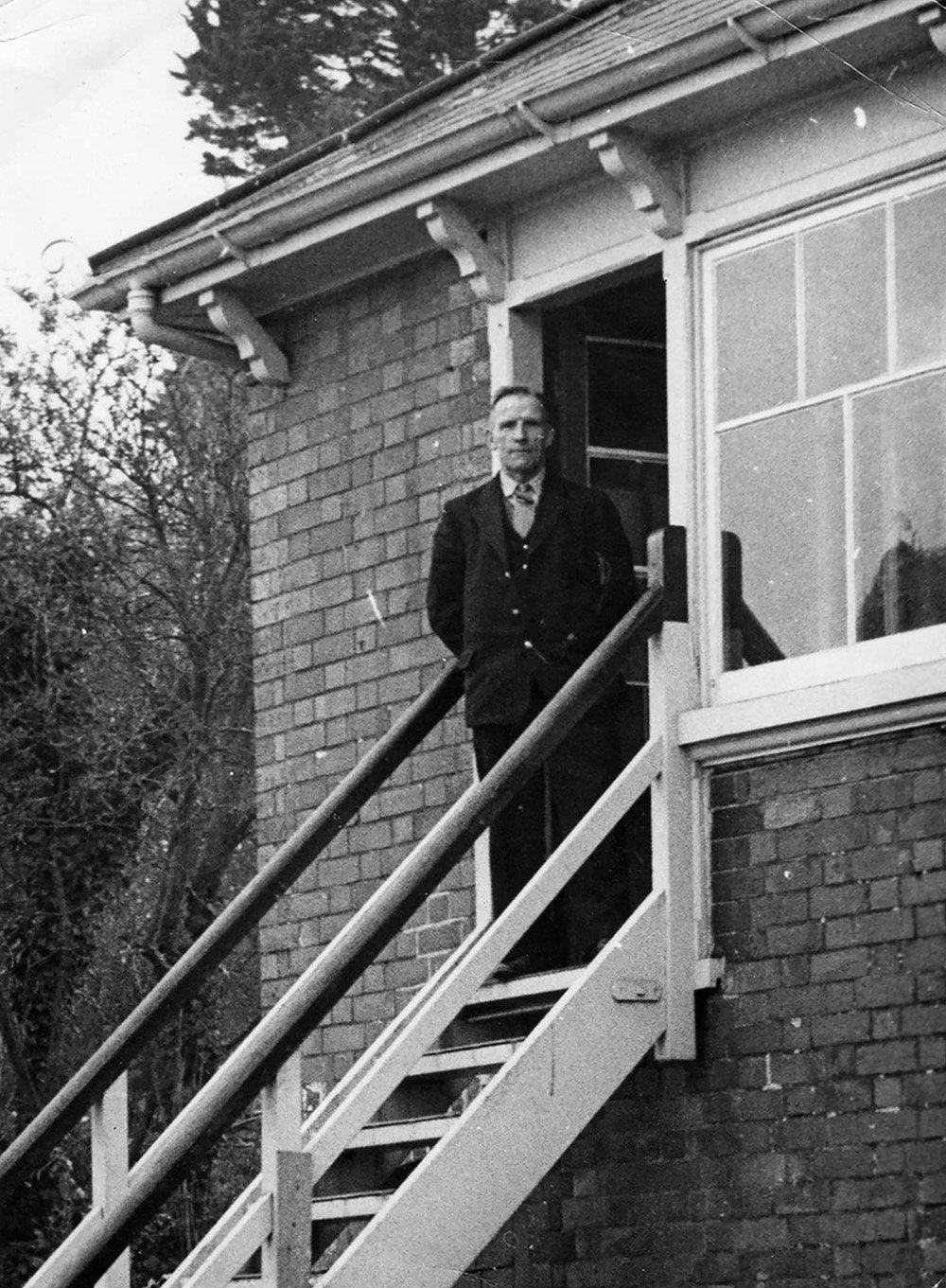
Here’s a proud looking Percy Goddard, the signalman. Date & image by unknown.
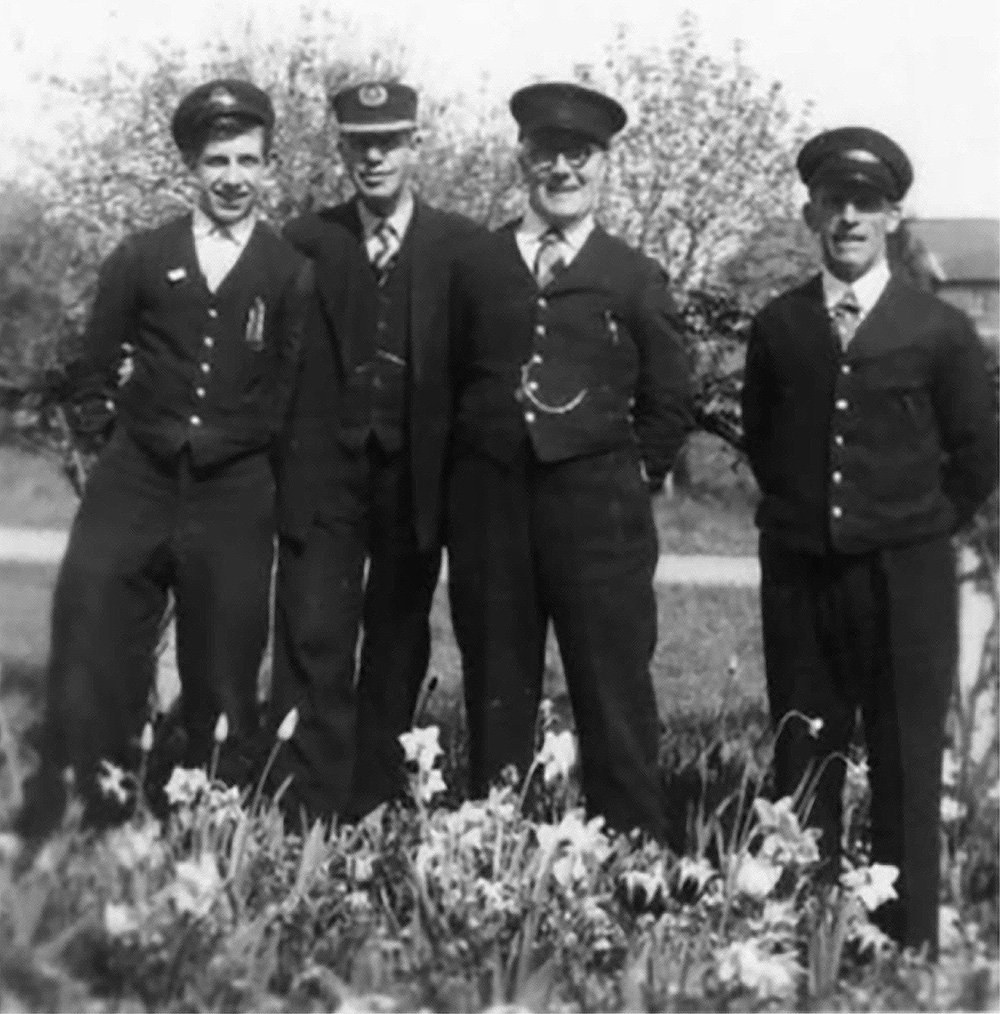
Some more of the happy staff at the West Station, from left to right, Denzel Cox, Mr Teague, Fred Lock, and Percy Goddard. Date and image by unknown.
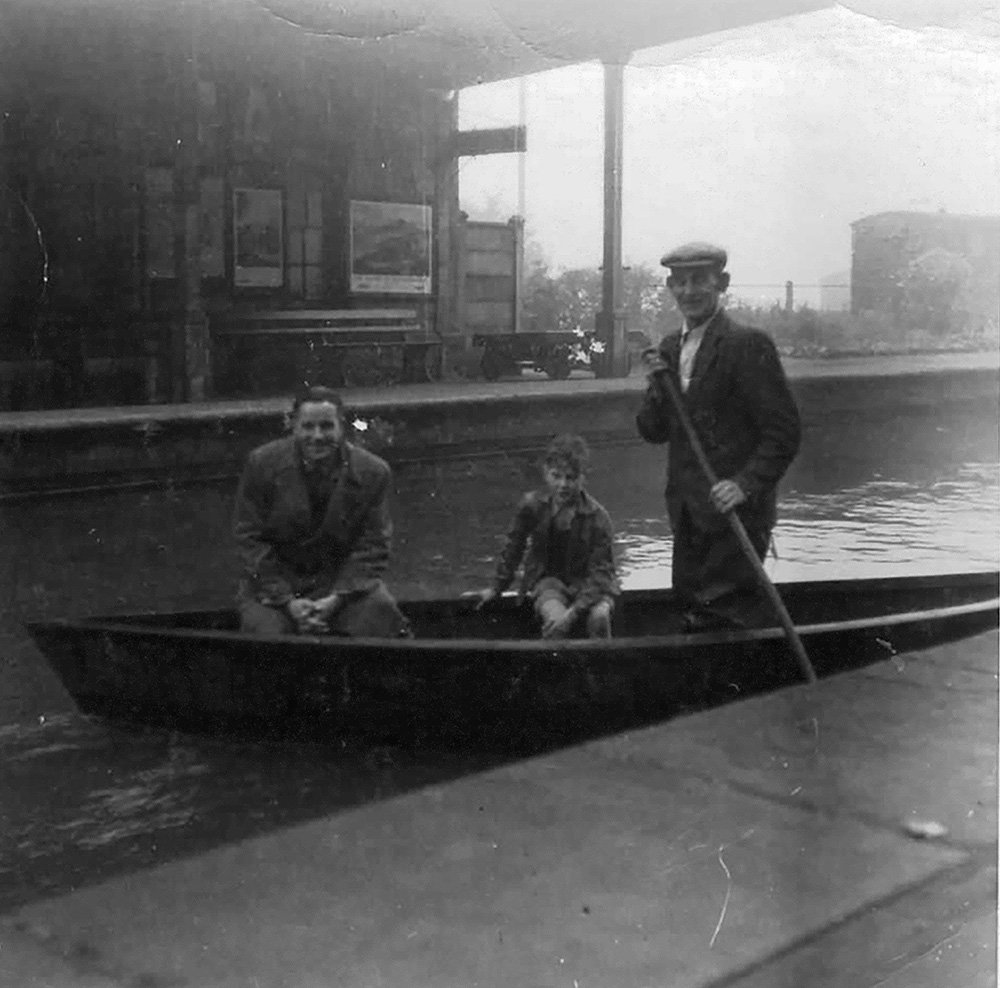
No steam power today, just rowing over the tracks. Cliff Langford, Ron Trott, and Brian Langford making their way through another flood. Date and image unknown.
Langport West Today
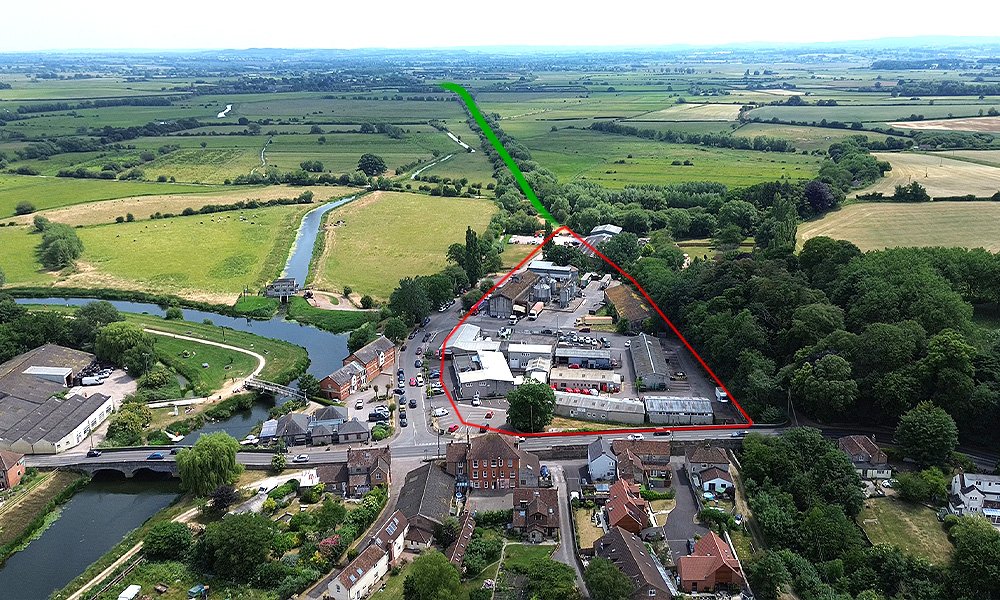
I took the drone up and this is an overview, looking south, of the station site. You can see the green line, which was the trackbed, and I’ve done the best I can to highlight the station in red.
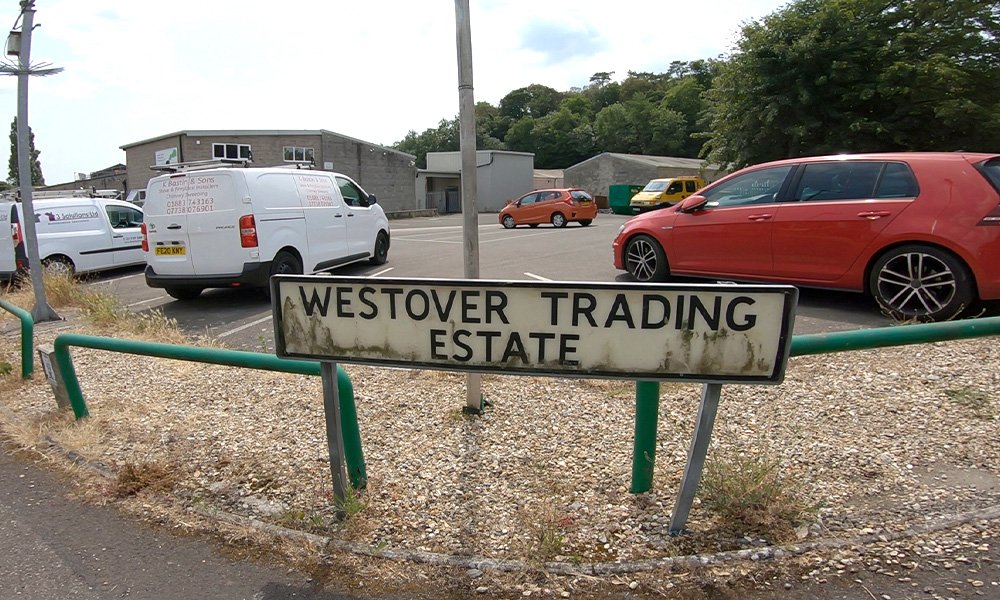
Today, as with many of the stations site closed in the 1960s, the area is an industrial estate.
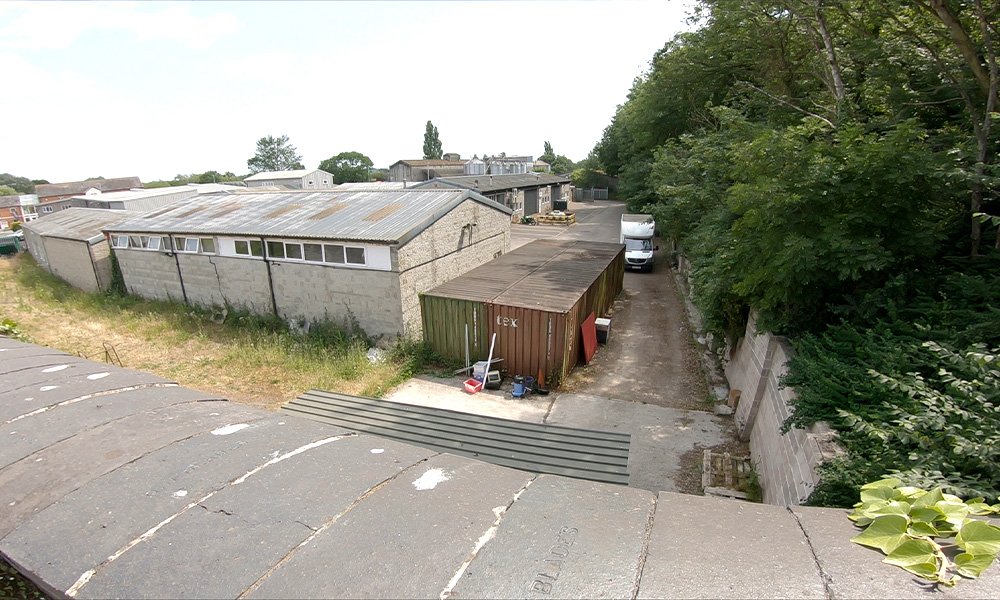
Standing on the road bridge, looking over the wall, the up platform would have been on your left, and the trackbed can just about be made out, which the roadway is now.
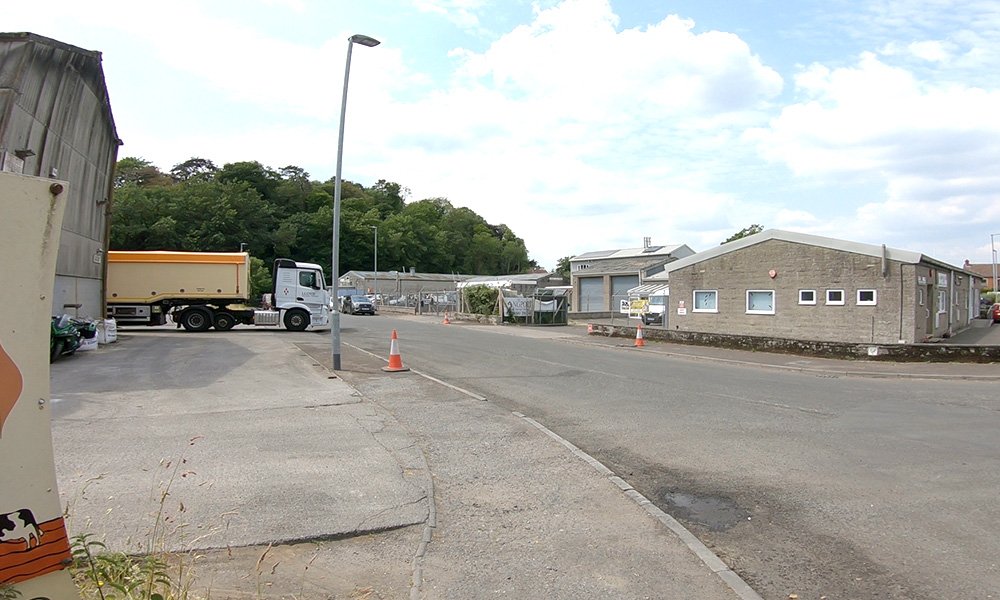
You are looking at roughly where the good shed would have been, directly in front of you. As with a lot of these ‘now’ images, it’s very hard to tell.
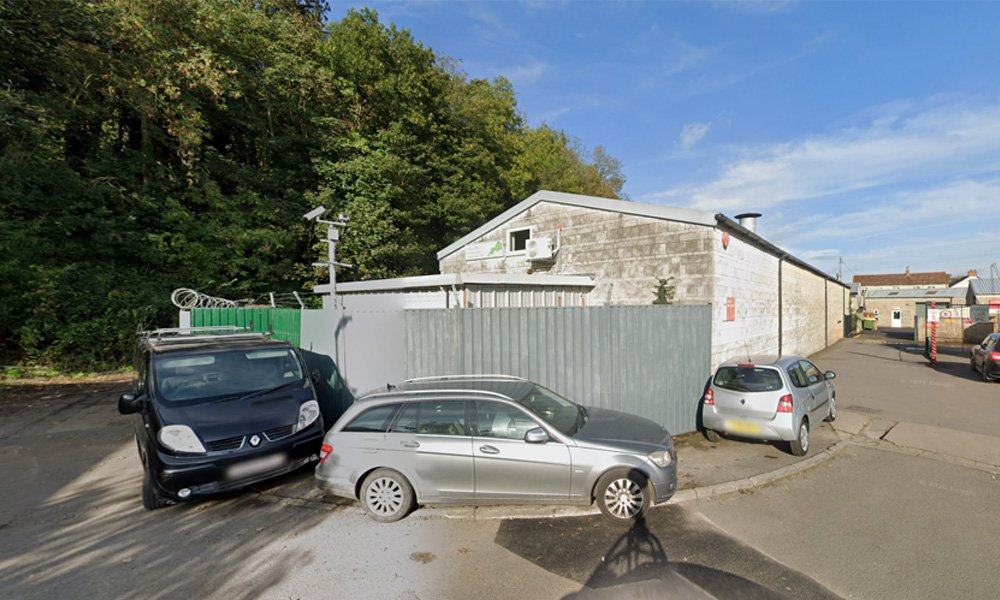
This one was taken from Google Maps, and it’s looking at the road bridge, which is now obscured by the building. To the left is where the double trackbed would have been, with the up platform to the left of that.
Then and Now
I say this every time, but matching up these then and now photos is very difficult. I haven’t had the chance to get up to Langport recently, so there will be more on the way.
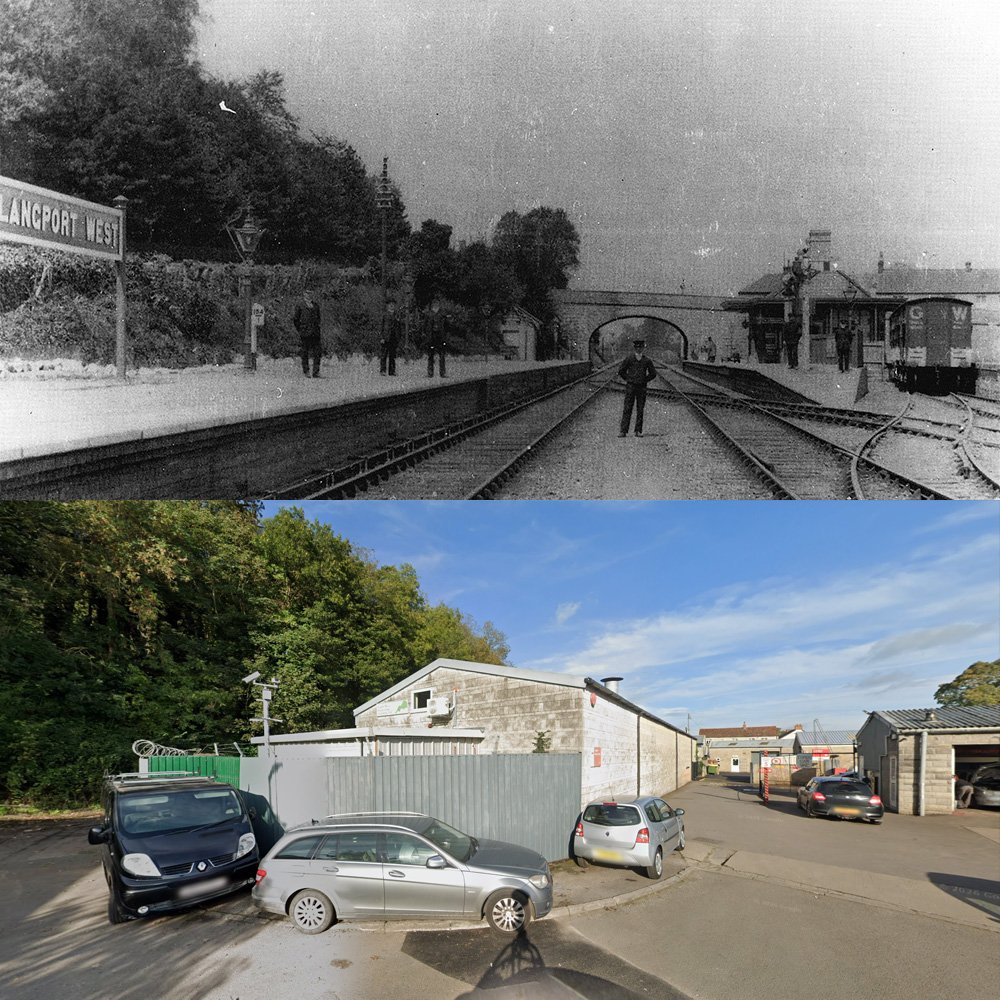
Not from exactly the same place, but both looking towards the road bridge. As you can see, things have changed a lot since the railway closed.
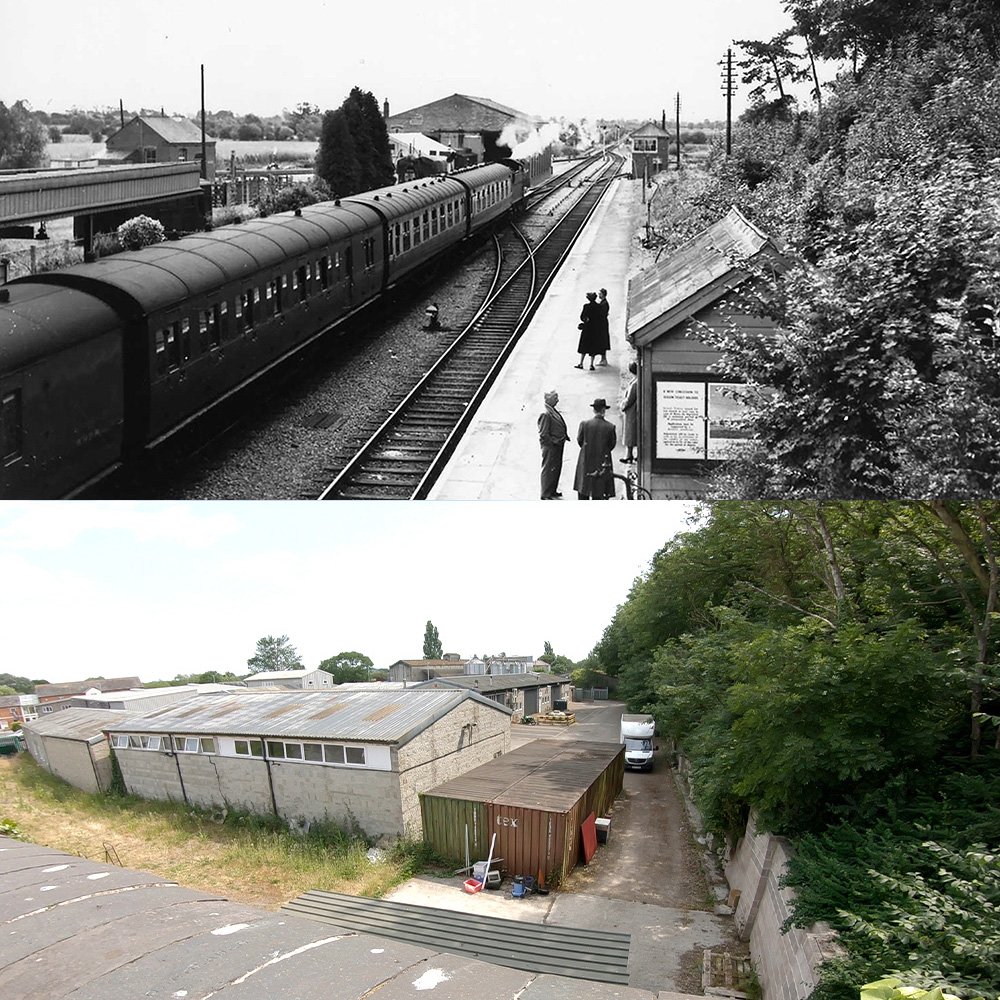
If the original image was taken from the road bridge, and not the foot bridge, this again is a best guess for then and now.
Up Next
Next on the line was Athelney, although I plan on covering Curry Rival Junction as well. Then only a few stops to the end of the line, Taunton.
Thank you to Derek Philips, Middleton Press, and Langport & District History Society for the use of their wonderful images. Remember, if you have any movie footage, photos or memories of the Yeovil to Taunton railway, please Contact Me, as I would be most interested in talking to you.

This Post Has 2 Comments
Magic memories 👍👍
Pingback: Curry Rivel and Athelney Station, Somerset - Trains only pass by these days - Aarchive Films