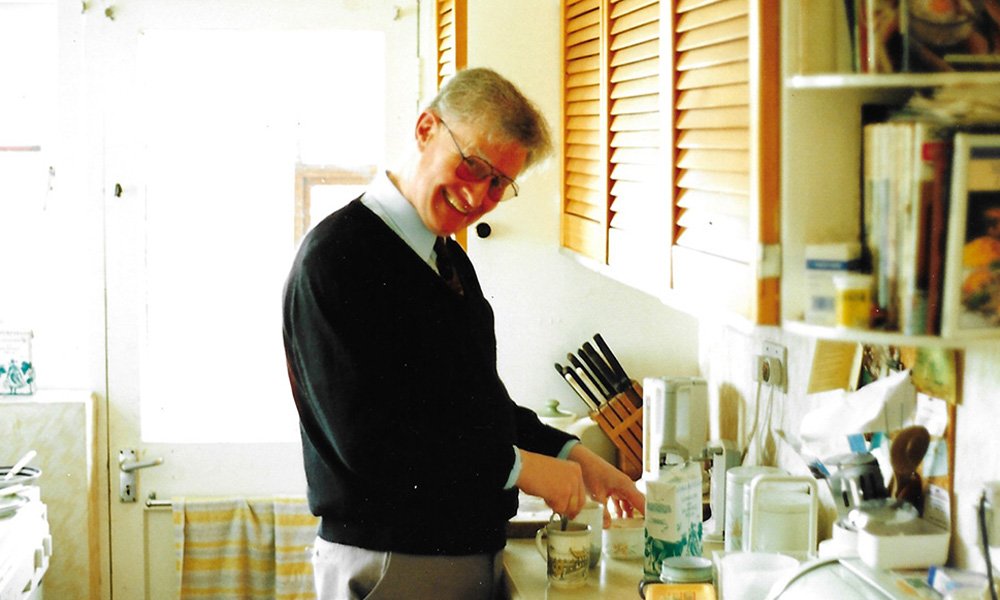
Today is the 7th Jan, and it would have been my dad’s (Roger Lilley’s) 80th birthday. Sadly, he passed away 25 years ago this year, but I always remember him at this time, as we set up Aarchive Films together, over 34 years ago.
You might have read our About Us page, but I wanted to tell the story of where dad found his love of movies, and how it was a huge part of his life.
A Young Boys Dream
When dad was only about 7 – 8 years old, he knew he wanted a movie projector. On his way home from school, he passed a curiosity shop, and they had a hand cranked 9.5mm cine projector. With his nose pressed up against the shop window, he knew he wanted it!
He started to save his pocket money every week to buy it. Every week, another few pennies were added, and the money started to build up. One day, while walking home, he looked into the shop window and, OH NO! The projector had gone!
This next part of the story got worse every time dad told it. That sad little boy was devastated, the projector he wanted had been sold. With his bottom lip quivering and a tear in his eye, he walked home, heartbroken, with his school satchel dragging behind him. When he got home he hung up his coat and satchel. He heard his father’s voice from the kitchen.
He went in and there, on the kitchen table was the projector and his dad stood behind it. The first film footage dad remembered watching was simply a horse running.

Dad, and granddad, sat there and watched a number of short 9.5mm films for the rest of the day. Dad knew he loved movies and wanted to work with them.
Plymouth Cinemas
Dad studied to become an account, but took part time work as a projectionist in some of the cinemas in Plymouth, his home town. He started in the Palladium, which was on St Leven Road, Devonport. He then moved to State Cinema, in St Budeaux, then on to the Drake Odeon, Derry’s Cross, in the city centre.
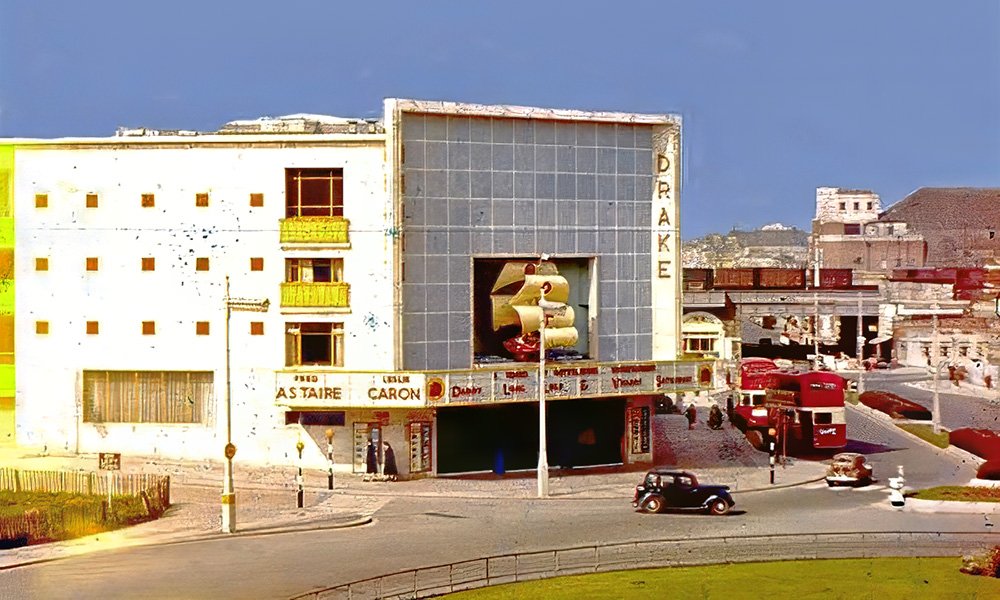
Every time we drove past the cinema, dad would tell me he used to clean the sails on Drake’s ship. He had many happy years at the Drake, and he also made some good friends there. One of those friends was Roger Underwood, who worked at the Drake and later at the ABC cinema, just a stones throw from the Drake. Back then, there was a friendly rivalry between the two cinemas. Here is an image of Roger Underwood lacing a projector for a screening.
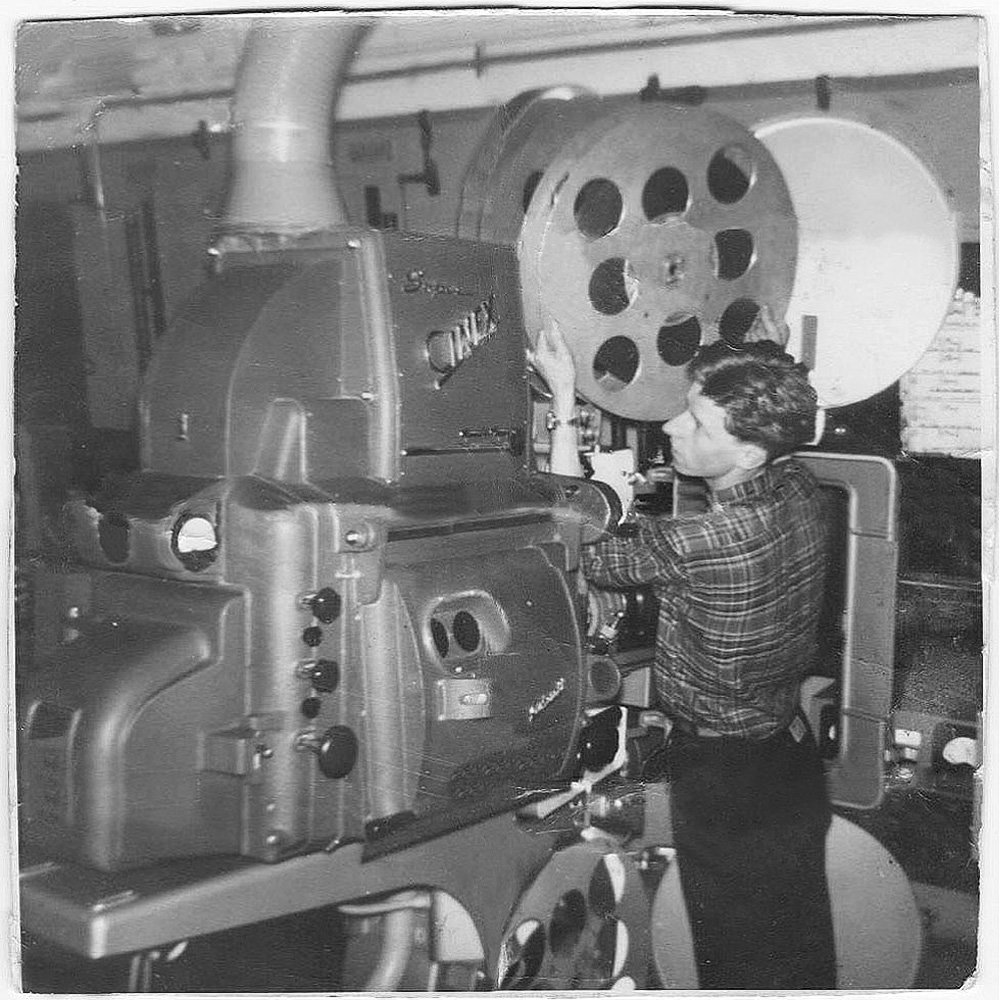
When dad and I got into video production, after I left school, we contacted Roger again, as he was a video cameraman and editor. We worked with Roger for many years and made many of the video productions with him. It was nice that both Rogers, my dad and Roger Underwood, had first met working in a cinema together.
Before the Days of Video
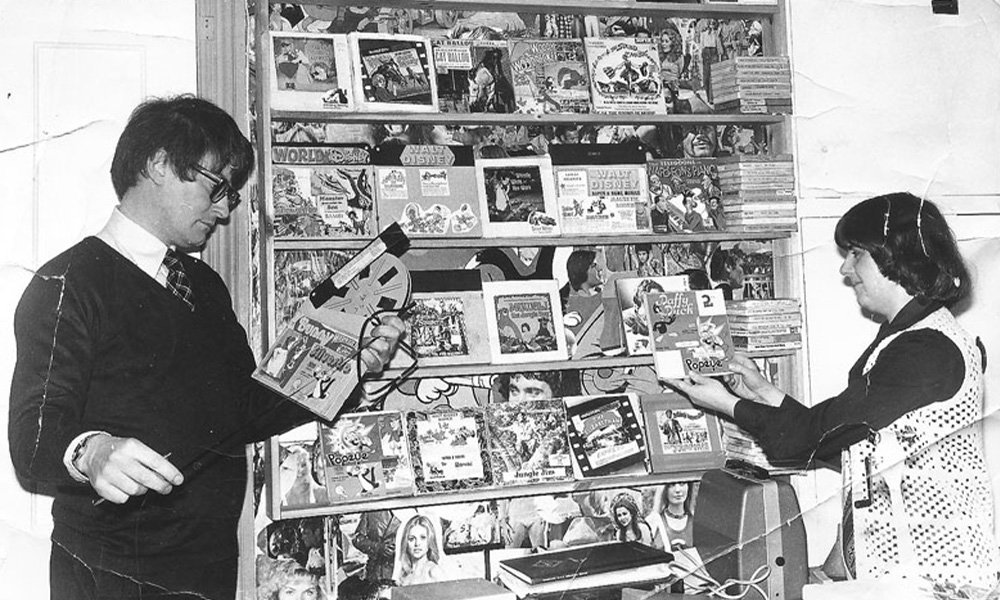
Back in the 1970s, before the days of VHS videos, if you wanted to watch a movie, you had to wait until it was in the cinema or on TV. The other option was to have a film projector and rent movies, usually on Super 8mm. Dad married in 1969, and him and his new wife, had a shop for renting Super 8mm movies and projectors. One was on Embankment Road, then later, in Cathcart Ave.
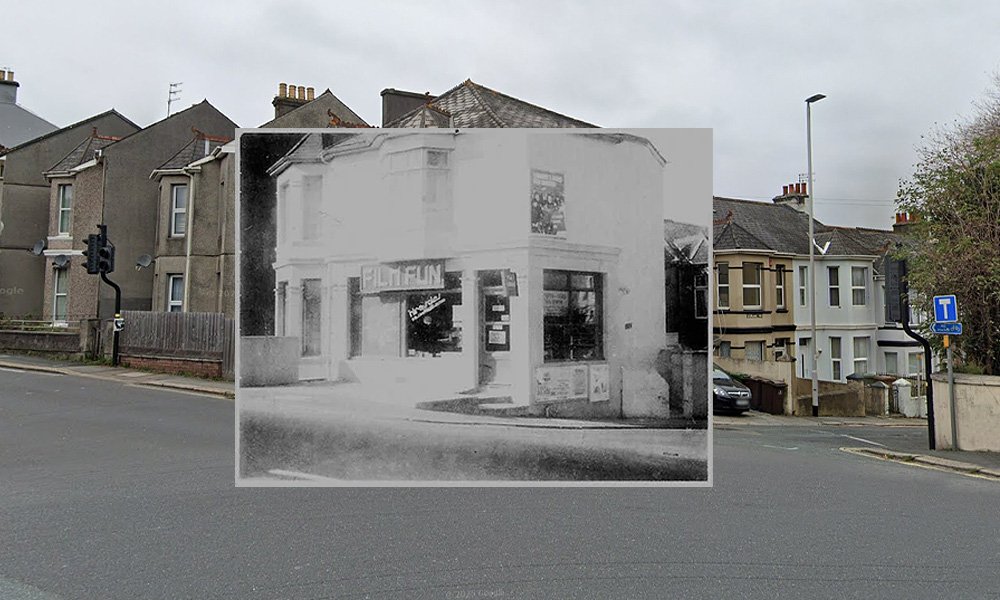
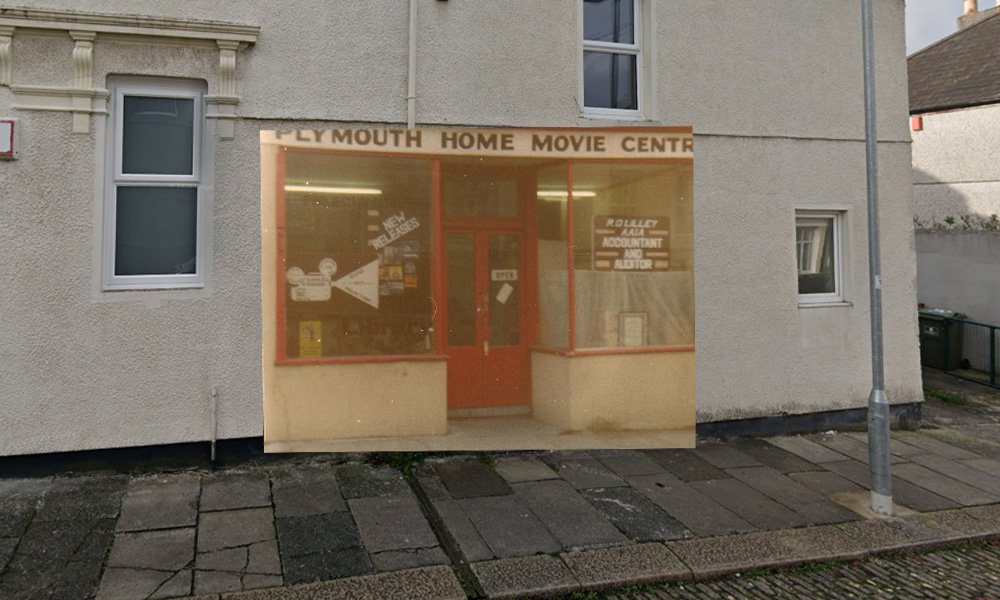
Dad became an accountant, but he also ran a business selling and renting Super 8mm movies. At the time, it was called Movieland International. There used to be large 8mm film conventions all over the UK, the biggest was in Blackpool every year.
Mum and dad were regulars at the conventions and when I was old enough, I would go as well.
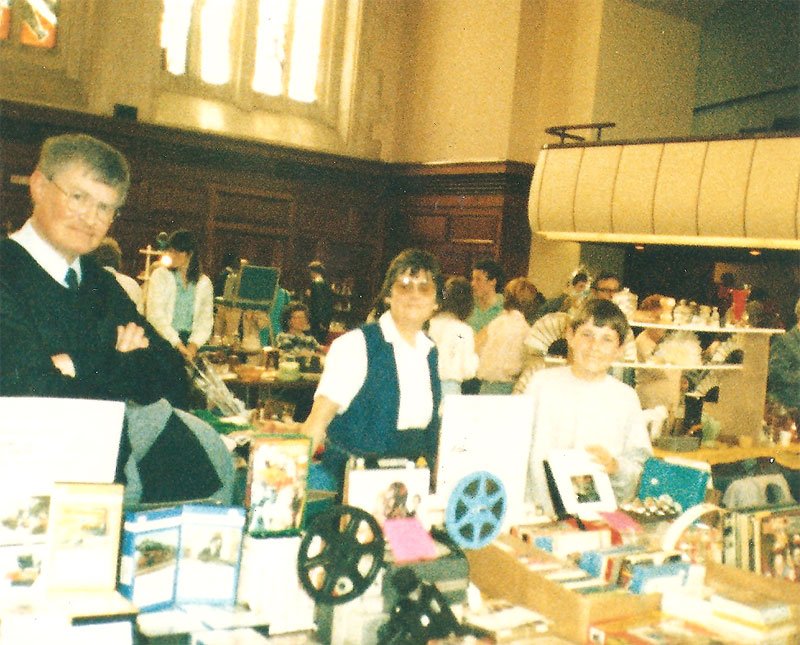
Those really were the days!
As I grew up, dad converted our garage into a home made cinema; with proper cinema seats, a projection room and curtains that opened and shut. If we were lucky, mum would come around in a pinny, giving us ice creams. Sadly, I don’t have a single photo of the home made cinema. These days, we take 100 photos every time we leave the house, but back in the day, you just didn’t take as many.
Movies with Music
Dad was also a talented musician. He always bragged he could play several instruments, one piano and 4 guitars. My sister provided me with some images of dad in his first band: The Avengers, dad is on the right.
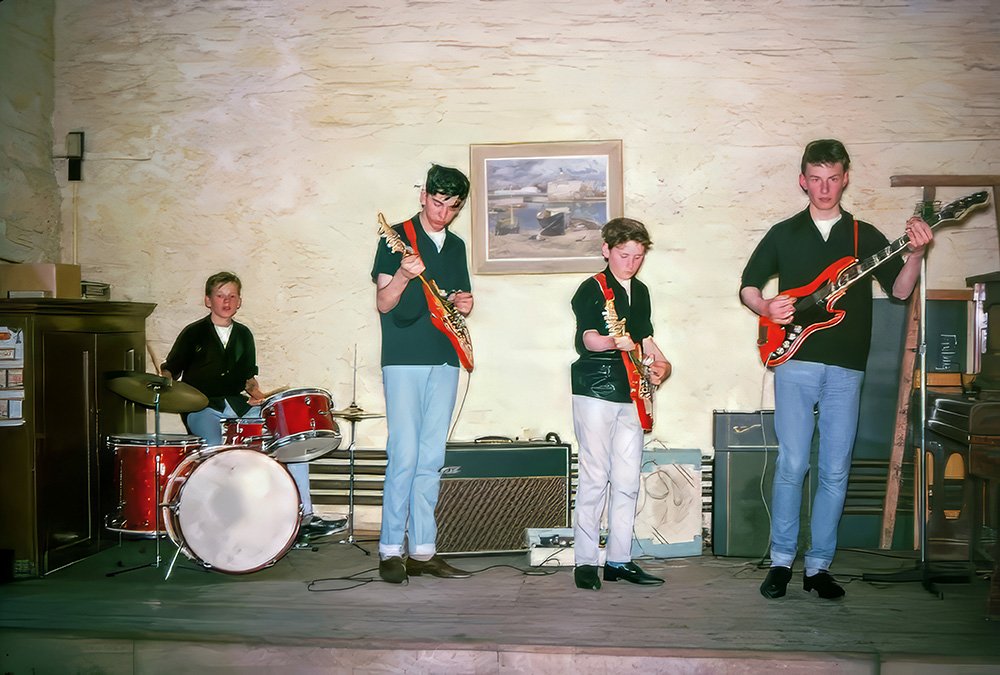
I mention music as dad would right music for some of the old silent movies we used to sell. Remember when movies were completely silent and they used to have someone playing the piano in the cinema? Well, dad did the same thing.
A silent movie, like a Laurel & Hardy, didn’t make as much as a sound version. We were able to put a soundtrack on the movies we had; with a different theme for hero, the damsel in distress and the villain.
We had a machine that would put a magnetic sound stripe on to a film, which was a trick process. Then we hooked up a keyboard to the projector, the movie would go through and dad would play the soundtrack over the top. Strange to think there still might be some old Super 8mm movies with dad’s music on them.
Home Movies on to Video
VHS videos killed off the 8mm market, although, you can still find movies on 8mm today. I found a copy of Star Wars on Super 8mm recently, but it was well over a £1,000! I left school in 1992, and dad had the idea of putting home movies on to video for people. Before the days of video cameras, you would shoot home movies on cine film. It was usually about 3 minutes per 50ft spool, you would send it off to the processors, get it back, set up a projector and screen and watch them back.
In an upstairs bedroom, dad and I managed to set up a projector and video camera and transfer some of our own home movies. Here is my sister and I, on a boating holiday on the Thames. Dad added the soundtrack and narration, which he made into a poem.
I love hearing his voice. I still transfer home movies to digital for people, but not as busy as we used to be. However, one day, a chap called Reg Blackett got in contact with us, and he had 40 minutes of 16mm cine film of the building of the Tamar Bridge. It was incredible footage and had everything; from the struts of the bridge going into the river to the Queen Mother officially opening it.
Dad got in contact with Roger Underwood, who he worked with at the Drake, and we made our first video production, A Joint Project – Bridging the Tamar.
Over the years dad was alive, we made a total of just over 20 videos, about the history of our home city, Plymouth, and some of the closed railway lines around the South West. I am in the process of updating the videos, but making sure I keep dad’s narration on each of them.
Miss You, Buddy
I am glad, though, that I still honour dad’s memory with Aarchive still running, the video productions we made are still popular and his legacy is not forgotten.
I’m no fan of A.I. and I never use it for anything I make, but I did ask it to make a photo of dad and I in a cinema. Honestly, this brought a tear to my eye. This would have been us watching The Empire Strikes Back. It’s uncanny.
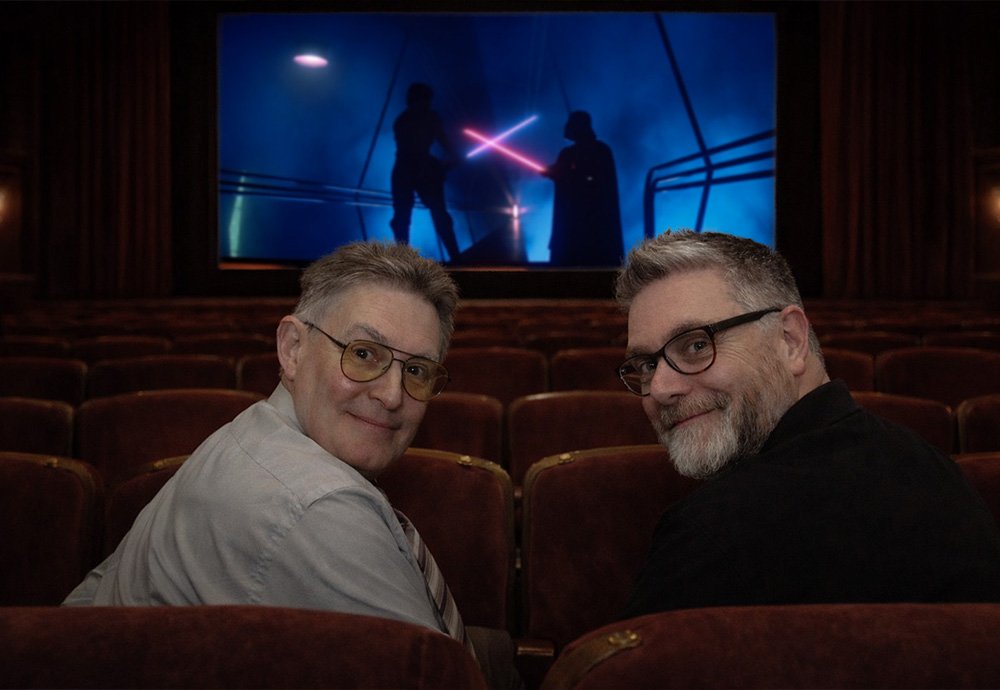
As I said, I’m glad his legacy is living on, through the videos we made, that I’m still transferring home movies to digital and that Aarchive is still going, after all these years. His love of film and movies was passed on to me and I still love editing and splicing home movies today.
Here’s to you dad, I wish I was half the man you were.